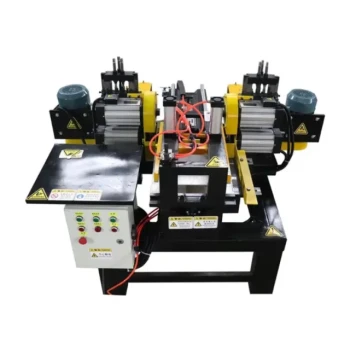
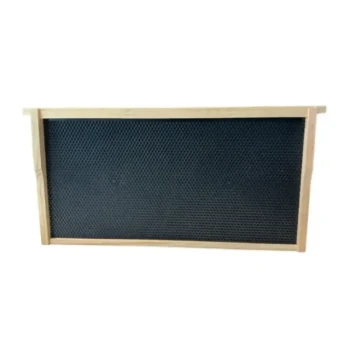
Match the equipment to the bees, not the other way around. Variations in honeybee body size and natural cell dimensions determine the correct frame spacing, hive-body dimensions, foundation cell size, embossing tolerances, and queen-excluder spacing. For example, some Apis cerana hill populations build cells around 4.8 mm, while smaller plains populations may use cells near 4.15 mm; equipment designed for one population may therefore perform poorly with another.
The correct machinery configuration begins with the target bee population’s natural measurements. Precisely matched frames, foundation sheets, and hive components support faster comb construction, better brood management, efficient honey storage, and lower colony stress.
Why Bee Size Must Guide Equipment Selection
Body size affects internal hive dimensions
Honeybee species and ecotypes differ in body size, thorax width, wing length, and nesting behavior. These differences influence the usable space required between frames, the internal dimensions of hive bodies, and the clearance needed for bees to move through the hive.
For commercial production, a hive-making machine should be capable of producing consistent, population-specific dimensions rather than only one generic hive format. Small dimensional errors can create excessive gaps, restricted movement, or unwanted comb attachment.
Natural cell size affects foundation specifications
Foundation embossing equipment must reproduce the cell dimensions that the managed bee population naturally accepts. The cited Apis cerana examples—approximately 4.8 mm for hill varieties and 4.15 mm for smaller plains varieties—illustrate why a universal foundation specification is not always appropriate.
A foundation sheet that is too large or too small may encourage bees to remodel the comb, reject sections of the sheet, or build irregular cells. The result can be slower colony development and less predictable frame utilization.
Different castes require different cell structures
Worker cells are generally smaller and horizontally oriented, while drone cells are larger. Queen cells are vertically protruding and structurally distinct from both worker and drone cells.
Foundation and comb-production equipment should therefore be designed primarily for the intended worker comb and drone-comb pattern. Queen-rearing equipment requires separate cell cups or molds that reproduce the natural queen-cell form rather than relying on ordinary foundation embossing.
How Variations Affect Hive-Making Machinery
Frame manufacturing requires dimensional control
Frame-making machinery must maintain accurate bar lengths, frame depths, side-bar spacing, and assembly tolerances. These dimensions must correspond to the hive body and the bee population’s preferred comb geometry.
For distributors and equipment resellers, this means offering compatible systems rather than isolated components. A frame machine, hive-body machine, and foundation unit should be specified as a coordinated package.
Hive bodies must reflect nesting behavior
Cavity-nesting bees such as Apis cerana generally require carefully dimensioned hive bodies that provide suitable internal volume and movement space. Poorly matched dimensions can increase colony stress and may contribute to absconding.
By contrast, the open single-comb nest of Apis dorsata is not naturally organized around conventional removable frames. Its comb can become extremely large, so standard framed-hive machinery should not be presented as a direct substitute for equipment intended for cavity-nesting species.
Machine flexibility is commercially valuable
A manufacturer or distributor serving multiple markets should prioritize adjustable tooling, interchangeable molds, configurable frame fixtures, and size-calibrated foundation embossing systems. This reduces the need to maintain a completely separate production line for every bee population.
The key requirement is not merely high output. It is the ability to change cell grids and hive dimensions while preserving repeatable accuracy across production batches.
How Variations Affect Comb Foundation Equipment
Foundation cell grids must match the target population
Foundation embossing rollers and molding plates should be selected according to the intended cell pitch and diameter. A nominal “standard” worker foundation may not be suitable for every Apis cerana ecotype or other species.
Equipment specifications should clearly state the available cell sizes, adjustment range, embossing tolerance, sheet dimensions, and compatibility with the selected frame format. This information is essential for B2B buyers comparing suppliers.
Foundation quality affects colony acceptance
Correct cell dimensions help bees extend the foundation into usable comb and maintain orderly brood areas. When the foundation matches the colony’s natural construction pattern, it can reduce remodeling work and improve the consistency of brood and honey-storage areas.
Wax quality, sheet thickness, embossing depth, and dimensional stability also matter. Accurate cell geometry is valuable only if the sheet remains flat, durable, and compatible with the frame during handling and extraction.
Cell size influences brood-comb management
Worker and drone cells differ in size, and the queen responds to the cell structure when laying. Equipment that produces accurately dimensioned worker foundation can help maintain a more orderly worker-brood area and reduce unintended expansion of drone comb.
This should be treated as a management aid rather than an absolute biological control. Bees may still modify foundation according to colony condition, season, genetics, and available resources.
Species and Caste Considerations
Apis mellifera supports standardized high-volume systems
Apis mellifera is widely managed in standardized frame hives, making it suitable for integrated commercial systems. These may include automated hive-component production, foundation manufacturing, honey extraction, filtering, filling, and packaging equipment.
However, standardization remains dependent on the selected hive format and local beekeeping practice. The equipment package should specify frame and foundation compatibility rather than assuming that all Apis mellifera operations use identical dimensions.
Apis cerana demands closer population matching
Apis cerana populations can vary considerably in body size and natural cell dimensions. Hive and foundation equipment should therefore be selected using measurements from the actual ecotype or managed stock whenever possible.
This is particularly important when supplying equipment across regions. A configuration optimized for a larger hill population may not be the best choice for a smaller plains population.
Apis dorsata requires a different design philosophy
Apis dorsata builds large, open single combs rather than the compact, removable-frame arrangements common in managed cavity hives. Its reported worker cells are approximately 5.28–5.64 mm, and its honey-storage section can become exceptionally deep and heavy.
These characteristics are relevant to specialized harvesting and support systems, but they do not justify adapting ordinary frame-hive equipment without careful engineering. Reinforced supports, high-capacity handling systems, and appropriate harvesting methods may be more relevant than conventional foundation sheets.
Queen management requires calibrated spacing
Queens and drones have broader bodies than workers. Queen excluders therefore require carefully selected grid spacing that restricts queen movement while allowing workers to pass.
Excluder dimensions should be validated for the species and bee population being managed. A spacing suitable for one population may be too restrictive for workers of a larger population or insufficient to exclude a larger queen.
Understanding the Trade-offs
Standardization versus customization
Standardized machinery lowers production complexity, simplifies spare-parts management, and supports faster fulfillment. Custom or adjustable equipment provides better biological compatibility but usually increases tooling, calibration, inventory, and training requirements.
The practical solution for many suppliers is a modular platform with interchangeable cell-size tooling and frame fixtures. This combines a common machine base with population-specific production components.
Maximum honey storage versus colony compatibility
Larger cells may provide greater volume per cell, but larger is not automatically better. If the cell geometry does not suit the managed bees, the colony may remodel the comb or use it inefficiently.
Equipment should therefore be selected for accepted comb construction and colony performance, not simply for the largest possible storage capacity.
High throughput versus dimensional precision
Automated machinery can increase output, but high speed does not compensate for inaccurate embossing, warped sheets, or inconsistent frame assembly. Small errors repeated across thousands of components can create significant field problems.
Quality control should include cell-size verification, frame-dimension checks, sheet flatness inspection, and compatibility testing with representative colonies.
Broad product range versus inventory complexity
Offering multiple foundation sizes, hive formats, and frame configurations improves market coverage. It also creates a greater need for clear product coding, technical documentation, sample approval, and responsive after-sales support.
Distributors and wholesalers should organize products by species, ecotype, frame format, cell size, and machine compatibility. This reduces ordering errors and makes one-stop sourcing more reliable.
How to Apply This to Your Project
Begin by identifying the managed bee species or ecotype, measuring its natural worker-cell dimensions, and confirming the intended frame and hive format.
- If your primary focus is equipment compatibility: Specify the bee population, frame dimensions, frame spacing, foundation cell size, and queen-excluder spacing before selecting machinery.
- If your primary focus is high-volume commercial production: Choose an integrated system for hive bodies, frames, foundation, extraction, and filling, with adjustable tooling where multiple bee populations are served.
- If your primary focus is Apis cerana management: Prioritize precisely dimensioned hive bodies and population-specific foundation rather than relying on a generic Apis mellifera configuration.
- If your primary focus is distribution or resale: Build a clearly documented portfolio of interchangeable machines, molds, foundation sizes, and spare parts, supported by rapid technical response and reliable fulfillment.
- If your primary focus is colony retention and productivity: Validate foundation and hive dimensions in field colonies before committing to large-scale production or repeat inventory purchases.
The most reliable equipment strategy is to combine biological measurement, modular machinery, precise manufacturing, and disciplined technical support.
Summary Table:
| Factor | Impact on Equipment Selection |
|---|---|
| Bee body size | Determines frame spacing, hive body dimensions, and clearance needs. |
| Natural cell size | Dictates foundation cell pitch, diameter, and embossing tolerances. |
| Caste differences | Worker/drone cells require distinct foundation patterns; queen cells need special molds. |
| Species (e.g., Apis mellifera, cerana, dorsata) | Standardized vs. population-specific equipment; dorsata requires non-standard handling. |
| Queen excluder spacing | Must match queen and worker thorax widths to function correctly. |
Ready to optimize your beekeeping operation? At HONESTBEE, we offer a comprehensive range of hive-making machinery and comb foundation equipment tailored to your specific bee populations. Our team provides expert guidance to ensure your equipment matches your bees' natural dimensions, enhancing productivity and colony health. Contact us today for a personalized consultation and discover how our one-stop sourcing, rapid delivery, and dedicated support can empower your business. Get in touch now!
Related Products
- Manual Beeswax Comb Foundation Machine Wax Foundation Mill Embossing Machine
- Beeswax Machine Press Embosser Wax Foundation Mold Printer Bee Hive Equipment Making Sheet
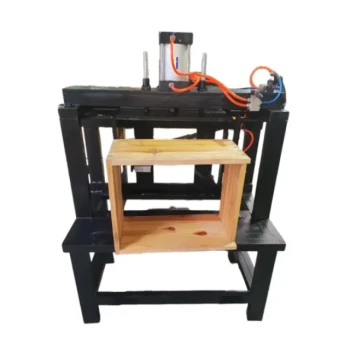
- High-Efficiency Pneumatic Bee Hive Making Machine for Rapid Box Assembly
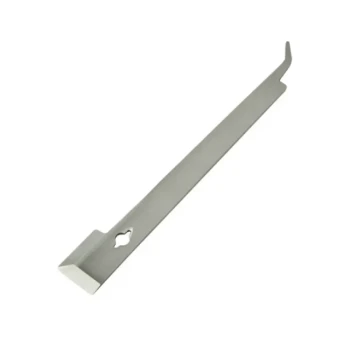
- Professional Frame Comb Fork and Lifter for Efficient Handling
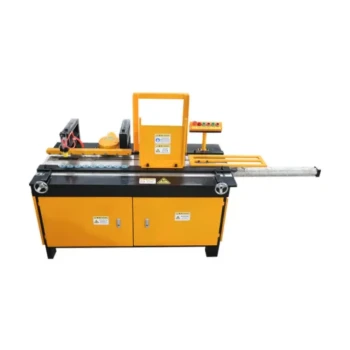
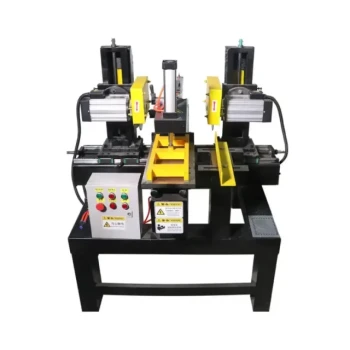
- Beehive Handle and Frame Rest Cutting Machine: Your Specialized Hive Machine
People Also Ask
- What are the primary technical challenges faced by beeswax foundation production machinery? Tackling Lipophilic Residues
- What are the advantages of implementing a pulley and belt drive system in beeswax foundation machinery? Master Quality.
- What role does a foundation machine play in the recycling and resource utilization of beeswax within an apiary?
- Why is the introduction of a beeswax foundation machine considered an important step in improving honey yields?
- How do beeswax foundation machines facilitate the internal recycling of beeswax? Build a Self-Sustaining Apiary