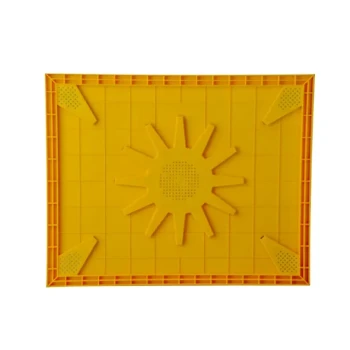
A plastic bee feeder box simulates field exposure by functioning as a controlled delivery system for chemically treated sugar syrup placed directly above the hive frames. This setup mimics a contaminated nectar source, allowing adult honeybees to consume the substance and naturally distribute it throughout the colony.
The core success of this method relies on trophallaxis—the social exchange of food among bees. By feeding on the treated syrup, adult bees act as vectors, passing the chemical to the queen and larvae exactly as they would spread pesticides collected during wild foraging.
The Mechanics of Controlled Exposure
Strategic Placement
The feeder box is installed above the hive frames. This positioning ensures the syrup is easily accessible to the colony's internal population while allowing researchers to monitor consumption rates without disturbing the brood nest deep inside the hive.
The Surrogate Nectar
Instead of pure water or honey, the feeder holds sugar syrup treated with specific chemical concentrations. Researchers determine these concentrations to match the levels of pesticides or contaminants bees would likely encounter in the wild, creating a realistic toxicological challenge.
Mimicking Natural Distribution
The Entry Point
In a natural setting, foraging bees bring contaminants into the hive. In this simulation, adult honeybees consuming syrup from the feeder replicate this role. They are the first point of contact, absorbing the chemical initially.
Spreading to the Brood
The simulation achieves colony-level impact through trophallaxis. The adult bees regurgitate and share the treated syrup with other hive members.
Targeting the Queen and Larvae
Through this chain of food sharing, the chemical eventually reaches the most critical members of the colony: the queen and the developing larvae. This confirms that the feeder box effectively models the pathway of systemic transmission found in nature.
Understanding the Trade-offs
Uniformity vs. Natural Variation
While this method creates a realistic pathway, it offers a high degree of uniformity that nature rarely provides. Every bee feeding from the box receives a consistent concentration, whereas wild exposure can be sporadic and patchy.
Isolation of Variables
This approach isolates the chemical impact from other field stressors. While excellent for determining toxicity, it does not account for the physical stress of foraging flights or navigation challenges that bees face when collecting contaminants in the field.
Making the Right Choice for Your Goal
If your primary focus is Colony-Wide Transmission:
- This method is ideal because it guarantees the substance reaches the queen and brood through natural social interaction.
If your primary focus is Dosage Precision:
- Use this setup to ensure the exact concentration of a chemical enters the hive environment without the unpredictability of wild foraging sources.
By utilizing the colony's innate biological drive to share food, the plastic feeder box transforms a static container into a dynamic simulation of environmental risk.
Summary Table:
| Feature | Field Exposure Simulation Mechanism |
|---|---|
| Delivery Method | Controlled delivery via treated sugar syrup placed above hive frames |
| Biological Pathway | Social food exchange (Trophallaxis) among adult bees, queen, and larvae |
| Exposure Target | Replicates whole-colony impact including brood and reproductive health |
| Key Advantage | High dosage uniformity and isolation of chemical variables for research |
| Primary Goal | Modeling systemic transmission of pesticides or environmental contaminants |
Elevate Your Commercial Apiary with Professional Equipment
At HONESTBEE, we understand the complex needs of commercial apiaries and distributors. Whether you are conducting critical research or scaling honey production, we provide the full spectrum of high-quality tools, including specialized plastic bee feeder boxes, hive-making machinery, and honey-filling systems.
Our comprehensive wholesale offering ensures you have access to the hardware and industry consumables necessary for healthy colony management and efficient operations. From specialized beekeeping tools to honey-themed cultural merchandise, we are your partner in professional beekeeping excellence.
Ready to optimize your supply chain or upgrade your facility?
Contact HONESTBEE Today to discuss how our tailored equipment solutions can drive your success.
References
- Chong-Yu Ko, Yu‐Shin Nai. Evaluating the Effect of Environmental Chemicals on Honey Bee Development from the Individual to Colony Level. DOI: 10.3791/55296
This article is also based on technical information from HonestBee Knowledge Base .
Related Products
- White Plastic 0.5L Beekeeping Entrance Feeder for Bees
- Rapid Bee Feeder White Plastic 2L Round Top Feeder for 8 or 10-Frame Bee Hives
- Plastic Transporting Bee Packages and Nuc Boxes for Beekeeping
- 3.5L Plastic Beehive Frame Feeder Deep Frame Water Feeder for In Hive Use
- Professional Insulated Plastic Bee Hives
People Also Ask
- How do you make an entrance feeder for bees? A Guide to Safe & Effective Hive Feeding
- How to make an entrance feeder for bees? A DIY Guide for Safe & Effective Feeding
- How does a bee entrance feeder work? A Simple Guide to Convenient Hive Feeding
- What is a bee entrance feeder and what are its drawbacks? Essential Guide to Hive Security and Feeding Efficiency
- What are the advantages and disadvantages of using an entrance feeder for bees? Balance Convenience and Hive Security.