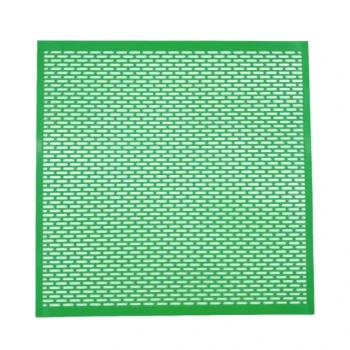
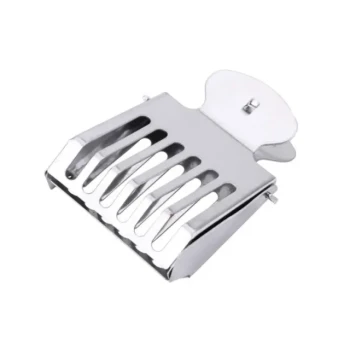
A queen excluder dramatically simplifies the search for a queen by physically restricting her movement to a specific section of the hive. By leveraging the size difference between the larger queen and smaller worker bees, the excluder acts as a precision filter, preventing the queen from wandering into honey supers or other hive bodies and effectively reducing the search area you must inspect.
Finding a single queen in a populous colony can feel like a game of chance. By using a queen excluder to partition the hive, you turn the search into a process of elimination, identifying the queen's location based on where fresh biological evidence—specifically eggs and brood—appears.
The Mechanics of Exclusion
The Physical Barrier
The fundamental principle of the excluder is simple mechanics. It is a barrier with precise grid gaps, typically measuring between 4.1 and 4.4 millimeters.
Selective Passage
These dimensions are critical. They are wide enough to allow the smaller worker bees to pass through freely to tend to the colony. However, they are too narrow for the larger thorax of the queen, confining her to a designated area.
Strategies for Locating the Queen
Reducing the Search Area
The most immediate benefit is volume reduction. By keeping the queen confined to the lower brood boxes, you eliminate the need to search the upper honey supers.
This ensures you do not waste time inspecting frames where the queen physically cannot be, allowing you to focus your attention solely on the brood nest.
The "Split-Box" Diagnostic Method
For a more targeted search, particularly in large hives or during requeening, you can use the excluder as a diagnostic tool.
You can place an excluder between two deep brood hive bodies. This physically separates the colony's potential egg-laying zones into two distinct sections.
Tracking Fresh Brood
After installing the excluder between the boxes, you must wait for a brief period—typically three days to one week.
Upon your return, inspect the frames in both boxes. You are looking specifically for fresh eggs.
Because the queen has been trapped in one box for several days, only that specific box will contain newly laid eggs. This confirms exactly which box the queen is in, halving your search area instantly.
Understanding the Trade-offs
It Requires Patience
Using an excluder to locate a queen is not an instant fix. The "Split-Box" method requires a waiting period (3 to 7 days) for the queen to lay enough eggs to make her location obvious.
Precision Limitations
While the excluder identifies which box the queen is in, it does not identify the specific frame. You will still need to perform a visual inspection of the frames within the identified box to spot her.
Making the Right Choice for Your Goal
Using an excluder is about working smarter, not harder. Depending on your immediate objective, apply the tool as follows:
- If your primary focus is routine inspection: Leave the excluder above the brood nest permanently to ensure you never have to search honey supers for the queen.
- If your primary focus is requeening a large hive: Install the excluder between brood boxes one week prior to the procedure to isolate the queen's location to a single box.
By using the queen's biology against her, you transform the search from a chaotic hunt into a logical, manageable procedure.
Summary Table:
| Feature | Specification/Benefit |
|---|---|
| Grid Gap Size | 4.1mm - 4.4mm (Thorax-specific barrier) |
| Primary Function | Restricts larger queen while allowing worker passage |
| Search Reduction | Eliminates honey supers from the inspection zone |
| Diagnostic Method | Split-box tracking via fresh egg presence |
| Waiting Period | 3 to 7 days for accurate "Split-Box" results |
| Best Use Case | Routine inspections and requeening large colonies |
Maximize Your Apiary Efficiency with HONESTBEE
Finding the queen is only the beginning of professional colony management. As a leading partner for commercial apiaries and distributors, HONESTBEE provides the precision-engineered equipment you need to scale your operations. From high-quality queen excluders and specialized beekeeping tools to industrial-grade hive-making and honey-filling machines, we offer a comprehensive wholesale portfolio designed for durability and performance.
Ready to elevate your beekeeping business? Our team is here to supply you with the essential hardware and industry consumables needed to succeed in the global market.
Contact HONESTBEE Today to Discuss Your Wholesale Needs
Related Products
- High Performance Plastic Queen Excluder for Beekeeping and Apiary Management
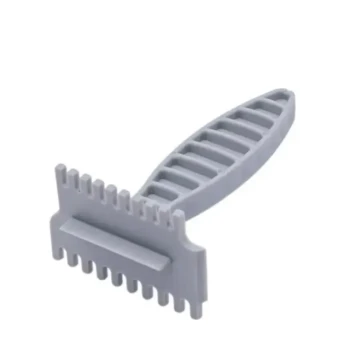
- Lightweight Durable Plastic Queen Excluder Scraper for Beekeeping
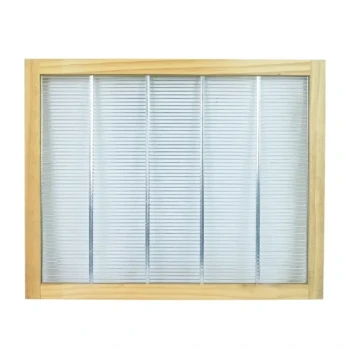
- Premium Wood Framed Metal Wire Queen Bee Excluder
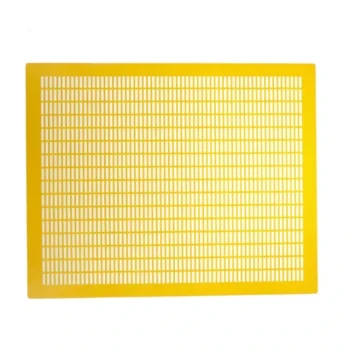
- Professional Plastic Queen Excluder for Modern Beekeeping
- Metal Queen Bee Excluder for Beekeeping
People Also Ask
- What are the characteristics of a plastic queen excluder? Key Benefits for Cost-Effective Beekeeping
- What are the operational and cost advantages of using plastic queen excluders over metal or wire excluders in commercial hive management? Discover how they reduce labor, prevent wing damage, and lower total costs.
- What types of queen excluders are available for beekeepers? Choose the Right Tool for Your Hive
- Why are standardized hive frames and queen excluders essential for maintaining honey purity and quality? Scale Your Purity
- Do plastic queen excluders work? A Cost-Effective Solution for Modern Apiaries