A queen excluder functions as a precision timing tool for researchers by spatially confining the queen bee to specific frames for a controlled window of time. By leveraging the physical size difference between castes, the excluder prevents the queen from moving freely while allowing workers to pass, ensuring that all eggs in the designated area are laid within a known, narrow timeframe.
The excluder transforms a biological process into a controlled variable. By physically restricting the queen, researchers generate larval cohorts with identical birth windows, effectively eliminating age-related developmental noise from sensitive datasets.
The Mechanics of Synchronization
Leveraging Physical Dimorphism
The queen excluder operates on a simple physical principle: size disparity. The thorax of a queen bee is significantly larger than that of a worker bee.
The Precise Filter
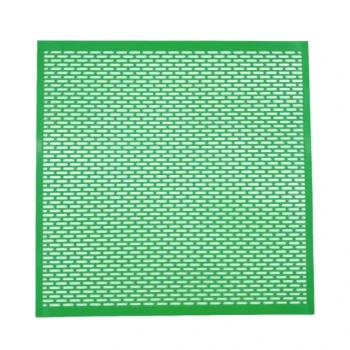
Excluders are manufactured with specific grid spacing, typically between 4.1 and 4.4 millimeters. This gap is calculated to be just wide enough for smaller worker bees to traverse but too narrow for the queen to pass through.
Spatial Confinement Equals Temporal Control
By placing this barrier within the hive, researchers restrict the queen's egg-laying activities to a specific honeycomb or hive section. Because she can only lay eggs in that restricted zone during the time she is confined, the start time for development is synchronized for all resulting larvae.
Why Age Precision Matters for Research
Reducing Developmental Variability
In biological research, even slight differences in age can skew results. The primary function of the excluder in this context is to ensure collected larvae have a strictly uniform age, such as 1 to 3 days.
Protecting Proteomic Integrity
Proteomic analysis involves studying the set of proteins produced by an organism. Because protein expression changes rapidly during early development, age variability would introduce "noise" into the data, making it impossible to distinguish between experimental results and normal growth changes.
Standardizing Sensitivity Tests
For studies involving external stressors, such as pesticide dose-response tests or parasite infestations, the subject's age dictates its resilience. A synchronized starting point ensures that all subjects are at the exact same stage of vulnerability when the variable is introduced.
Analyzing Chemical Signaling
Developmental precision is also required for studying subtle chemical changes, such as variations in Brood Ester Pheromones (BEP). These pheromone profiles shift as larvae age, requiring exact chronological sampling to measure accurately.
Operational Considerations and Requirements
The Necessity of Modified Equipment
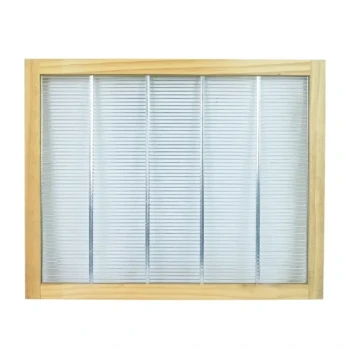
To achieve this level of control, standard equipment is often insufficient. Researchers frequently utilize modified beehives with built-in wire mesh excluders designed specifically to compartmentalize the queen's movement without disrupting the colony's airflow or worker traffic.
The Risk of Mechanical Failure
The method relies entirely on the precision of the grid spacing. If the manufacturing tolerance drifts above 4.4mm, the queen may breach the containment, immediately compromising the age uniformity of the sample set.
Dependence on Manual Timing
The excluder is a tool, not an automated solution. The precision of the larval age is directly correlated to the researcher's ability to time the placement and removal of the queen; the barrier simply enforces the boundaries set by the human operator.
Making the Right Choice for Your Research
To maximize the integrity of your data, align your use of the queen excluder with your specific experimental needs:
- If your primary focus is Proteomics or Molecular Biology: Use the excluder to create strict 1-to-3-day age windows to prevent natural developmental protein shifts from invalidating your analysis.
- If your primary focus is Toxicology or Parasitology: Utilize modified hives with built-in mesh to ensure all subjects are at the exact same developmental stage for consistent dose-response baselines.
By strictly controlling the "where," the queen excluder allows researchers to master the "when," turning a chaotic hive environment into a precise laboratory setting.
Summary Table:
| Feature | Research Application | Benefit |
|---|---|---|
| Physical Dimorphism | Grid spacing (4.1-4.4mm) | Restricts queen movement while allowing workers to pass |
| Temporal Control | Egg-laying synchronization | Ensures larvae cohorts have identical birth windows |
| Data Integrity | Proteomic & Molecular Analysis | Eliminates developmental "noise" in protein expression |
| Standardization | Toxicology & Stressor Tests | Guarantees uniform vulnerability for dose-response accuracy |
| Spatial Confinement | Modified hive equipment | Maintains airflow while compartmentalizing queen activity |
Elevate Your Research Precision with HONESTBEE
High-stakes honeybee research demands equipment with zero margin for error. HONESTBEE caters to commercial apiaries, distributors, and research institutions with a comprehensive wholesale offering designed for precision.
Whether you need specialized queen excluders with exact manufacturing tolerances, hive-making machinery, or honey-themed cultural merchandise, we supply the full spectrum of beekeeping tools. Our portfolio ensures that your larvae breeding and hive management are supported by the industry's most reliable hardware.
Ready to scale your operation or refine your research results? Contact us today to explore our wholesale equipment solutions
References
- Bin Han, Jianke Li. An Integrated Proteomics Reveals Pathological Mechanism of Honeybee (<i>Apis cerena</i>) Sacbrood Disease. DOI: 10.1021/pr301226d
This article is also based on technical information from HonestBee Knowledge Base .
Related Products
- High Performance Plastic Queen Excluder for Beekeeping and Apiary Management
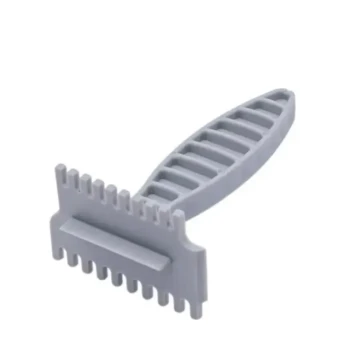
- Lightweight Durable Plastic Queen Excluder Scraper for Beekeeping
- Premium Wood Framed Metal Wire Queen Bee Excluder
- Professional Plastic Queen Excluder for Modern Beekeeping
- Metal Queen Bee Excluder for Beekeeping
People Also Ask
- What are the characteristics of a plastic queen excluder? Key Benefits for Cost-Effective Beekeeping
- What are the operational and cost advantages of using plastic queen excluders over metal or wire excluders in commercial hive management? Discover how they reduce labor, prevent wing damage, and lower total costs.
- What types of queen excluders are available for beekeepers? Choose the Right Tool for Your Hive
- Why are standardized hive frames and queen excluders essential for maintaining honey purity and quality? Scale Your Purity
- Do plastic queen excluders work? A Cost-Effective Solution for Modern Apiaries