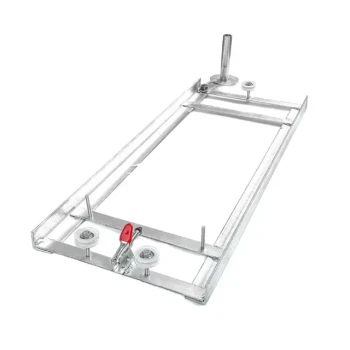
A wire mesh floor facilitates cleaning by physically separating the hive's living quarters from its waste collection area. Instead of debris accumulating on the floor where bees walk, gravity pulls dirt, dead bees, and pests through the mesh onto a removable tray located beneath the hive. This allows the beekeeper to clean the hive without opening the main chamber or disturbing the colony.
Core Takeaway The primary advantage of a wire mesh floor is the "slide-out" inspection board. This system transforms cleaning from a disruptive, heavy-lifting task into a simple maintenance routine that can often be performed from the outside of the hive, preserving the colony's internal climate and calm.
The Mechanics of Simplified Maintenance
The Slide-Out Tray System
The most significant feature for cleaning is the removable bottom board (often called an insert or inspection tray) placed underneath the wire mesh.
Because the floor is permeable, waste does not pile up inside the box. To clean the hive, you simply slide this board out from the rear or side. You can then brush, wipe, or vacuum the debris off the tray and slide it back in.
Passive Debris Filtration
The mesh creates a passive filtration system. In a traditional solid-floor hive, the bees must physically carry out every piece of debris, or it accumulates and rots.
With a wire mesh floor (typically with ~2.5mm openings), gravity does the work. Dirt, wax cappings, and biological waste fall through the holes immediately. This keeps the actual floor of the hive—the mesh itself—relatively clean with zero effort from the beekeeper.
Comparing Cleaning Workflows
The Traditional Method (Solid Floor)
Cleaning a solid bottom board is labor-intensive and intrusive. You must smoke the bees, lift the heavy brood boxes off the base, and physically scrape away adhered propolis and rotting debris with a hive tool.
This disrupts the colony's temperature and organization, increasing the risk of crushing bees or rolling the queen.
The Modern Method (Mesh Floor)
With a mesh floor, the cleaning process is non-invasive. Because you are only removing a tray situated under the hive, the bees generally do not notice the activity.
This eliminates the need to dismantle the hive structure for routine sanitation. It significantly speeds up apiary management, allowing for frequent cleaning rather than a once-a-season deep clean.
Beyond Dirt: Pest and Pathogen Control
Breaking the Varroa Cycle
Cleaning is not just about dirt; it is about pest management. When Varroa mites fall off a bee, they pass through the mesh and land on the ground or the inspection tray.
Unlike a solid floor, where the mite could climb back onto a passing bee, the mesh acts as a one-way barrier. The mites are separated from the colony permanently, effectively "cleaning" the parasite load from the hive passively.
Reducing Moisture and Mold
A solid floor often traps moisture, leading to mold growth and "sewage" sludge at the bottom of the hive.
The open architecture of a wire mesh floor promotes vertical airflow. This ventilation keeps the hive drier, preventing the buildup of fungi and bacteria. A drier environment essentially self-cleans by inhibiting the rot that typically requires scraping.
Understanding the Trade-offs
Managing Airflow
While the mesh aids in cleaning and ventilation, it can create drafts. In colder climates or during winter, the removable board must be kept in place to regulate temperature, or the bees will struggle to maintain cluster warmth.
Material Durability
To ensure the floor remains easy to clean over time, stainless steel mesh is the superior choice.
Cheaper galvanized wire may rust due to the acidic nature of hive condensation and mite treatments. Rust creates rough surfaces that trap debris, negating the "easy clean" benefit. Investing in corrosion-resistant materials ensures the mesh remains smooth and permeable for years.
Making the Right Choice for Your Goal
If your primary focus is Colony Health:
- Prioritize a mesh floor to passively lower Varroa mite counts and prevent the buildup of mold-inducing moisture.
If your primary focus is Low-Stress Management:
- Choose a mesh floor to enable cleaning and monitoring without dismantling the hive, which drastically reduces the risk of agitating the bees or rolling the queen.
The wire mesh floor is a fundamental upgrade that shifts hive hygiene from a manual chore to a passive, gravity-assisted system.
Summary Table:
| Feature | Wire Mesh Floor | Traditional Solid Floor |
|---|---|---|
| Cleaning Method | Slide-out tray (non-invasive) | Manual scraping (requires lifting boxes) |
| Debris Management | Passive gravity filtration | Manual removal by bees or keeper |
| Pest Control | Traps Varroa mites below mesh | Mites can re-attach to bees |
| Moisture Control | High airflow; prevents mold | Low airflow; prone to rot/sludge |
| Bee Disturbance | Zero to minimal | High (requires smoke and dismantling) |
Maximize Your Apiary Efficiency with HONESTBEE
Maintaining a healthy colony starts with the right infrastructure. At HONESTBEE, we specialize in supporting commercial apiaries and distributors with high-quality, professional-grade beekeeping solutions.
Our extensive portfolio includes:
- Durable Hardware: Stainless steel mesh floors, specialized hive-making machinery, and precision honey-filling equipment.
- Essential Consumables: A full spectrum of beekeeping tools and industry-standard supplies.
- Wholesale Support: Tailored offerings designed to scale your operations and meet market demand.
Ready to upgrade your equipment and streamline your maintenance routine? Contact us today to discover how our comprehensive wholesale solutions can drive success for your business.
Related Products
- Stainless Steel Bee Hive Frame Wire for Beekeeping
- Langstroth Solid Bottom Board for Beekeeping
- Solid Bottom Board Australian Pine Wood Langstroth Bottom Board for Wholesale
- HONESTBEE Wired and Assembled Wooden Bee Frames Foundation for a Thriving Hive
- HONESTBEE Professional Frame Wiring Board and Jig
People Also Ask
- What are the arguments for and against wiring beehive frames? Balance Durability and Management Flexibility
- What are the drawbacks of wiring beehive frames? Key Limitations and Structural Trade-offs Revealed
- How is the wire secured at the top of the frame? A Guide to Locking in Tension for Strong Honeycomb
- What factors determine the amount of wiring needed in beehive frames? Tailor Your Strategy for Your Climate
- What tools are needed to wire a beehive frame? Essential Equipment for Durable Frame Construction