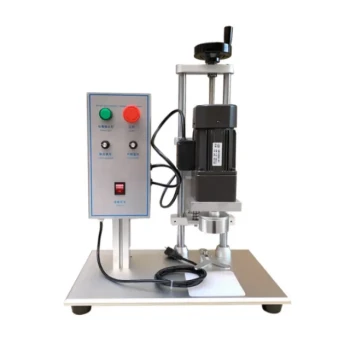
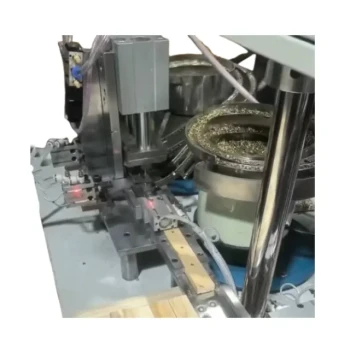
Automation fundamentally stabilizes production quality. By replacing variable manual processes with standardized mechanical operations, automated filling machinery ensures that every single product unit meets precise specifications, effectively eliminating the human error that leads to discrepancies.
The core value of automation lies in operational uniformity; it transforms filling from a variable task into a predictable constant. This consistency not only enhances food safety through reduced contamination risks but can also drive a reduction in customer complaints by as much as 25%.
The Power of Operational Uniformity
Eliminating Process Discrepancies
Manual filling inevitably introduces variation, but automated systems are designed for repetition without deviation.
By adhering to strict programming, these machines ensure that every container receives the exact same volume and treatment. This uniformity is the primary defense against product discrepancies that often result in customer dissatisfaction.
Strengthening Brand Reputation
Reliability builds trust. When a customer opens a product, they expect the same experience every time.
Consistent filling operations protect your brand’s image by ensuring that shelf presence and product volume are identical across batches. Data indicates that companies can reduce customer complaints by up to 25% simply by implementing automation to stabilize these variables.
Technical Mechanisms for Purity and Safety
Integrated Filtration Capabilities
Beyond simple volume control, modern automation often integrates multi-stage filtration systems.
Using apiary production as a technical example, these systems can actively remove physical impurities—such as pest remains or particulate matter—during the filling process. This ensures that the final product remains pure and free from foreign contaminants that could compromise quality standards.
Reducing Environmental Exposure
Speed and precision play a critical role in maintaining chemical stability and hygiene.
Automated filling significantly reduces the contact time between the product and the surrounding air. This minimizes the risk of oxidation and prevents secondary contamination from airborne microorganisms, a critical factor for sensitive products like honey or pharmaceuticals.
Understanding the Trade-offs
High Initial Complexity
While automation solves consistency issues, it introduces setup complexity.
Achieving the precision required for high-quality filling demands rigorous calibration and configuration. If the machine is not set up correctly from the start, it will replicate an error with the same efficiency as it replicates a correct fill.
Maintenance Dependencies
Consistency is not a "set it and forget it" attribute.
To maintain the high standards of purity and precision described above, automated machinery requires regular maintenance and cleaning. Neglecting the filtration systems or mechanical components will eventually degrade the quality of the output.
Making the Right Choice for Your Goal
To determine if automated filling is the right step for your production line, consider your primary objectives:
- If your primary focus is Brand Loyalty: Automate to standardize your packaging presentation, as this consistency is proven to significantly reduce customer complaints.
- If your primary focus is Product Safety: Prioritize machinery with integrated filtration and high-speed filling capabilities to minimize air exposure and contamination risks.
Automation is not just about speed; it is the most reliable method for guaranteeing the integrity of your product.
Summary Table:
| Feature | Manual Filling | Automated Filling | Impact on Quality |
|---|---|---|---|
| Consistency | High variability (human error) | Precise repetition | Eliminates volume discrepancies |
| Contamination Risk | Higher (human contact/exposure) | Low (closed systems/filtration) | Enhances product safety & purity |
| Speed & Exposure | Slower; high air exposure | Rapid; minimized air contact | Prevents oxidation & degradation |
| Error Reduction | Inconsistent batch quality | Up to 25% fewer complaints | Strengthens brand reputation |
| Maintenance | Low technical requirement | High (calibration & cleaning) | Requires routine upkeep for peak performance |
Elevate Your Apiary Production Standards with HONESTBEE
Consistency is the cornerstone of a successful brand. At HONESTBEE, we empower commercial apiaries and distributors with the precision tools needed to dominate the market. From high-speed honey-filling machines with integrated filtration to professional-grade hive-making machinery, our comprehensive wholesale solutions eliminate human error and safeguard your product purity.
Partner with HONESTBEE to:
- Standardize Quality: Reduce customer complaints by up to 25% with uniform filling.
- Scale Efficiency: Access a full spectrum of beekeeping tools and industrial consumables.
- Global Support: Benefit from our expertise in specialized hardware and honey-themed cultural merchandise.
Ready to transform your production line into a model of consistency? Contact our expert team today to discover the perfect automation solution for your business.
Related Products
- Precision Durable Efficient HONESTBEE Rotary Honey Filling Machine
- Pneumatic Paste Filling Machine Bottling Packaging Machine Single Nozzle
- Pneumatic Double Nozzle Honey Filling Bottling Packaging Machine
- Automatic Honey Filling and Filtering Machine for Beekeeping Bottle Filling
- Economy Small Honey Filling Machine Honey Bottle Filler Packaging Machine
People Also Ask
- How do honey filling machines work? Achieve Precision & Speed for Your Apiary
- How do high-precision honey filling machines ensure quality? Optimize Your Commercial Production with HONESTBEE
- How do honey filling and processing machines aid native bee product conservation? Boost Value with HONESTBEE Technology
- What is a key feature of the new generation of the honey filling machine? The Advanced Electronic Control Unit
- What quality control role does professional honey filling equipment perform? Ensure Consistency and Product Stability