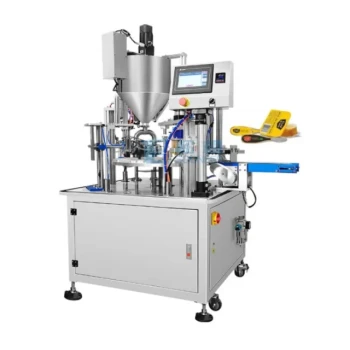
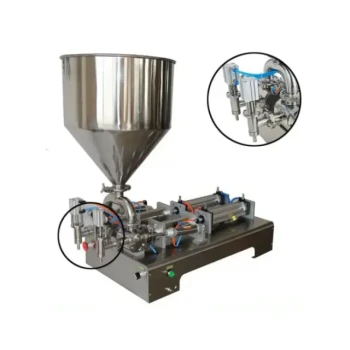
Automated honey-filling machines revolutionize post-processing by utilizing high-precision quantitative systems that ensure every container holds a consistent weight while drastically increasing bottling speed. Compared to manual methods, this technology minimizes spill waste and nearly eliminates the risk of secondary contamination, ensuring production efficiency and strict adherence to hygiene standards.
The Core Insight While speed is the most visible benefit, the true value of automation lies in standardization and preservation. By removing human variability and exposure, these machines transform honey from a raw agricultural harvest into a shelf-stable, professional commodity that meets rigorous safety certifications.
Achieving Commercial Standardization
Eliminating Consistency Errors
Manual filling inevitably leads to variations in net weight, resulting in either product giveaway or non-compliant packaging.
Automated machines utilize high-precision quantitative filling systems, such as gravimetric or volumetric sensors, to ensure strict consistency across all units. This guarantees that every jar meets industry standards for net weight, which is critical for commercial distribution.
From Farm to Market
For an apiary to scale, it must transition its product from a bulk agricultural good into a standardized industrial commodity.
Automation provides the professional consistency required for this shift. By ensuring uniform fill levels and weights, producers improve the marketability of the product and build consumer trust in the brand's reliability.
Hygiene and Bioactive Preservation
The Closed-System Advantage
Manual operations expose honey to the environment, increasing the risk of microbial contamination from human handling or airborne particles.
Automated fillers establish a closed path from storage tanks to packaging, significantly reducing the honey's exposure to ambient air and external contaminants. This mechanical operation effectively eliminates the "human factor" in hygiene security.
Protecting Chemical Integrity
Honey contains oxygen-sensitive bioactive substances, including inhibines, phenolic antioxidants, and vitamins.
By achieving highly hygienic sealing and minimizing air exposure, industrial machines protect these volatile compounds. This ensures the pharmacological stability and sensory quality (aroma and color) of the honey are preserved from the processing floor to the retail shelf.
Operational Efficiency and Waste Reduction
Maximizing Throughput
Manual bottling is a bottleneck that cannot scale linearly with high harvest yields.
Automated machines significantly increase packaging speeds, allowing commercial apiaries to handle high output volumes efficiently. This throughput is essential for reducing labor costs and meeting the demands of large-scale distribution.
Reducing Raw Material Loss
Spills and drips are common in manual processing, leading to a cumulative loss of valuable product.
The precise metering control of automated systems minimizes spill waste. By reducing raw material loss, the operation becomes more cost-effective and environmentally efficient.
Understanding the Trade-offs
Complexity vs. Simplicity
While automation solves volume and consistency issues, it introduces mechanical complexity.
Operators must move from simple manual tools to managing calibration and maintenance of sophisticated equipment. This requires a shift in mindset and potentially new technical skills to ensure the machines remain accurate over time.
Flexibility Limitations
Manual filling allows for instant changes between odd-shaped jars or tiny batches.
Automated systems often require setup time to switch between container sizes or fill volumes. For operations with extremely low volume or constantly changing packaging designs, the setup overhead can sometimes outweigh the efficiency gains.
Making the Right Choice for Your Goal
To maximize the value of your post-processing equipment, align your choice with your specific business objectives:
- If your primary focus is Commercial Scale: Prioritize machines with high throughput and volumetric precision to minimize labor costs and maximize daily output.
- If your primary focus is Product Quality & Certification: Select equipment with closed-system designs to preserve bioactive compounds and ensure the hygiene required for certifications like Geographical Indication (GI).
- If your primary focus is Brand Professionalism: Focus on gravimetric systems that guarantee identical net weights to ensure uniform shelf presence and consumer trust.
Automation is not just about filling jars faster; it is the strategic tool that secures product integrity and enables scalable market growth.
Summary Table:
| Feature | Manual Filling | Automated Filling |
|---|---|---|
| Consistency | High variability; frequent weight errors | High-precision quantitative systems |
| Hygiene | Open exposure; higher contamination risk | Closed-system path; minimal exposure |
| Throughput | Limited by labor; slow and linear | Rapid bottling; scalable for high yields |
| Waste Control | Frequent drips and spills | Precise metering minimizes product loss |
| Integrity | Potential loss of bioactive compounds | Preserves antioxidants and aroma |
Elevate Your Honey Production with HONESTBEE
Transitioning from manual labor to industrial automation is the key to scaling your brand and ensuring product integrity. HONESTBEE specializes in supporting commercial apiaries and distributors with a comprehensive suite of professional beekeeping machinery, including high-precision honey-filling machines and hive-making equipment.
Our solutions are designed to help you meet rigorous safety certifications, eliminate waste, and achieve the professional consistency your customers demand. Whether you are looking for advanced hardware or essential industry consumables, our experts are ready to optimize your workflow.
Ready to modernize your honey processing? Contact us today to explore our wholesale offerings and industrial equipment!
References
- Tomas A. Bustamante, Mary Bammer. Keeping Bees in Florida. DOI: 10.32473/edis-aa264-2016
This article is also based on technical information from HonestBee Knowledge Base .
Related Products
- Fully Automatic Honey Filling Packaging Machine for Processing Line
- Automatic Honey Filling and Filtering Machine for Beekeeping Bottle Filling
- Precision Durable Efficient HONESTBEE Rotary Honey Filling Machine
- Precision Automated Packaging Turntable Honey Spoon Filling Sealing Packing Machine
- Semi Automatic Small Honey Bottle Filling Machine Honey Filler
People Also Ask
- Why are fully automatic honey filling and packaging lines essential? Boost Your Honey's Market Value and Quality
- What is a fully-automatic honey filler? Streamline Your Production with High-Precision Automation
- How do automated honey filling and packaging machines affect profitability? Boost Margins with HONESTBEE Technology
- How do automated honey filling and packaging machines contribute to the market value of honey products? Maximize Your ROI
- How do industrial-grade automated honey filling and packaging machines mitigate the risk of physical contamination?