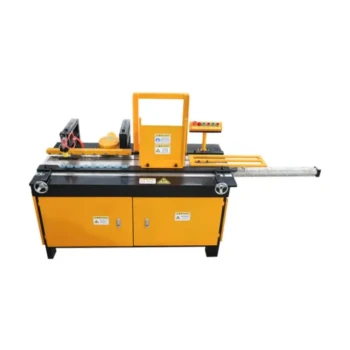
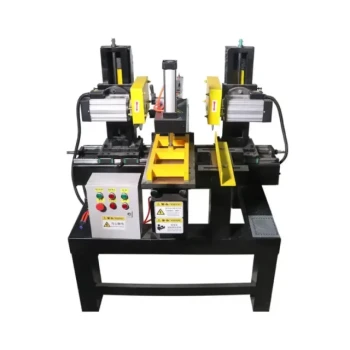
Professional hive-making equipment ensures standardization by strictly controlling the physical dimensions of wooden hives and matching frames to create the precise "bee space" required by Apis cerana. Because this species is highly sensitive to spatial variations, these manufacturing standards are critical for optimizing ventilation and temperature, which directly reduces colony stress and improves breeding success rates.
The Core Connection Scientific rearing of Apis cerana relies on minimizing environmental variables. Professional equipment transforms raw materials into standardized infrastructure, ensuring that every hive offers the exact internal geometry needed to stabilize the colony's microclimate and facilitate non-destructive human intervention.
The Importance of Precise Dimensions
Creating Accurate Bee Space
The primary function of professional equipment is to manufacture components that adhere to exact measurements. For Apis cerana, this often translates to specific dimensions, such as 36cm in length, 18cm in width, and 26cm in height.
This precision creates accurate "bee space"—the critical gap between frames and hive walls. Unlike other species, Apis cerana is intolerant of incorrect spacing; standardized equipment ensures the gap is consistent, preventing the bees from building excessive burr comb or propolizing gaps.
Regulating the Hive Microclimate
Standardized hardware optimizes the internal airflow and thermal regulation of the colony. By maintaining consistent volume and spacing, the equipment helps the bees manage ventilation and temperature control more efficiently.
This environmental stability is vital for reducing stress reactions. When the physical environment is predictable, the colony can focus energy on brood rearing rather than thermoregulation or hive repair.
Facilitating Scientific Management
Enabling the Movable Frame System
Professional equipment produces standardized movable frames that fit perfectly within the hive body. This design allows beekeepers to inspect specific frame positions (typically 5 to 6 frames) without dismantling the nest structure.
Technicians can remove frames to inspect brood combs, honey reserves, and pollen stores without triggering defensive behavior or damaging the hive. This capability is the foundation of modern, scientific colony management.
Dynamic Health Monitoring
The standardization of the hive bottom and frame positioning facilitates the systematic collection of data. Technicians can easily extract samples of larvae, pupae, and adult bees for analysis.
Furthermore, standardized floors allow for the analysis of debris. This enables the monitoring of threats such as Thai Sacbrood Virus, wax moths, and natural predators, permitting early intervention before a colony collapses.
Enhancing Reproductive Success
Precision in Queen Rearing
During artificial queen rearing, the exact dimensions of the hive ensure that queen frames are positioned accurately. This stability allows technicians to perform frequent, high-precision observations of queen cells.
Reducing Disturbance
The multi-layered structure (body, frames, and cover) produced by professional equipment allows for operations like larval grafting to occur with minimal disruption. By minimizing physical vibrations and exposure during these sensitive tasks, the survival rate of artificial queen rearing increases significantly.
Understanding the Trade-offs
The Risk of Material Inconsistency
While professional equipment ensures dimensional accuracy, the quality of the hive is also dependent on the raw material selected. Even a perfectly cut hive will fail if the wood lacks thermal properties; specific woods like Kail, Toon, or Himalayan Cedar are often required for their insulation value.
Dependency on Hardware
Relying on standardized equipment creates a dependency on specific supply chains. If a component breaks, it must be replaced with a part of identical specifications to maintain the "bee space." Using makeshift repairs on a standardized hive can disrupt the internal spacing, leading to the very stress and cross-combing the system was designed to prevent.
Making the Right Choice for Your Goal
To apply these standards effectively, consider your primary objective:
- If your primary focus is Pest and Disease Control: Prioritize hives with standardized bottom boards that facilitate debris collection for monitoring wax moths and viral indicators.
- If your primary focus is Queen Rearing: Ensure your equipment supports exact frame spacing to allow for frequent manipulation of queen cells without crushing bees or rolling the queen.
- If your primary focus is Honey Production: Focus on standardized movable frames that allow for extraction and frame rotation without destroying the brood nest structure.
Standardization is not just about convenience; it is the biological baseline required to transform Apis cerana beekeeping from a foraging activity into a controlled scientific practice.
Summary Table:
| Feature | Standardization Impact | Scientific Benefit for Apis cerana |
|---|---|---|
| Dimensional Accuracy | Precise "Bee Space" (36x18x26cm) | Prevents burr comb and reduces colony stress. |
| Movable Frame System | Uniform frame and hive body fit | Enables non-destructive inspection and management. |
| Microclimate Control | Consistent internal volume | Optimizes ventilation and thermal regulation. |
| Standardized Bottoms | Easy debris and sample access | Facilitates early monitoring of pests and viruses. |
| Component Modularization | Interchangable parts | Enhances queen rearing precision and survival rates. |
Scale Your Apiary with Industrial Precision
At HONESTBEE, we understand that for commercial apiaries and distributors, precision is the difference between a thriving colony and a failing one. Our professional-grade hive-making and honey-filling machines are engineered to deliver the exact standardization required for scientific Apis cerana rearing.
Whether you need to supply a full spectrum of beekeeping tools or require specialized hardware to manufacture your own equipment, HONESTBEE provides the comprehensive wholesale solutions your business deserves. From essential consumables to honey-themed cultural merchandise, we help you bring value and efficiency to your customers.
Ready to elevate your beekeeping production?
References
- Randall Hepburn, Colleen Hepburn. Bibliography of<i>Apis cerana</i>Fabricius (1793). DOI: 10.1051/apido:2006038
This article is also based on technical information from HonestBee Knowledge Base .
Related Products
- High-Efficiency Pneumatic Bee Hive Making Machine for Rapid Box Assembly
- Professional Stainless Steel Pry-Bar Hive Tool
- Professional Multi-Function Stainless Steel Hive Tool
- Stainless Steel J Hook Hive Tool for Beekeeping
- Beehive Handle and Frame Rest Cutting Machine: Your Specialized Hive Machine
People Also Ask
- How does the introduction of professional beehive-making machinery benefit sustainable beekeeping? Scale Your Apiary
- Why is specialized beehive-making machinery critical for low-defense breeding? Enhance Selection with Precision Tools
- How does the introduction of specialized beehive making machinery contribute to increasing the scale of regional beekeeping industries?
- What is the importance of specialized beehive making machinery in a circular bio-economy? Build Local Sustainability
- Why is specialized beehive-making machinery essential? Scale Your Apiary with Precision Industrial Standards