Providing additional hive space effectively prevents swarming by physically expanding the colony's environment to accommodate population growth and resource storage. By adding deep boxes and honey supers, beekeepers enable vertical expansion, which alleviates the congestion that triggers the colony's natural instinct to split and relocate.
Swarming is a biological response to overcrowding; when a colony feels it has outgrown its bounds, it divides. Proactively increasing hive volume neutralizes this trigger, redirecting the colony's energy toward production rather than reproduction.
The Mechanics of Congestion and Relief
The Overcrowding Trigger
During peak productivity seasons, a colony's population expands rapidly. Simultaneously, foragers bring in massive amounts of nectar.
Without sufficient room, the brood nest becomes "honey-bound" (clogged with nectar), leaving no room for the queen to lay eggs. This congestion signals the colony that their home is maxed out, initiating the swarm preparation.
Vertical Expansion
The primary method for alleviating this pressure is vertical expansion. Adding deep boxes or honey supers creates immediate physical volume.
This encourages the bees to move upward into the new space. It draws the population away from the congested brood nest, distributing the bees more evenly throughout the hive structure.
Managing Resource Storage
Space is not just for the bees themselves; it is for their stores. Nectar requires significant space for curing and storage.
By providing empty frames in new supers, you ensure foragers have a place to deposit nectar without encroaching on the queen's laying area in the deep boxes below.
Strategic Methods for Space Management
Reversing Hive Bodies
In late winter or early spring, the cluster is often found in the upper brood box, leaving the bottom box empty. Because bees naturally prefer moving upward into empty space, they may feel crowded at the top even if the bottom is empty.
"Reversing" involves moving the crowded upper box to the bottom and placing the empty box on top. This tricks the colony into perceiving new overhead space, encouraging upward expansion and delaying the swarm instinct.
Enhancing Ventilation and Access
Perceived crowding is also influenced by airflow and traffic jams. Drilling small holes in upper deeps or supers serves a dual purpose.
First, it improves ventilation, reducing the environmental stress of a hot, humid hive. Second, it provides upper entrances for foragers, reducing congestion at the main bottom entrance.
The Role of Queen Excluders
While primarily used to separate brood from honey, queen excluders are part of the expansion system. They allow beekeepers to add honey supers indefinitely above the brood nest without the queen laying eggs in the honey stores.
Understanding the Trade-offs
Space vs. Containment
It is critical to distinguish between managing the urge to swarm and suppressing it with barriers. Methods like clipping a queen's wings or using entrance excluders to trap the queen are generally ineffective long-term strategies.
While these might stop the old queen from leaving, the colony will often swarm anyway with a new virgin queen, or the trapped queen may be harmed. Space management addresses the cause (crowding), whereas containment only fights the symptom.
The Necessity of the Queen
Space alone cannot always override biological imperatives if the queen is failing. Colonies may swarm to replace an old queen regardless of space.
Proactive requeening in the spring can complement space management. A young, vigorous queen is less prone to swarming than an older one, making the added space more effective.
Making the Right Choice for Your Goal
- If your primary focus is maximizing honey production: Add honey supers proactively before the main nectar flow begins to ensure foragers never lack storage space.
- If your primary focus is early spring management: Reverse your hive bodies so the brood nest is at the bottom and empty space is directly above it.
- If your primary focus is reducing hive stress: Drill ventilation holes in upper supers to improve airflow and provide alternative entrances for foragers.
By staying ahead of the colony's growth curve with timely expansion, you turn a potential swarm into a powerful, productive harvest.
Summary Table:
| Method | Action Taken | Primary Benefit |
|---|---|---|
| Vertical Expansion | Adding honey supers/deep boxes | Relieves brood nest congestion & provides nectar storage. |
| Hive Reversing | Moving empty bottom box to the top | Encourages natural upward growth and delays swarm instinct. |
| Upper Entrances | Drilling ventilation/access holes | Reduces traffic jams at the main entrance and lowers humidity. |
| Queen Management | Requeening with young queens | Complements space management by reducing replacement swarms. |
Maximize Your Colony’s Productivity with HONESTBEE
Don't let overcrowding limit your harvest. At HONESTBEE, we empower commercial apiaries and distributors with the professional-grade tools needed to manage hive expansion effectively. From high-capacity honey-filling machines and hive-making machinery to a full spectrum of beekeeping hardware and consumables, our wholesale solutions are designed for scale.
Ready to elevate your beekeeping operation? Contact us today to discover how our comprehensive equipment portfolio can streamline your production and boost your bottom line!
Related Products
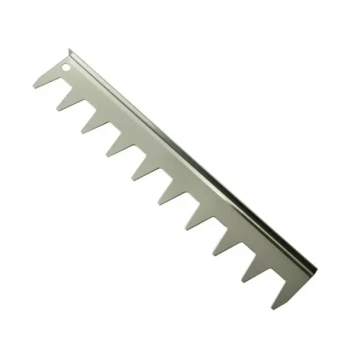
- Stainless Steel 9 Frame Hive Spacer Durable Precise for Commercial Beekeeping
- Durable Plastic Frame Spacer
- Ergonomic Plastic Frame Spacer Tool for Rapid Hive Management Beekeeping
- Professional Large-Format Hive Number Set for Beekeeping
- Durable Plastic Hive Number Set for Beekeeping
People Also Ask
- What is the function of Langstroth frames in comb foundation construction? Optimize Your Apiary's Structural Integrity
- What are the specific dimensions for the wooden parts of Langstroth beehive frames? Precision Guide for All Sizes
- How are Langstroth beehive frames assembled? A Step-by-Step Guide for a Durable Hive
- What is the purpose of Langstroth beehive frames in beekeeping? Key to Professional Hive Management & Scaling
- What is the purpose of Langstroth beehive frames? Unlock the Key to Modern Beekeeping