Filtration is the decisive post-harvest step that determines both the marketability and the biological stability of stingless bee honey. It impacts quality by mechanically eliminating physical contaminants—such as wax, propolis, and pollen—while simultaneously extending shelf life by removing the organic substrates that typically trigger rapid fermentation.
By effectively separating solid impurities and organic residues from the liquid honey, filtration transforms a naturally unstable raw ingredient into a standardized, clear, and food-safe product capable of withstanding long-term storage without spoiling.
Enhancing Visual and Sensory Quality
Achieving Optical Clarity
Raw stingless bee honey often contains a suspension of hive debris.
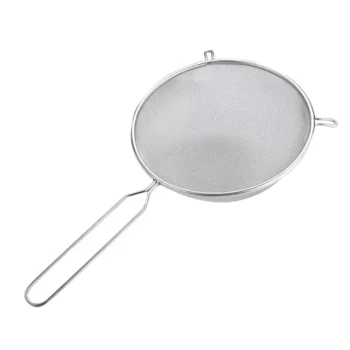
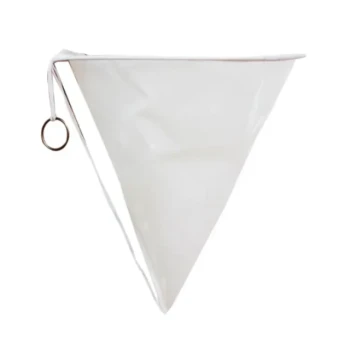
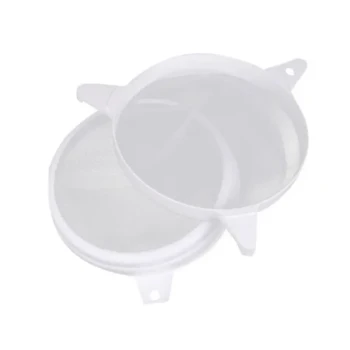
Filtration utilizes specialized equipment to intercept and remove beeswax fragments, bee parts, and larval remains.
This results in a transparent, visually appealing product that meets consumer expectations for high-quality honey.
Refining Texture and Consistency
Beyond visual appeal, the presence of solids like propolis or pollen grains can create a gritty mouthfeel.
Physical screening mechanisms ensure the honey reaches a smooth, uniform texture.
This refinement helps increase the product's premium value, making it suitable for high-end retail channels where sensory consistency is mandatory.
Standardization for Commercial Markets
To enter formal retail channels like supermarkets or pharmacies, honey must meet strict national and international standards.
Filtration removes the variables that cause inconsistency between batches, such as random forest debris or varying levels of particulate matter.
This process ensures color uniformity and purity, allowing the honey to be marketed as a standardized commercial product.
The Science of Shelf Life Extension
Eliminating Fermentation Triggers
Stingless bee honey is naturally unique but notoriously unstable due to higher moisture content compared to Apis mellifera (standard honeybee) honey.
The primary reference notes that filtration removes organic impurities that act as catalysts for fermentation.
By stripping away these fermentation triggers, the process stabilizes the honey, preventing it from souring or spoiling during storage.
Delaying Natural Crystallization
Unfiltered honey contains millions of microscopic particles that serve as "nucleation sites" where sugar crystals begin to form.
High-precision filtration effectively removes these solid impurities.
By reducing the number of nucleation sites, the process delays the natural crystallization process, keeping the honey in a desirable liquid state for a longer period.
Understanding the Trade-offs
Mechanical vs. Biological Stability
While filtration is excellent for physical cleaning, it must be balanced with proper storage.
Filtration stabilizes the honey physically, but because stingless bee honey has high water activity, it remains hygroscopic (absorbs moisture from the air).
Therefore, filtration must be paired with professional sealed storage containers to maintain the stability achieved during processing; filtration alone cannot prevent spoilage if the honey re-absorbs environmental moisture.
Making the Right Choice for Your Goal
The level of filtration you choose should align with your specific commercial objectives and target market.
- If your primary focus is Mass Market Retail: Prioritize multi-stage mechanical filtration to maximize clarity and delay crystallization, ensuring the product remains visually consistent on supermarket shelves.
- If your primary focus is Product Safety: Utilize fine filtration to rigorously remove all larval remains and organic debris, which is the most effective method for minimizing fermentation risks in this moisture-rich honey.
Effective filtration is not just about cleaning the product; it is the essential preservation method that allows stingless bee honey to transition from a local harvest to a globally viable commodity.
Summary Table:
| Impact Factor | Effect of Filtration | Benefit to Product |
|---|---|---|
| Physical Purity | Removes wax, propolis, and hive debris | Enhanced optical clarity and professional appearance |
| Sensory Texture | Eliminates gritty pollen and organic solids | Smooth, uniform mouthfeel for premium markets |
| Fermentation | Strips away organic catalysts | Significantly extended shelf life and biological stability |
| Crystallization | Reduces nucleation sites (micro-particles) | Delays sugaring, keeping honey in a liquid state longer |
| Market Standards | Ensures consistency across batches | Meets strict retail and export purity requirements |
Scaling Your Stingless Bee Honey Production?
As a dedicated partner to commercial apiaries and honey distributors, HONESTBEE understands that the transition from local harvest to global commodity requires the right infrastructure. We offer a comprehensive suite of beekeeping tools, industrial machinery, and specialized honey-processing equipment designed to maximize your product's value.
From honey-filling machines that ensure precision to high-performance filtration hardware, we provide the essential solutions to eliminate fermentation risks and achieve superior clarity. Let us help you standardize your output and grow your wholesale operations.
Ready to elevate your honey quality? Contact HONESTBEE today for expert equipment consultation!
References
- Henny Herwina, Syakira Tiara Rezvi. Potential of Stingless Beekeeping in Community Empowerment Strategy for Building Sustainable Creative Economy in a Forest Farmer Group of Puncak Labuang, Padang City. DOI: 10.25077/jwa.32.3.343-356.2025
This article is also based on technical information from HonestBee Knowledge Base .
Related Products
- Electric Double Wall Honey Filtering Machine Purifier Equipment for Honey Processing Plant
- Professional Stainless Steel Honey Filtering Machine with Water Bath Heating for Beekeeping
- 0.5T Capacity Honey Dehumidifier Dryer with Vacuum Heating and Thickening Filtering Machine
- Professional Stainless Steel Honey Filter with Support Handle
- Honey Concentrating and Filtering Dehumidifier Machine 2T Capacity for Honey
People Also Ask
- What types of equipment are used in honey filtering? Build an Efficient System for Pure, Marketable Honey
- What is the process of filtering honey? A Guide to Clean, Pure, and Market-Ready Honey
- What is the overall importance of using the right equipment in honey filtering? Boost Quality & Marketability
- What role do professional honey harvesting and filtering equipment play in meeting honey market quality standards? Boost ROI
- Why is filtering important in honey processing, and what equipment is used? A Guide to Quality & Efficiency