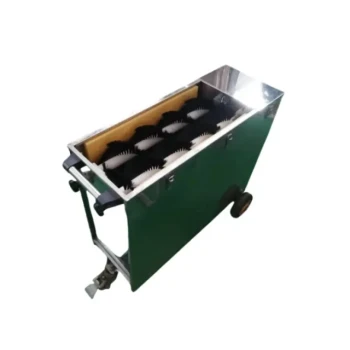
The integration of modern machinery drives profitability by fundamentally shifting the cost structure of large-scale apiaries. By automating labor-intensive processes and standardizing equipment, apiaries reduce the internal cost of production per kilogram of honey while simultaneously increasing output capacity, allowing the business to maintain margins even during periods of market price volatility.
Core Takeaway Technology transforms beekeeping from a labor-intensive craft into a scalable industrial operation. By combining high-efficiency extraction with migratory capabilities, apiaries can lower production costs by nearly 40% while more than doubling overall profitability compared to stationary, manual operations.
Reducing Internal Production Costs
To maximize profit, large-scale operations must decouple output from manual labor hours.
Minimizing Labor Intensity
The primary driver of profitability is the reduction of high-intensity manual labor. Modern automated processing machinery and high-efficiency extraction tools allow fewer operators to process significantly higher volumes of honey. This lowers the wage cost associated with each unit of production.
Achieving Economies of Scale
Technological modernization enables economies of scale. By utilizing industrial-grade equipment, apiaries can expand their colony counts without a proportional increase in overhead. This efficiency creates a buffer against market fluctuations, ensuring competitiveness even when honey prices dip.
The Yield Multiplier of Migratory Equipment
While stationary operations rely on local flora, modern transport equipment unlocks the massive potential of migratory beekeeping.
Surpassing Stationary Yields
Investing in mobile beekeeping equipment, such as transport platforms, allows colonies to follow peak blooming periods. Data indicates that migratory methods can increase per-colony production by 83.1%, reaching yields as high as 94.3 kg.
The Profitability Shift
The impact on the bottom line is drastic. The surge in productivity provided by mobility reduces the production cost per kilogram of honey by approximately 38.6%. Ultimately, this can improve the overall profitability of the apiary by 2.18 times compared to traditional stationary operations.
Standardization and Asset Management
Profitability is also found in the maintenance and longevity of the hardware itself.
Precision and Interchangeability
Modern hive-making machinery allows for the precise processing of hives and frame bars. This ensures high standardization, meaning parts are interchangeable across thousands of colonies. This reduces waste and simplifies the logistics of replacing broken components.
Reducing Hardware Costs
Specialized machinery enables apiaries to produce customized equipment in-house or source standardized parts. This avoids the price premiums associated with finished commercial products and significantly reduces logistics costs. It also ensures that asset replacement keeps pace with rapid colony expansion.
Operational Speed and Safety
Efficiency on the ground translates directly to financial performance.
Eliminating Psychological Barriers
Professional protective gear acts as a productivity tool. By eliminating the fear of stings, operators can perform large-volume hive inspections and precision management tasks much faster. This speed is essential for managing industrial-scale operations.
Non-Destructive Extraction
Modern hives feature removable super designs that allow for honey extraction without damaging the hive structure. This preserves the colony's infrastructure, reducing the energy bees must spend rebuilding and allowing them to focus on honey production.
Understanding the Trade-offs
While the upside is significant, the transition to mechanized beekeeping carries specific risks and costs.
Initial Capital Expenditure
The shift requires substantial upfront investment. Transport platforms, industrial extractors, and hive-making machinery introduce depreciation costs that do not exist in traditional setups. Profitability depends on utilizing this equipment at full capacity to offset these fixed costs.
The Learning Curve
Moving from scattered beekeeping to industrial management requires new skills. Demonstration apiaries are often necessary to bridge the gap between scientific research and practical application, allowing teams to test new processes before fully committing capital.
Making the Right Choice for Your Goal
To apply these insights effectively, align your equipment strategy with your specific operational focus:
- If your primary focus is Maximizing Yield: Prioritize investment in mobile transport platforms to transition from stationary to migratory beekeeping for a potential 2x profit increase.
- If your primary focus is Cost Control: Invest in hive-making machinery to produce standardized components in-house, reducing logistics costs and reliance on expensive finished goods.
- If your primary focus is Labor Efficiency: Implement automated extraction lines and high-quality protective gear to maximize the number of hives a single operator can manage.
True profitability in modern beekeeping is not just about producing more honey; it is about utilizing technology to drastically lower the cost of every kilogram you produce.
Summary Table:
| Optimization Focus | Key Machinery/Equipment | Primary Profit Driver | Impact on Performance |
|---|---|---|---|
| Yield Maximization | Mobile Transport Platforms | Migratory beekeeping access | +83% Yield per colony |
| Labor Efficiency | Automated Extraction Lines | Reduction in manual labor hours | -40% Production costs |
| Cost Control | Hive-making Machinery | In-house part standardization | Reduced logistics & waste |
| Operational Speed | Professional Protective Gear | Faster hive inspections | Higher colony management capacity |
| Asset Longevity | Precision Manufacturing Tools | Interchangeable components | Lower long-term maintenance costs |
Scale Your Apiary Operations with HONESTBEE
Transitioning from a labor-intensive craft to a high-yield industrial operation requires the right hardware. HONESTBEE specializes in empowering commercial apiaries and distributors with the tools needed to maximize margins and achieve true economies of scale.
From industrial-grade honey-filling machines and precision hive-making equipment to professional protective gear and specialized consumables, we provide a comprehensive wholesale portfolio designed for the modern beekeeping industry. Whether you are looking to produce standardized components in-house or upgrade to high-efficiency extraction, our experts are here to help you optimize your cost structure.
Ready to transform your productivity?
Contact HONESTBEE Today to explore our full spectrum of beekeeping machinery and wholesale equipment solutions.
References
- Georgi Aleksiev. The impact of social support on the competitiveness of Bulgarian apiculter after the accession to the Europan Union. DOI: 10.15547/tjs.2015.s.01.028
This article is also based on technical information from HonestBee Knowledge Base .
Related Products
- Stainless Steel J Hook Hive Tool for Beekeeping
- HONESTBEE 15-in-1 Beekeeper Multi-Tool with Hammer and Pliers for Beekeeping
- HONESTBEE Professional Mini J-Hook Hive Tool for Beekeeping
- Multi-Function Plier-Style Frame Grip Hive Tool
- Stainless Steel Honey Bee Smoker Hive and Honeycomb Smoker for Beekeeping
People Also Ask
- What specific challenges do beekeeping hive tools address during hive maintenance? Essential Solutions for Apiaries
- What is a J-hook hive tool and why is it favored by some beekeepers? Master Gentle Frame Handling
- What are the features of a J-hook hive tool? Effortlessly Lift Frames with Superior Leverage
- What is the purpose of the J-hook hive tool? Effortlessly Lift Frames with Superior Leverage
- How is a J-hook hive tool designed and what is its primary use? Master Effortless Hive Inspections