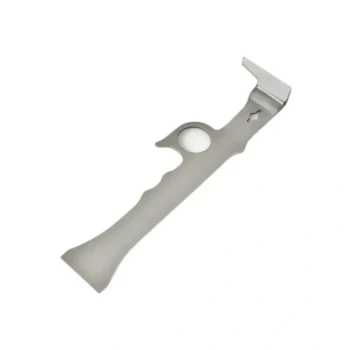
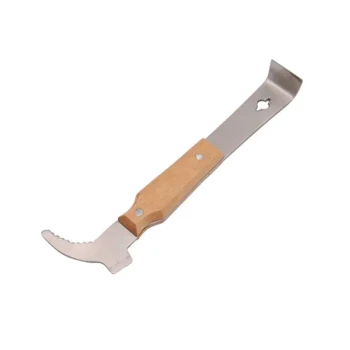
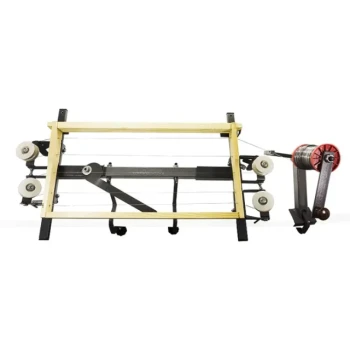
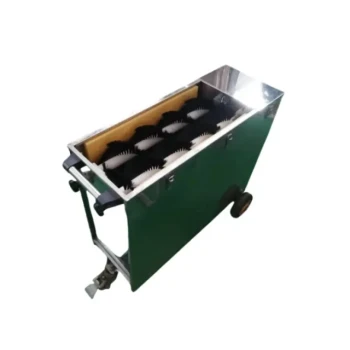
The absence of professional beekeeping tools directly degrades production efficiency by necessitating crude harvesting methods that physically damage the hive. Without specialized equipment such as extractors, uncapping knives, and protective gear, the harvesting process disrupts the colony, lowers product quality, and significantly increases the energy burden on the bees.
Core Takeaway Lacking professional equipment creates a cycle of inefficiency where harvesting becomes a destructive rather than a maintenance activity. This forces the colony to divert biological resources from honey production to hive repair, while simultaneously inflating human labor costs and limiting the economic viability of the operation.
The Biological Impact on Colony Efficiency
Structural Damage and Energy Loss
Without professional tools like uncapping knives and centrifugal extractors, harvesting often involves cutting or crushing the honeycomb. This crude approach destroys the intricate wax structures the bees have built.
Consequently, bees must consume significant amounts of honey—their primary energy source—to secrete wax and rebuild the comb. This diverts the colony's energy away from gathering nectar and producing new honey, directly reducing the total yield.
Colony Stress and Health Decline
The lack of protective suits and smokers prevents beekeepers from managing the hive calmly and safely. This leads to increased colony disturbance during inspections and harvests.
High stress levels disrupt normal colony behavior and can weaken the bees' overall health. Professional management machinery allows for scientific precision in monitoring, ensuring the colony remains strong enough to maintain consistent production cycles.
The Economic Impact on Operations
Increased Labor Intensity
Manual harvesting without mechanical extractors is incredibly labor-intensive and time-consuming. This slows down the operational cycle, making it difficult to complete harvests before seasonal changes occur.
By failing to utilize modern extraction tools, the labor cost per unit of honey rises significantly. This inability to control labor input makes the final product less price-competitive in the global market.
Inability to Leverage Migratory Opportunities
A lack of specialized transport machinery and portable hive units restricts a beekeeper to a single location. Professional operations use mobile equipment to relocate colonies based on regional blooming periods.
Without this mobility, beekeepers cannot chase seasonal floral cycles. This results in a lower "honey collection capacity" per hive, as the colony is limited to the forage available in one static area.
Wasted By-Product Revenue
Professional processing equipment allows for the efficient recovery and refinement of beeswax. Without this machinery, raw wax is often discarded or processed inefficiently.
This represents a loss in total factor productivity. Proper tooling converts waste into commercially valuable products, expanding the apiary's output without requiring additional bee colonies.
Understanding the Trade-offs
While professional equipment maximizes efficiency, it introduces specific challenges regarding capital allocation.
High Initial Capital Expenditure
The primary "downside" to professional tooling is the significant upfront investment required for machinery, specialized vehicles, and processing plants. For a hobbyist or a very small-scale producer, the cost of a high-efficiency extraction line may outweigh the marginal gain in honey yield.
Maintenance and Technical Barriers
Advanced equipment requires maintenance and technical knowledge to operate correctly. Relying heavily on mechanization introduces a dependency on hardware; if a critical extractor fails without a backup, the harvest window can be missed entirely.
Making the Right Choice for Your Goal
To solve the efficiency problem, you must align your equipment investment with your specific production targets.
- If your primary focus is Commercial Volume: Prioritize mechanical extractors and mobile transport equipment to reduce labor costs and chase peak floral blooms.
- If your primary focus is Organic Quality: Invest in precision management tools and stainless steel processing equipment to ensure high purity and minimize colony stress.
- If your primary focus is Startup Cash Flow: acquire essential protective gear and basic extraction tools immediately to minimize hive damage and accelerate the path to profitability.
The most efficient apiaries view tools not as luxuries, but as essential assets that protect the colony's energy and the beekeeper's time.
Summary Table:
| Impact Factor | Without Professional Tools | With HONESTBEE Professional Equipment |
|---|---|---|
| Hive Integrity | Comb destruction during harvest; high energy loss for repairs. | Precision extraction preserves comb structure for reuse. |
| Colony Stress | High disturbance leads to lower health and productivity. | Smoker and protective gear ensure calm, scientific management. |
| Labor Efficiency | Manual, time-consuming harvesting; high labor costs. | Mechanical extractors and machinery accelerate production cycles. |
| Yield Potential | Limited to static forage and inefficient wax recovery. | Migratory equipment and refining tools maximize all by-products. |
| Market Position | High per-unit cost; low price competitiveness. | Scalable, efficient operations with higher profit margins. |
Scale Your Apiary Operations with HONESTBEE
Don't let inefficient tools bottleneck your production. At HONESTBEE, we empower commercial apiaries and distributors with high-performance beekeeping solutions designed to maximize every harvest. From precision hive-making and honey-filling machines to a full range of specialized hardware and industry consumables, we provide the tools you need to reduce labor costs and protect your colony's health.
Ready to elevate your honey and beeswax production? Contact HONESTBEE Today to explore our wholesale machinery and cultural merchandise tailored for professional growth.
References
- Yaregal Shiferaw, Oljira Kenea. Honey Bee Colony Absconding and Associated Risk Factors Facing Beekeepers in Bure Zuria Woreda, North Western Ethiopia. DOI: 10.7176/jbah/10-22-02
This article is also based on technical information from HonestBee Knowledge Base .
Related Products
- HONESTBEE Professional Mini J-Hook Hive Tool for Beekeeping
- Professional 600D Oxford Cloth Beekeeping Tool Bag with 8 Pockets and Elastic Loops
- Stainless Steel J Hook Hive Tool for Beekeeping
- HONESTBEE Classic Pry Bar Hive Tool with High Visibility Finish for Beekeeping
- HONESTBEE Advanced Ergonomic Stainless Steel Hive Tool for Beekeeping
People Also Ask
- What specific challenges do beekeeping hive tools address during hive maintenance? Essential Solutions for Apiaries
- What is the recommended method for storing beekeeping tools? Expert Vertical Storage Solutions for Your Apiary
- Why is the treatment of beekeeping tools with high-concentration chemical disinfectants necessary for preventing AFB?
- How does a favorable microclimate interact with beekeeping tools? Boost Overwintering Success and Equipment Longevity
- What is a J-hook hive tool and why is it favored by some beekeepers? Master Gentle Frame Handling