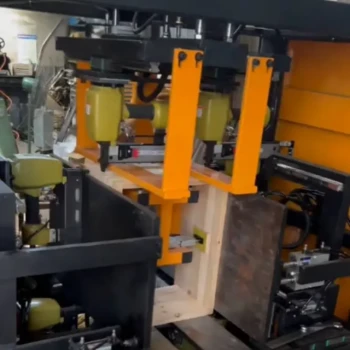
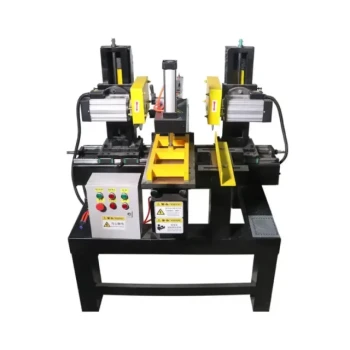
The transition from traditional beekeeping to a modern commercial operation is driven by the strategic application of industrial machinery. The core role of this hardware is to decouple production limits from manual labor, allowing apiaries to achieve the high-efficiency standardization required for international competitiveness. By mechanizing critical tasks—from hive construction to honey extraction—these tools stabilize production environments and drastically reduce the operational costs per colony.
The Essential Shift To scale beyond hobbyist levels, an apiary must move from treating each hive as a unique project to managing colonies as a standardized system. Industrial machinery provides the physical infrastructure to execute this shift, transforming variable biological processes into a predictable, scalable business model.
The Pillars of Commercial Scalability
Enforcing Standardization
In a manual operation, slight variations in equipment are manageable. In a large-scale commercial apiary, they are a bottleneck. Industrial-grade manufacturing machinery ensures that every hive component—from frames to covers—is structurally identical.
This uniformity ensures interchangeability. A frame from Hive A fits perfectly into Hive B, and both fit seamlessly into automated extraction lines.
This standardization significantly speeds up daily quarantine inspections and improves loading efficiency during migratory beekeeping, where time is a critical resource.
Mass Production of Infrastructure
Scaling an apiary requires rapid asset expansion. Industrial hive-making machinery allows for the mass production of uniform beehive components at a speed impossible for manual labor.
This capability reduces the acquisition cost of individual hive units. It also simplifies long-term maintenance, as standardized parts make replacement straightforward and modular.
Optimizing Downstream Integration
The role of hardware extends beyond the hive. Standardized equipment specifications enable seamless integration with automated processing machinery.
Uniform frames and supers allow honey extractors and filling machines to operate without jamming or requiring manual adjustments. This creates a continuous, efficient workflow from the field to the final packaged product.
Operational Efficiency and Economic Impact
Reducing Labor Intensity
Managing high-density operations (often exceeding 150 colonies) creates a workload that is unsustainable with manual methods alone.
Mechanization takes over the heavy lifting and repetitive tasks. This reduction in labor intensity allows a smaller team to manage a significantly larger number of colonies effectively.
Maximizing Resource Utilization
Research suggests that many non-mechanized apiaries operate at roughly 46% economic efficiency.
By precisely configuring production tools, operators can reduce resource input by up to 54% while maintaining output. Specialized hardware addresses the "low efficiency" issues caused by improper resource allocation, ensuring capital is fully utilized.
Risk Mitigation and Quality Control
Stabilizing the Environment
Industrial equipment provides a more controlled environment for bee colonies compared to ad-hoc housing.
High-quality, consistent housing mitigates environmental risks and fluctuations in climate. This infrastructure is essential for maintaining production stability when external conditions are unpredictable.
Hygiene and Disease Management
Automated machinery supports precise hygiene management.
By standardizing housing and processing, operators can better control disease vectors and maintain high sanitary standards. This lowers the risk of colony loss and ensures the consistency of by-products like bee venom, pollen, and propolis.
Understanding the Trade-offs
High Initial Capital Expenditure
The transition to industrial machinery requires significant upfront investment. While unit maintenance costs drop over time, the initial acquisition of hive-making machines and automated lines serves as a barrier to entry.
Operational Rigidity
Standardization creates efficiency, but it also creates rigidity. Once an apiary commits to a specific industrial standard or machinery specification, changing course becomes expensive. It requires a commitment to a specific system of management.
Making the Right Choice for Your Goal
To successfully transition to a commercial scale, align your machinery investment with your immediate bottleneck.
- If your primary focus is rapid expansion of colony count: Prioritize industrial hive-making machinery to lower the unit cost of new infrastructure and ensure modular consistency.
- If your primary focus is increasing profit margins on existing hives: Prioritize automated processing and extraction hardware to reduce labor hours and eliminate bottlenecks during harvest.
Success in modern apiculture is no longer just about biology; it is about building a mechanized ecosystem that allows biological assets to thrive at scale.
Summary Table:
| Key Role | Primary Benefit | Impact on Scalability |
|---|---|---|
| Enforcing Standardization | Ensures uniform components and interchangeability | Accelerates inspections and migratory logistics |
| Infrastructure Production | Rapid mass-manufacturing of hive units | Lowers acquisition costs and enables fast expansion |
| Labor Mechanization | Decouples production limits from manual labor | Allows smaller teams to manage 150+ colonies |
| Downstream Integration | Seamless connection to extraction/filling lines | Creates a continuous workflow from hive to bottle |
| Risk Mitigation | Controlled housing and hygienic environments | Stabilizes production and improves disease control |
Revolutionize Your Beekeeping Operation with HONESTBEE
Transitioning to a large-scale commercial apiary requires more than just biological expertise—it demands a robust industrial infrastructure. HONESTBEE specializes in empowering commercial apiaries and distributors with the tools needed for global competitiveness.
Why Partner with HONESTBEE?
- Comprehensive Wholesale Range: From specialized hive-making and honey-filling machines to a full spectrum of beekeeping tools and hardware.
- Scalable Solutions: We provide the industrial machinery and consumables necessary to standardize your operations and maximize resource utilization.
- Expert Support: Our portfolio covers everything from heavy-duty equipment to honey-themed cultural merchandise, ensuring every facet of your business is supported.
Ready to eliminate your production bottlenecks and reduce operational costs? Contact HONESTBEE today to explore our wholesale offerings and industrial solutions tailored for modern apiculture.
References
- Agnieszka Borowska. Produkcja, konsumpcja i handel zagraniczny miodem w Polsce w latach 2004-2015. DOI: 10.22630/rnr.2016.103.4.41
This article is also based on technical information from HonestBee Knowledge Base .
Related Products
- Automatic Honey Filling and Filtering Machine for Beekeeping Bottle Filling
- Stainless Steel J Hook Hive Tool for Beekeeping
- Stainless Steel Honey Bee Smoker Hive and Honeycomb Smoker for Beekeeping
- Durable Galvanized Steel Frame Grip
- Professional Bee Smoker with Elongated Spout and Durable Bellows for Beekeeping
People Also Ask
- What process advantages do professional honey filtering and filling machines provide? Optimize Your Organic Honey Output
- How do honey filling and filtering machines increase product value? Turn Raw Honey into Premium Export-Grade Goods
- How do honey filtration and filling machinery contribute to industrialization? Scale Your Commercial Honey Production
- What specific issues do industrial filtration and automated filling machinery address? Ensure Honey Quality & Compliance
- How does the use of professional honey filtration and filling machinery facilitate international honey exports?