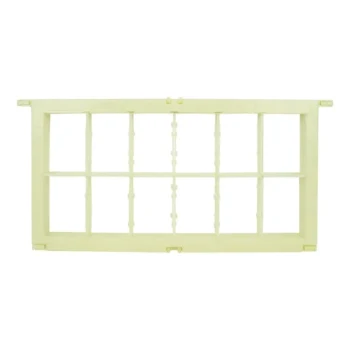
The removal and freezing of drone comb frames is a mechanical strategy that effectively turns the biological instincts of the Varroa mite against itself. By placing specialized frames with larger cell patterns in the hive, beekeepers encourage the production of drone brood, which acts as a "bait" to trap mites. Once the cells are capped, the frames are removed and frozen for 24 hours, physically killing the parasites trapped inside before they can emerge and spread.
Core Takeaway This method exploits the Varroa mite's strong biological preference for drone brood to concentrate a significant portion of the parasite population into specific frames. By freezing these frames before the drones emerge, beekeepers can lower the mite baseline and slow population growth without relying on synthetic chemical treatments.
The Biological Mechanism
Exploiting Mite Preferences
Varroa mites exhibit a distinct biological preference for reproducing within drone brood (male bee larvae) rather than worker brood. Research indicates that drone cells are approximately 10 to 12 times more attractive to mites.
The "Bait" Principle
The specialized frames used in this method feature a foundation pattern with larger cells. This encourages the queen to lay unfertilized eggs, which develop into drones. Because drones require a longer development time than workers, they offer mites a more stable environment for reproduction, causing the parasites to naturally congregate in these specific cells.
The Execution Process
Trapping the Mites
As the drone larvae develop, female Varroa mites enter the cells just before the worker bees seal them. The bees then cap the cells with wax, inadvertently trapping the mites and their future offspring inside the "bait" frame.
The Freeze Phase
Once the drone brood is fully capped—but before the adult drones emerge—the beekeeper removes the entire frame. It is then placed in a freezer for 24 hours. This step is critical; the extreme cold penetrates the capped cells and kills both the developing drone pupae and, more importantly, every mite trapped inside.
Understanding the Trade-offs
Timing is Critical
This method requires strict adherence to a schedule. If the beekeeper fails to remove the frame before the drones emerge, they will release a massive population of mites back into the colony. In this scenario, the "trap" becomes a breeding ground that worsens the infestation.
Resource Costs to the Colony
Producing drone brood requires significant energy and resources from the colony. By freezing the comb, you are effectively destroying the colony's investment in that brood. While necessary for mite control, this does place a metabolic tax on the hive.
Not a "Silver Bullet"
Drone brood removal is a suppression tool, not an eradication method. It significantly slows the growth rate of the Varroa population, but it generally cannot eliminate the mites entirely. It is best used as part of a broader management strategy.
Making the Right Choice for Your Goal
This method is highly effective for specific management styles but may not suit every apiary.
- If your primary focus is Chemical-Free/Organic Beekeeping: This is an essential tool, allowing you to physically remove parasites without contaminating wax or honey with synthetic residues.
- If your primary focus is Low-Maintenance Management: This method may be risky, as it requires precise timing and frequent hive inspections to ensure frames are removed before drones hatch.
- If your primary focus is Integrated Pest Management (IPM): Use this method early in the season to keep mite numbers low, delaying the need for stronger interventions until later in the year.
Ultimately, drone comb removal is a powerful biological lever that allows you to manage pest loads by sacrificing a small portion of brood to save the colony.
Summary Table:
| Aspect | Details |
|---|---|
| Biological Basis | Varroa mites are 10-12x more attracted to drone brood than worker brood. |
| The "Trap" | Specialized larger cell frames encourage the queen to lay drone eggs. |
| Critical Step | Freeze frames for 24 hours after capping but before drones emerge. |
| Main Advantage | Reduces mite baseline without chemical residues in wax or honey. |
| Key Constraint | Requires precise timing; late removal can increase mite populations. |
Scale Your Apiary Success with HONESTBEE
Managing Varroa mites is just one part of a successful operation. At HONESTBEE, we empower commercial apiaries and distributors with the professional-grade tools needed to thrive. From high-precision drone comb frames to advanced honey-filling machines and specialized hardware, our comprehensive wholesale offering is designed to enhance your efficiency and colony health.
Why partner with HONESTBEE?
- Full Spectrum Supply: We provide everything from essential consumables to industrial beekeeping machinery.
- Commercial Expertise: Tailored solutions for large-scale operations and global distributors.
- Beyond the Hive: Explore our unique honey-themed cultural merchandise to diversify your retail portfolio.
Ready to elevate your beekeeping business? Contact us today to explore our wholesale catalog!
Related Products
- Heart-Shaped Comb Honey Frame and Honeycomb Cassette
- Professional Sectional Comb Honey Frame with 250g Cassette System for Beekeeping
- Plastic Honey Comb Frames Cassette Box for Honey
- Professional Frame Comb Fork and Lifter for Efficient Handling
- Assembled Wooden Bee Frames with Beeswax Foundation Ready to Use by HONESTBEE
People Also Ask
- How are honeybee combs utilized for non-destructive colony monitoring? Master Population Density Tracking
- What is a honeycomb frame? The Key to Modern, Sustainable Beekeeping
- What is the technical purpose of exchanging honeycomb frames? Master Apiary Equalization for Growth
- What frame to use for honeycomb? Choose the Right System for Pure, Edible Comb
- What is the significance of sampling honeycomb frames and hive bottoms? A Guide to Scientific Sanitation Monitoring