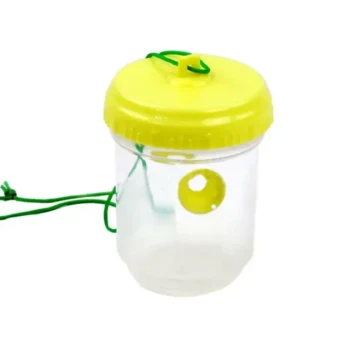
The size of the entrance aperture acts as the primary physical filter in the hornet capture process. While a larger opening facilitates the entry of large-bodied invasive hornets, thereby increasing potential capture rates, it creates a direct pathway for non-target species. Widening the aperture removes the mechanical barrier that protects local biodiversity, leading to higher rates of bycatch.
Optimization is a balancing act: Expanding the entrance size to maximize invasive hornet capture comes at the direct cost of ecological selectivity. A precise aperture is required to admit the target pest while mechanically excluding protected native species.
The Dynamics of Capture Efficiency
Increasing Target Accessibility
The primary motivation for increasing aperture size is to accommodate the physical dimensions of large-bodied invasive hornets.
If the entrance is too narrow, the target species cannot physically enter the trap, rendering it ineffective regardless of the bait used. A larger opening removes this friction, theoretically allowing for a higher volume of target captures.
Throughput and Traffic
A wider aperture reduces the navigation difficulty for the insect.
This allows for easier entry, which can be beneficial in areas with high densities of invasive hornets where maximizing immediate removal is the priority.
The Ecological Impact of Aperture Geometry
The Risk to Native Species
The reference highlights that selectivity is inversely correlated with aperture size.
As the entrance widens, it permits the entry of protected local species. This undermines the environmental goal of trapping, as the trap becomes a hazard to the very ecosystem it is meant to defend.
Vulnerability of Large Beetles
Large beetles are specifically cited as a group at risk when aperture specifications are loose.
Because beetles often share similar size profiles with hornets, an optimized entrance is the only passive defense against trapping them. Oversized apertures eliminate this safeguard.
Understanding the Trade-offs
The Efficiency vs. Selectivity Conflict
There is no "perfect" size that maximizes capture while completely eliminating bycatch; there is only an optimal compromise.
Pushing for maximum eradication efficiency by opening the aperture invariably degrades the trap's ability to filter out non-targets.
The Cost of Poor Optimization
Failing to optimize geometric specifications can lead to counterproductive results.
While you may catch more invasive hornets, the collateral damage to local populations (bycatch) can negate the conservation benefits of the trapping effort.
Making the Right Choice for Your Goals
To determine the ideal aperture strategy, you must weigh the severity of the infestation against the sensitivity of the local environment.
- If your primary focus is aggressive eradication in a monoculture: You may lean toward a slightly more permissive aperture to ensure no invasive hornets are excluded, acknowledging a higher risk of bycatch.
- If your primary focus is biodiversity conservation: You should prioritize a strictly optimized, smaller aperture that maintains high selectivity to protect native species, even if it slightly reduces the total catch of invasive hornets.
Ultimately, the entrance geometry must be treated as a precision tool, not a simple doorway.
Summary Table:
| Factor | Small/Optimized Aperture | Large/Permissive Aperture |
|---|---|---|
| Target Capture | Highly selective; admits specific hornets | High volume; easier entry for all hornets |
| Bycatch Risk | Low; mechanically excludes native species | High; permits entry of large beetles and bees |
| Ecological Impact | High conservation value; protects biodiversity | Potential for significant collateral damage |
| Best Use Case | Biodiversity conservation & sensitive areas | Aggressive eradication in high-density areas |
Elevate Your Beekeeping with HONESTBEE’s Professional Solutions
Protecting your commercial apiary from invasive species requires more than just tools—it requires precision-engineered equipment. At HONESTBEE, we specialize in supporting commercial apiaries and distributors with a comprehensive range of high-quality wholesale beekeeping supplies. From specialized hive-making and honey-filling machinery to essential industry consumables and honey-themed merchandise, we provide the full spectrum of equipment needed to safeguard your colonies and scale your operations.
Whether you are looking to optimize your pest management or expand your distribution portfolio, our team is ready to deliver the hardware and expertise your business deserves.
Contact HONESTBEE today to discuss your wholesale needs
References
- Sandra V. Rojas‐Nossa, Josefina Garrido. Comparison of Effectiveness and Selectiveness of Baited Traps for the Capture of the Invasive Hornet Vespa velutina. DOI: 10.3390/ani14010129
This article is also based on technical information from HonestBee Knowledge Base .
Related Products
People Also Ask
- What are the design principles and advantages of pollen traps in the collection of bee pollen? Boost Your Apiary Yield
- Why is frequent harvesting of bee pollen from traps necessary for quality control? Ensure Freshness and Prevent Mold.
- How often should bee pollen be harvested from a trap and why? Master Freshness and Prevent Spoilage
- What function do pollen traps serve in quantitative collection? Boost Your Apiary's Data & Production Efficiency
- What is the primary function of bee pollen traps? Optimize Your Pollen Harvest with Advanced Extraction Efficiency