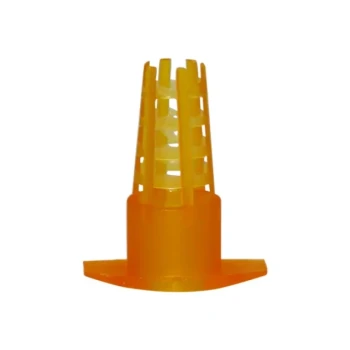
A spiral wire protector is designed to shield a queen cell while allowing essential interaction with the hive environment. To use it effectively, you must manually expand the coil to create specific gap sizes, anchor the device securely to the comb, and modify the surrounding honeycomb to ensure the queen remains warm.
The success of this method relies on creating space for nurse bees. You must crush adjacent worker cells to allow bees to cluster around the protector, ensuring they can maintain the incubation temperature required for the queen's survival.
Preparing the Protector Components
Adjusting the Coil Tension
Before installation, the wire coil requires manual adjustment. You must pull the coil out slightly to expand it.
The goal is to create even gaps between the rings. These gaps should remain smaller than the thickness of the wire itself to ensure structural integrity while permitting environmental exposure.
Evaluating the Base
The protector consists of the wire coil and a square tinplate. This plate is designed to slide between the cell and the comb to provide bottom support.
However, using the tinplate is not strictly necessary if the queen cell is already built on a substantial, sturdy base. In such cases, the coil alone may suffice.
Installation and Environmental Control
Anchoring to the Comb
Once the cell is positioned inside the coil, use the wire stub attached to the protector to secure it.
Embed this stub firmly into the wax of the comb. This prevents the protector from shifting or falling as bees move across the frame.
Ensuring Proper Incubation
The most critical aspect of using a spiral protector is thermal regulation. The wire cage prevents direct contact, which can isolate the queen from the cluster's heat.
To solve this, you must crush several worker cells immediately surrounding the protector. This clears physical space, allowing a density of worker bees to cluster directly on and around the wire cage to maintain the necessary warmth.
Common Pitfalls to Avoid
Preventing Mechanical Shock
Queen pupae are highly sensitive to movement and vibration. When installing the protector or sliding the tinplate, you must work with extreme gentleness.
Do not rattle the queen cell within the protector. Any jarring motion against the hard wire or tinplate can damage the developing queen inside.
Making the Right Choice for Your Goal
When utilizing spiral wire protectors, prioritize your specific environmental conditions:
- If your primary focus is structural stability: Ensure you slide the square tinplate beneath the cell if the wax base feels thin or fragile.
- If your primary focus is temperature regulation: Aggressively clear space by crushing nearby worker cells to ensure nurse bees can envelope the wire cage.
Proper spacing and careful handling are the keys to a viable queen.
Summary Table:
| Step | Action | Key Requirement |
|---|---|---|
| Preparation | Adjust Coil Tension | Gaps must be smaller than wire thickness |
| Assembly | Install Base Plate | Optional; use if cell base is thin or fragile |
| Installation | Secure Wire Stub | Embed firmly into the comb wax for stability |
| Incubation | Clear Surrounding Cells | Crush worker cells to allow nurse bee clustering |
| Safety | Handle Gently | Avoid mechanical shock or rattling of the pupae |
Maximize Your Apiary Productivity with HONESTBEE
At HONESTBEE, we specialize in supporting commercial apiaries and beekeeping distributors with high-quality, professional-grade equipment. Whether you are scaling up queen rearing or streamlining honey production, we provide the tools you need to succeed.
Our comprehensive wholesale range includes:
- Beekeeping Tools: Precision equipment like spiral protectors, grafting tools, and protective gear.
- Machinery: Industrial-grade hive-making and honey-filling machines for maximum efficiency.
- Consumables: A wide array of essential industry supplies to keep your operation running smoothly.
- Merchandise: Unique honey-themed cultural products to enhance your brand's reach.
Partner with a supplier that understands the complexities of large-scale beekeeping. Let us help you optimize your yields and grow your business.
Related Products
- JZBZ Style Shipping Cell Protector for Queen Rearing Kit
- JZBZ Style Push-In Cell Protector for Professional Queen Rearing Kits
- Premium Wood Framed Metal Wire Queen Bee Excluder
- Premium Nicot Style Cell Bar Holder and Queen Cell Cup Holder System
- JZBZ Langstroth Queen Rearing Frame for Beekeeping
People Also Ask
- What is the purpose of queen cell protectors? Safeguard Your Queen Rearing Success
- How can aluminum foil be used to protect a queen cell? Low-Cost Shielding for Queen Introduction
- What are some methods and types of queen cell protectors? Safeguard Your Queen Introduction Process
- What is the primary reason for using queen cell protectors? Secure Your Yield with Proven Protection
- What is the role of queen cell protectors and emergence cages? Secure Your Genetic Stock and Hive Stability