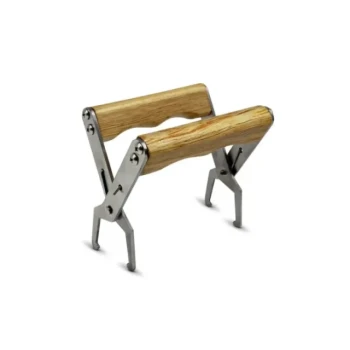
Professional monitoring equipment serves as a critical geospatial filter for organic integrity. It is utilized to rigorously map the distribution and spread of nectar-producing plants across specific geographic regions. By leveraging this technology, apiary managers can pinpoint undisturbed or abandoned lands that are verifiable "green nectar bases," ensuring the final honey product is free from pesticide residues.
The core value of this technology lies in site selection transparency. It transforms the search for organic honey sources from a guessing game into a precise science, identifying isolated landscapes that are naturally shielded from agricultural chemicals.
Strategic Landscape Mapping
Tracking Floral Distribution
To manage large-scale nectar sources, professionals use monitoring equipment to analyze the spread of specific flora. This allows managers to visualize exactly where nectar-producing plants are thriving within a given region.
Identifying Undisturbed Zones
The equipment is specifically calibrated to locate undisturbed lands. These are areas that have not been subjected to recent human development or industrial agriculture. By highlighting these zones, managers can distinguish between safe wildlands and potentially contaminated farmlands.
Locating Abandoned Areas
Beyond wildlands, the technology identifies abandoned areas. These parcels of land often revert to a natural state, providing rich floral diversity without the chemical inputs associated with active farming.
Ensuring Organic Quality
Avoiding Pesticide Residues
The primary threat to organic honey is cross-contamination from foraging bees. Monitoring equipment mitigates this by validating that selected sites are sufficiently distant from conventional agriculture. This ensures the nectar source is free from pesticide residues.
Establishing Green Nectar Bases
By combining floral data with land-use data, managers establish "green nectar bases." These are designated zones certified as safe for organic production. This precise selection process is the foundation of high-quality organic honey.
Understanding the Constraints
The Difference Between Identification and Control
While equipment can identify potential sites, it cannot physically control the flight path of a bee. Monitoring provides the data to make a safe choice, but it does not physically restrict bees if the buffer zones are miscalculated.
Reliance on Data Accuracy
The quality of the honey is only as good as the data provided by the monitoring equipment. If the mapping of "undisturbed" land is outdated or fails to account for recent chemical drifts, the organic status of the nectar base could be compromised.
Making the Right Choice for Your Goal
To effectively utilize monitoring equipment for apiary management, consider your specific objectives:
- If your primary focus is Scale: Prioritize equipment that can map floral distribution over vast geographic regions to identify the largest density of nectar sources.
- If your primary focus is Organic Certification: Use the technology to strictly identify abandoned or undisturbed lands that offer a verified buffer against pesticide residues.
Technology is the bridge that connects wild, untreated landscapes to the consumer's table, ensuring purity through precision.
Summary Table:
| Feature | Function in Organic Management | Impact on Honey Quality |
|---|---|---|
| Floral Mapping | Tracks distribution of nectar-producing plants | Ensures consistent and high-volume nectar supply |
| Site Calibration | Identifies undisturbed and abandoned lands | Eliminates risk of pesticide and chemical residues |
| Buffer Validation | Measures distance from industrial agriculture | Maintains organic certification standards |
| Data Analytics | Creates verifiable 'Green Nectar Bases' | Provides site selection transparency and traceability |
Elevate Your Apiary Operations with HONESTBEE
Are you a commercial apiary or distributor looking to secure your supply chain and guarantee organic purity? HONESTBEE is your strategic partner in professional beekeeping. We provide more than just tools; we deliver the infrastructure for success.
Our comprehensive wholesale portfolio includes:
- Industrial Machinery: High-capacity hive-making and honey-filling machines.
- Precision Equipment: Specialized hardware designed for large-scale nectar management.
- Full-Spectrum Supplies: From essential industry consumables to unique honey-themed cultural merchandise.
Whether you are scaling your production or seeking to verify the integrity of your nectar bases, HONESTBEE offers the technical expertise and equipment you need to thrive in the competitive honey market.
Contact HONESTBEE today to optimize your commercial honey production!
References
- Edita Štefanić, Dragan Bubalo. Goldenrod: a valuable plant for beekeeping in north-eastern Croatia. DOI: 10.1080/0005772x.2003.11099581
This article is also based on technical information from HonestBee Knowledge Base .
Related Products
- Premium Frame Grip with Ergonomic Wood Handles
- Precision Honey Refractometer Instrument for Quality Assessment
- HONESTBEE Professional Telescopic Pole Bee Swarm Catcher
People Also Ask
- What is a frame grip and how is it used? Secure Your Hive Inspections with Ease
- What is the purpose of using frame grips in beekeeping operations? Elevate Your Apiary Precision & Hive Safety
- What are the benefits of using Frame Grips in beekeeping? Boost Efficiency & Protect Your Hive
- How should frame grips be cared for after use? Essential Cleaning & Storage Tips for Beekeepers
- What is the step-by-step process for using frame grips during a hive inspection? Master Safe Frame Handling Today