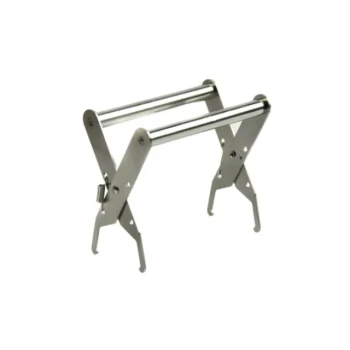
To ensure stability and ease of maintenance, position your beehive stand on a paving slab surrounded by gravel. While the stand should be stable, it requires a deliberate, slight lean toward the front to manage moisture effectively.
A proper foundation does more than hold the hive up; it prevents weed encroachment and uses gravity to keep the hive interior dry. The critical orientation detail is a specific "forward tilt" to ensure water run-off.
Establishing a Stable Foundation
A hive that shifts or sinks can stress the colony and make inspections dangerous. You must create a base that isolates the wood from the soil and resists vegetation.
The Role of Gravel
Surround the immediate area of your hive stand with gravel. This creates a barrier that suppresses weed growth under and around the hive.
Using a Paving Slab
Place a sturdy paving slab directly onto your prepared area. This acts as a level anchor for the stand, preventing the legs from sinking into soft mud during rain.
Correcting Uneven Terrain
If your apiary ground is uneven, do not rely on the stand legs alone for leveling. Bed the paving slab firmly into the gravel to create a flat, neutral starting point.
Managing Moisture and Drainage
Once the foundation is solid, the specific angle of the hive determines how well it handles weather. Water accumulation is a significant threat to colony health.
The Importance of the Forward Lean
Do not position the stand perfectly level from front to back. Ensure there is a slight downward tilt toward the hive's front entrance.
How This Protects the Colony
This angle ensures that rain striking the hive or landing board drains away from the interior. It prevents water from pooling inside the bottom board, which can lead to mold and chilled bees.
Common Pitfalls to Avoid
Even with the right materials, incorrect positioning can compromise the setup.
The "Perfectly Level" Mistake
While side-to-side leveling is good, achieving a perfectly level position front-to-back is a functional error. Without the forward slope, you lose the passive drainage required during heavy storms.
Neglecting Ground Cover
Placing a stand directly on bare earth or grass without a slab or gravel is inadvisable. This accelerates wood rot and allows weeds to grow up into the entrance, obstructing the bees' flight path.
Making the Right Choice for Your Goal
- If your primary focus is reducing maintenance: Utilize a paving slab surrounded by gravel to eliminate the need for mowing or weeding directly under the hive.
- If your primary focus is colony health: Prioritize the slight forward lean to ensure water runs off the structure rather than pooling inside.
A calculated foundation setup is your most effective passive tool for keeping a hive dry and accessible.
Summary Table:
| Setup Component | Recommendation | Purpose |
|---|---|---|
| Ground Cover | Gravel Layer | Suppresses weeds and prevents wood rot |
| Foundation | Paving Slab | Provides a level, solid anchor; prevents sinking |
| Lateral Alignment | Perfectly Level | Ensures stable comb building and hive balance |
| Front-to-Back Angle | Slight Forward Lean | Facilitates water run-off and prevents internal pooling |
Maximize Your Apiary Efficiency with HONESTBEE
At HONESTBEE, we understand that a successful commercial apiary starts with the right foundation. Whether you are managing thousands of colonies or distributing high-quality gear, we provide the industrial-grade beekeeping tools and machinery needed to scale your operations. From specialized hive-making and honey-filling machines to essential consumables and honey-themed cultural merchandise, our wholesale portfolio is designed for durability and performance.
Ready to upgrade your equipment or stock your distribution center? Contact us today to learn how our comprehensive solutions can streamline your maintenance and protect your colony health.
Related Products
- Metal Hive Feet Bee Hive Stand for Ant Protection
- Metal Bee Hive Stand Bee Box Stand for Beekeeping
- Plastic Bee Hive Stand for Beekeeping
- Professional Ant-Proof Beehive Stand with Integrated Moat for Beekeeping
- Wooden Bee Hive Frames for Beekeeping and Wholesale
People Also Ask
- What are the benefits of elevating a bee hive with a stand or base? Protect Your Colony and Your Back
- How does a beehive stand protect against predators and pests? Essential Strategies for Colony Security
- How should the height of a beehive stand be determined? Find Your Ergonomic Sweet Spot
- What to stand a beehive on? The Best Foundation for a Healthy, Manageable Apiary
- What is the best base for a beehive? Choose the Right Stand for Colony Health