Seasonal context is essential when interpreting parasite-monitoring data. A parasite count cannot be judged reliably against one fixed threshold because parasite populations naturally change throughout the season. For example, 4.5 mites per 100 bees may signal an unusually early spring increase but represent a comparatively lower-than-expected burden in late autumn.
Interpret parasite data against seasonal trend curves, not isolated threshold values. The key question is whether the measured load is appropriate for that point in the season and whether it is rising faster than expected.
Why Seasonal Adjustment Matters
Parasite populations are not static
Parasite pressure typically increases and fluctuates during the beekeeping season, with populations often reaching their highest levels in late summer and early autumn.
Monitoring equipment therefore records a moving biological situation. The same numerical result can indicate very different levels of operational risk depending on when and where it was collected.
A single reading lacks sufficient context
A monitoring device may provide a precise count, but precision does not automatically provide meaning. Inspectors need to combine the reading with the month, local seasonal pattern, colony condition, and recent trend.
A fixed threshold can therefore produce two opposite errors: unnecessary intervention when seasonal levels are naturally higher, or delayed action when an increase occurs unusually early.
How Inspectors Should Interpret the Data
Compare readings with seasonal trend curves
The most useful comparison is between the current measurement and the expected parasite-load curve for that region and production system.
Inspectors should ask whether the value is:
- Within the expected seasonal range
- Increasing earlier than expected
- Rising faster than the normal pattern
- Persistently elevated across multiple inspections
- Lower or higher than comparable colonies at the same time
This approach turns monitoring equipment from a simple counting tool into an early-warning system.
Treat early-season increases as high priority
A mite count that would be ordinary later in the season may be abnormal in spring. The primary reference’s example of 4.5 mites per 100 bees illustrates this clearly: in spring, that level may indicate an early infestation rise requiring prompt pest-management attention.
The concern is not only the current count. An early rise can provide more time for the parasite population to increase before the season reaches its natural peak.
Interpret late-season readings against regional averages
The same 4.5 mites per 100 bees in late autumn may be below the regional seasonal average. Inspectors should not automatically classify it as equivalent to a spring reading.
However, a lower-than-average late-season result should still be documented and compared with the colony’s earlier measurements. Seasonal adjustment improves interpretation; it does not eliminate the need for continued monitoring.
Focus on direction as well as level
A stable count and a rapidly increasing count should not be treated as operationally identical, even if their latest readings are the same.
Trend data helps inspectors distinguish a temporary observation from a developing infestation. Repeated measurements are especially valuable when a result appears unusual for the time of year.
Integrating Monitoring with Apiary Inspection
Use equipment data as part of a wider inspection
Hive-monitoring equipment should support, not replace, broader apiary inspection. Data interpretation is stronger when it is considered alongside colony condition, brood-nest observations, and visible hive-management issues.
Inspectors should also evaluate whether the hive and its components are structurally sound, including the frames, frame ears, hive bodies, covers, and bottom boards.
Consider comb and brood-nest conditions
Frames with excess drone cells or old, dark comb may need to be moved from the brood-nest core to the hive margins and replaced with fresh foundation after the remaining brood emerges.
This does not change the seasonal parasite curve, but it provides important management context when inspectors evaluate colony health and decide whether monitoring results require follow-up.
Account for seasonal management demands
Seasonal conditions affect more than parasite pressure. Mid-summer forage lulls can contribute to swarming, rapid population division, and demand for additional housing.
Apiary operators may therefore need spare supers, nucleus boxes, and complete hive setups available alongside monitoring equipment. Reliable access to a full product range and rapid fulfillment can be operationally important when seasonal conditions create sudden equipment needs.
Understanding the Trade-offs
Avoiding a fixed threshold
A static threshold is simple to communicate and easy to apply across an equipment portfolio. Its weakness is that it can ignore seasonal biology and create inconsistent decisions.
Seasonal interpretation requires more local reference data and greater inspector expertise, but it produces a more realistic assessment of risk.
Avoiding seasonal averages alone
Seasonal averages are useful, but they can also conceal abnormal colony-specific behavior. A colony may be increasing rapidly even if its current count remains close to the regional average.
Inspectors should therefore use both seasonal position and individual trend rather than relying exclusively on either one.
Avoiding overconfidence in one measurement
Monitoring equipment can improve consistency and response time, but one reading should not automatically determine the full management response. Unusual values should be reviewed against repeated measurements and the condition of the hive.
This is particularly important when equipment is being supplied across different regions, because expected seasonal curves may not be interchangeable.
Planning for infrastructure and maintenance
The quality of monitoring data is only one part of operational readiness. Routine maintenance should include cleaning dead bees from feeders, preserving adequate ventilation before winter, and completing structural repairs before colonies begin winter clustering.
For distributors and professional apiary suppliers, this supports a broader one-stop sourcing model: parasite-monitoring tools should be complemented by frames, foundation, hive hardware, ventilation-related components, and replacement hive units.
Applying Seasonal Interpretation in Practice
Build region-specific reference curves
Inspectors and apiary managers should maintain seasonal reference ranges based on the relevant region and operating conditions. These curves should show expected parasite-load changes through spring, summer, late summer, and autumn.
The goal is not to create a single universal number. It is to establish a practical baseline against which each new reading can be assessed.
Record the timing and trend of every reading
Each equipment result should be logged with its inspection date and associated colony. This makes it possible to identify early rises, persistent elevation, and differences between colonies.
A result without a date is incomplete; a dated sequence of results can support a defensible management decision.
Link monitoring workflows to supply planning
When data indicates increased management activity, apiaries may need timely access to pest-management tools and related hive equipment. Suppliers serving commercial beekeepers should be prepared to support rapid, accurate fulfillment rather than treating monitoring devices as isolated products.
A broad inventory, responsive customer service, and professional product knowledge help operators act while the seasonal window still matters.
Making the Right Choice for Your Goal
Seasonal interpretation should be built into both inspection procedures and equipment-support strategies.
- If your primary focus is early infestation detection: Treat an unexpectedly elevated spring reading or rapid early-season increase as a priority for prompt review and pest-management action.
- If your primary focus is accurate risk classification: Compare every measurement with regional seasonal curves, colony history, and the direction of change rather than using one fixed threshold.
- If your primary focus is apiary supply planning: Source monitoring equipment together with frames, foundation, hive bodies, supers, nucs, and maintenance components to support changing seasonal requirements.
- If your primary focus is reliable commercial service: Choose suppliers that combine technical expertise, responsive customer support, broad product availability, and fast order fulfillment.
The most dependable interpretation comes from treating parasite counts as seasonal trend data, not isolated numbers.
Summary Table:
| Factor | Spring | Summer | Late Summer/Autumn |
|---|---|---|---|
| Expected Parasite Load | Low but increasing | Moderate | High (peak) |
| Interpretation of 4.5 mites/100 bees | Unusually early increase, high priority | Within normal range | Below average, less concern |
| Risk Level | High if rising early | Moderate | High if rising rapidly |
| Focus | Early detection and prevention | Monitor trend | Prepare for winter treatments |
Ensure your apiary is equipped for seasonal fluctuations with HONESTBEE's comprehensive range of monitoring tools and hive equipment. As a one-stop supplier for commercial beekeepers, we offer rapid delivery, OEM/ODM support, and expert guidance to keep your colonies healthy year-round. Contact us today to discuss your needs and secure reliable supply!
Related Products
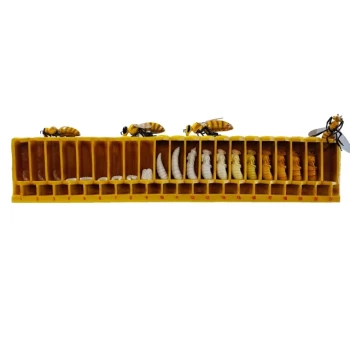
- Honey Bee Lifecycle Model: A Detailed Honeycomb Display of Bee Development
- Heavy-Duty Ergonomic Grip Galvanized Pollen Shovel
- HONESTBEE AC Powered Wire Embedder with Alligator Clips
- Professional Dual Action Queen Excluder Scraper for Beekeeping
- Solar Beeswax Melter Easy Solar Wax Melter for Beeswax
People Also Ask
- Are honey bees good to have around? The Essential Role and Ecological Impact of Bees
- Why does standardized equipment lower honey bee winter loss? Master Large-Scale Beekeeping Success
- Do honey bees leave their hives? Understanding the Critical Role of Swarming
- What activities require a lot of energy for honey bees? Understanding the Colony's Energy Budget
- How do honey bees develop from egg to adult? The Complete 4-Stage Metamorphosis Guide