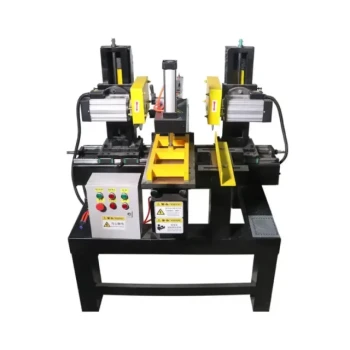
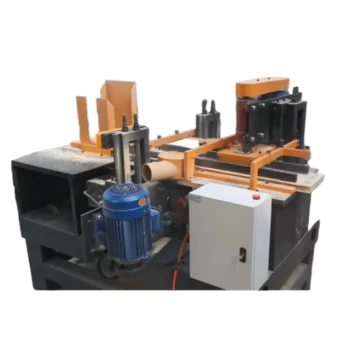
High-precision industrial machinery fundamentally transforms log hive production from a variable artisanal craft into a standardized engineering process. The primary advantage over manual excavation is the ability to maintain uniform wall thickness throughout the vessel, which guarantees consistent thermal insulation for the colony regardless of the log's external irregularities.
The shift from manual to mechanical production eliminates the structural inconsistencies inherent in hand-carved hives. By strictly controlling dimensions and cut precision, industrial machinery allows log hives to be integrated into scalable, commercial operations where component interchangeability and predictable thermal performance are mandatory.
Achieving Structural and Thermal Consistency
Uniform Wall Thickness
Manual excavation often results in uneven internal surfaces, creating hot or cold spots within the hive. Industrial machinery creates a mathematically consistent gap between the outer bark and the inner wall.
This precision ensures that thermal insulation values are constant across the entire hive body. A stable internal climate reduces the metabolic stress on bees, allowing them to focus on brood rearing and resource gathering rather than temperature regulation.
Standardization of Cavity Volume
Bees regulate their population and honey storage based on available space. Manual hollowing leads to significant volume variance from log to log, making colony management unpredictable.
High-precision machinery ensures every hive has an identical internal cubic volume. This allows apiarists to predict resource consumption and colony growth rates uniformly across an entire apiary.
Streamlining Commercial Operations
Precision Entrance Placement
In manual production, the entrance is often placed based on the wood's grain or ease of cutting. Industrial equipment allows for the precise control of size and placement of bee entrances.
This consistency is crucial for large-scale operations. It permits the standardization of entrance reducers, pollen traps, and other peripheral hardware that would otherwise require custom fitting for each hive.
Component Interchangeability
Standardized machining ensures that parts are not unique to a single log. If a specific component fails or needs maintenance, it can be replaced with an off-the-shelf part.
This facilitates the interchangeability of components, significantly reducing the complexity of maintenance protocols. It allows for a systematic approach to repair rather than a bespoke carpentry project for every damaged hive.
Understanding the Trade-offs
High Initial Capital Investment
While manual excavation requires simple hand tools or chainsaws, industrial precision requires specialized boring machines, automated tenoning equipment, or CNC routers. The cost of entry is significantly higher, making this approach viable primarily for commercial manufacturers rather than hobbyists.
Loss of Individual Adaptation
Manual carving allows the craftsman to navigate around knots or rot pockets unique to a specific log. Automated machinery follows a rigid program. If the raw timber has significant internal defects, high-precision machines may waste material or require logs to be pre-screened more rigorously than a manual carver would require.
Making the Right Choice for Your Goal
- If your primary focus is consistent colony health: Prioritize industrial machining to ensure uniform wall thickness, which maximizes thermal stability and pest exclusion.
- If your primary focus is commercial scalability: Leverage machined hives to establish standardized maintenance protocols, ensuring that tools and replacement parts work across your entire operation.
Precision manufacturing turns the log hive from a rustic curiosity into a viable, replicable tool for modern sustainable apiculture.
Summary Table:
| Feature | Manual Excavation | High-Precision Machinery |
|---|---|---|
| Wall Thickness | Uneven; inconsistent insulation | Uniform; optimized thermal stability |
| Cavity Volume | Variable; unpredictable growth | Standardized; predictable management |
| Maintenance | Bespoke; custom repairs needed | Interchangeable parts; off-the-shelf fit |
| Scalability | Low; labor-intensive artisanal craft | High; engineered for commercial apiaries |
| Entry Cost | Low; basic hand tools/chainsaws | High; specialized industrial equipment |
Scale Your Apiculture Business with HONESTBEE Precision
Transitioning from traditional methods to industrial precision is key to modern commercial success. HONESTBEE empowers commercial apiaries and distributors with the high-performance tools needed to dominate the market.
Our comprehensive wholesale range includes:
- Advanced Machinery: Hive-making and honey-filling machines designed for high-precision output.
- Full-Spectrum Equipment: A complete array of beekeeping tools and essential industry consumables.
- Exclusive Merchandise: Unique honey-themed cultural products to diversify your portfolio.
Whether you are scaling up production or streamlining maintenance with standardized components, we provide the hardware and expertise to elevate your operation.
Ready to modernize your inventory? Contact HONESTBEE today to discuss our wholesale solutions and bulk pricing.
References
- N.D. Demianenko. COLLECTION OF HIVE-LOGS IN THE COLLECTION OF THE MUSEUM OF THE HISTORY OF BEEKEEPING OF THE MIDDLE TRANSDNIPRIAN REGION OF THE NATIONAL HISTORICAL AND ETHNOGRAPHIC RESERVE “PEREYASLAV”. DOI: 10.32782/2663-5984/2023/1.35
This article is also based on technical information from HonestBee Knowledge Base .
Related Products
- Beehive Handle and Frame Rest Cutting Machine: Your Specialized Hive Machine
- Beehive Machine Double End Saw for Precision Hive Component Manufacturing
- Automatic Finger Joints Joint Making Machine for Bee Box and Hive Making
- High-Efficiency Pneumatic Bee Hive Making Machine for Rapid Box Assembly
- Mini Desktop Bee Hive Frame Forming Making Machine
People Also Ask
- What is the importance of specialized beehive-making machinery? Ensure Precision for Sensor-Based Hive Monitoring
- How do bee hive handles facilitate the evaluation of food stores? Use the Lift Test for Winter Survival
- How do specialized beehive handling machines contribute to efficiency? Streamline Your Mobile Beekeeping Logistics
- How do professional beehive and frame manufacturing machines contribute to commercial apiary management? Boost Efficiency
- What are the standard dimensions for frame rests in a beehive? Essential Guide for Perfect Bee Space