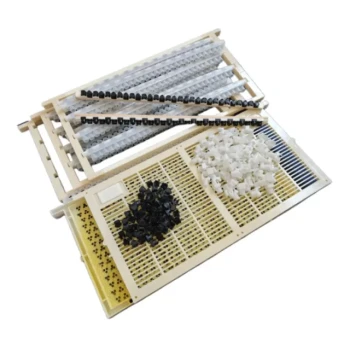
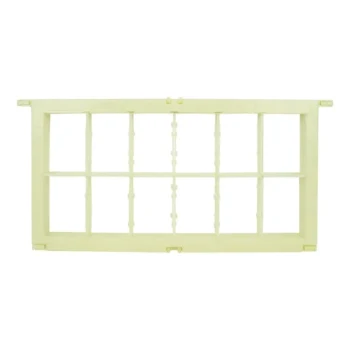
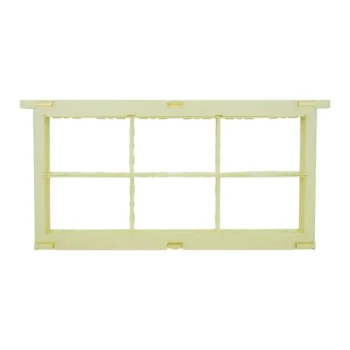
The primary advantage of the multi-bar design is its ability to exponentially increase royal jelly yield by maximizing the vertical space within a single hive frame. By accommodating multiple levels of cell bars, this design enables the simultaneous rearing of dozens of queen cells, directly leveraging the full secretion capacity of the colony's nurse bees.
The multi-bar frame acts as a high-density production platform that balances biological needs with operational efficiency. It allows beekeepers to scale production volume up or down based on colony strength without requiring additional hive equipment.
Maximizing Production Capacity
High-Density Cultivation
The most immediate benefit of the multi-bar design is the efficient use of physical space. A standard frame limits production to a single horizontal row, whereas a multi-bar grafted frame utilizes the vertical area to stack several rows.
This structure allows for the installation of artificial wax cups at a much higher density. Beekeepers can arrange hundreds of cups within a single unit, significantly enhancing the total yield per collection cycle.
Leveraging Nurse Bee Potential
A strong colony often possesses more nurse bees than a single bar of cells requires. The multi-bar design ensures that this biological resource is not wasted.
By presenting a larger number of larvae simultaneously, the frame stimulates the nurse bees to maximize their secretion of royal jelly. It converts the colony's excess energy into tangible product yield.
Enhancing Biological Conditions
Optimizing the Microclimate
The physical structure of the grafting frame helps maintain a consistent environment for the developing larvae.
When introduced into the colony, the frame ensures that all cell cups are held at a uniform temperature and humidity. This consistency is vital for high acceptance rates and ensures the jelly produced is of uniform quality.
Strategic Positioning for Higher Yields
The multi-bar design allows for strategic placement of larvae within the "sweet spots" of the hive.
Research and observation indicate that cell bars placed in the middle or center of the frame typically yield heavier royal jelly deposits. This central area is less susceptible to external temperature fluctuations and attracts the highest density of nurse bees.
Facilitating Nurse Bee Clustering
Despite the high density of cups, the design is engineered to maintain unobstructed bee passages.
Proper spacing between the bars prevents overcrowding, allowing nurse bees to cluster effectively around the cells. This accessibility promotes the balanced secretion and pouring of royal jelly into every cup, rather than just the most accessible ones.
Understanding the Operational Trade-offs
Colony Strength Dependency
While the multi-bar design offers high capacity, it is heavily dependent on the density of nurse bees.
If the number of cell bars exceeds the colony's nursing capacity, the bees cannot provision all cells adequately. This can lead to lower acceptance rates or meager royal jelly deposits in individual cups.
The Necessity of Adjustment
The "advantage" of high density can become a liability if not managed actively.
Beekeepers must treat the multi-bar frame as a flexible tool, not a static one. You must be prepared to reduce the number of installed bars during periods of lower population density to maintain quality.
Optimizing Your Frame Configuration
To get the most out of a multi-bar grafted frame, align your configuration with your specific production goals and colony status.
- If your primary focus is Maximum Total Yield: Install the maximum number of bars only when the colony is overflowing with young nurse bees to ensure every cup is visited.
- If your primary focus is Consistency and Quality: Prioritize the middle and center bar positions, as these areas maintain the most stable microclimate and receive the most attention from workers.
- If your primary focus is Colony Health: Reduce the number of bars during shoulder seasons to prevent exhausting the nurse bee population.
The multi-bar frame is a powerful amplifier of hive productivity, provided the biological workforce is strong enough to support the increased structural capacity.
Summary Table:
| Advantage Category | Key Benefit | Impact on Production |
|---|---|---|
| Space Efficiency | High-density vertical stacking | Maximizes cup capacity per frame |
| Biological Output | Full nurse bee utilization | Converts excess colony energy into jelly |
| Microclimate | Uniform heat & humidity | Ensures high acceptance and consistent quality |
| Strategic Layout | Optimized cell positioning | Increases jelly weight in central 'sweet spots' |
| Operational Flow | Unobstructed bee passages | Promotes effective clustering and provisioning |
Elevate Your Commercial Apiary with HONESTBEE
Maximize your royal jelly output and operational efficiency with professional-grade equipment. At HONESTBEE, we specialize in supporting commercial apiaries and distributors with a comprehensive wholesale portfolio. From high-density multi-bar grafted frames and hive-making machinery to honey-filling systems and essential consumables, we provide the tools you need to scale your business.
Ready to optimize your production capacity? Contact us today to explore our wholesale solutions and discover how our expertise in beekeeping hardware and cultural merchandise can drive your success.
References
- Naglaa A. Ghazala, Ahmed A. Taha. INFLUENCE OF BEEVENOM COLLECTION ON SOME HONEYBEE PRODUCTS. DOI: 10.21608/jppp.2014.87979
This article is also based on technical information from HonestBee Knowledge Base .
Related Products
- No Grafting Queen Rearing Kit: System for Royal Jelly Production and Queen Rearing
- Professional Sectional Comb Honey Frame with 250g Cassette System for Beekeeping
- Professional 500g Sectional Comb Honey Frame System for Beekeeping
- JZBZ Langstroth Queen Rearing Frame for Beekeeping
People Also Ask
- What is the primary function of a queen rearing kit? Eliminate Manual Grafting for Superior Bee Breeding
- How do specialized queen rearing kits and queen management tools improve the success rate of bee colony expansion?
- What are some alternative methods to grafting for queen cell production? Discover Graft-Free Queen Rearing Systems
- Are queen rearing systems generally suitable for all honeybee species? Master Efficient Breeding Methods
- Are queen rearing systems suitable for all beekeepers? Modern Tools for Every Experience Level