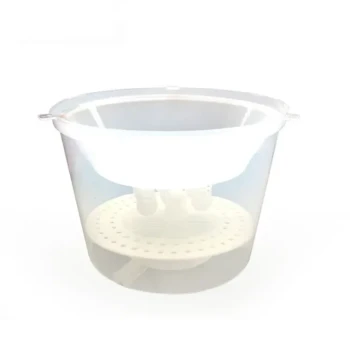
The decisive advantage of a professional pollen trap is its ability to generate a statistically representative sample of the entire colony's foraging habits. While manual netting provides only a snapshot of individual insects, a hive-mounted trap facilitates continuous, large-scale collection that accurately reflects the full botanical spectrum of the area without harming the bee population.
Core Insight: The move from manual netting to a professional trap changes the nature of your data from anecdotal to comprehensive. By automating collection at the entrance, you capture the colony's aggregate behavior over time, ensuring your botanical analysis is statistically valid rather than coincidental.
Achieving Statistical Significance
Comprehensive Foraging Spectrum
Manual netting captures only the specific bees a researcher happens to catch, introducing significant bias. A professional trap acts as a gateway for the entire hive, stripping pollen from a vast number of foragers. This ensures the sample reflects the true botanical diversity of available resources, rather than the habits of a few isolated bees.
Continuous Time-Interval Sampling
Foraging patterns change throughout the day and week based on bloom times. Manual collection is episodic and misses these fluctuations. A trap operates continuously over specific intervals, aggregating pollen loads to smooth out temporal variations and provide a reliable longitudinal dataset.
Operational Efficiency and Hive Safety
Non-Destructive Collection
Manual capture often involves handling bees, which can induce stress or result in fatalities. Professional traps are designed to be non-destructive. They strip pollen pellets using physical barriers with specific pore sizes, allowing the bees to enter the hive unharmed while leaving their load behind.
Automation and Volume
Manual netting is labor-intensive and yields small quantities. Traps function automatically once installed, enabling the accumulation of large-scale pollen loads. This is essential for applications requiring significant biomass for processing or extensive chemical analysis.
Sample Purity and Quality
Prevention of Contamination
A key function of the trap is stripping the pollen before the bee enters the hive interior. This prevents the pollen from being stored, consumed, or mixed with hive debris. The result is clean raw material suitable for high-purity applications, such as commercial granules or pharmaceutical capsules.
Understanding the Trade-offs
Nutritional Balance for the Colony
While the primary reference notes that traps are designed to work "without harming the bee colony," the supplementary reference notes that traps effectively prevent pollen from being consumed by the bees. Because pollen is the colony's primary protein source, leaving a trap on indefinitely can starve the brood. It is critical to manage collection intervals to ensure the hive retains enough pollen for its own survival and development.
Making the Right Choice for Your Goal
The method of collection dictates the utility of your sample. Here is how to apply this to your specific objectives:
- If your primary focus is Botanical Research: Use a trap to ensure your data represents the full statistical foraging spectrum of the colony, rather than isolated events.
- If your primary focus is Commercial Production: Rely on traps to automate the collection of large, clean volumes of pollen that require minimal post-processing.
- If your primary focus is Pest/Pathogen Sampling: While not explicitly detailed in the text, stick to manual netting if you need to target specific bees or vectors rather than aggregate pollen loads.
Professional traps transform pollen collection from a labor-intensive chore into a scalable, data-rich scientific process.
Summary Table:
| Feature | Manual Netting | Professional Pollen Trap |
|---|---|---|
| Data Scope | Snapshot/Anecdotal | Statistically Representative |
| Botanical Spectrum | Biased by individual catch | Comprehensive aggregate behavior |
| Operational Effort | High (Labor-intensive) | Low (Automated/Scalable) |
| Sample Volume | Small/Limited | Large-scale biomass |
| Purity | Risk of contamination | High-purity (pre-hive capture) |
| Bee Impact | Potential stress/fatality | Non-destructive/Physical stripping |
Elevate Your Apiary Operations with HONESTBEE
Transitioning from manual collection to professional equipment is the key to scaling your honey and pollen production. At HONESTBEE, we specialize in supporting commercial apiaries and distributors with a comprehensive wholesale range. Whether you are seeking high-efficiency pollen traps, specialized hive-making machinery, or advanced honey-filling systems, our portfolio is designed to maximize your ROI.
From essential beekeeping tools to unique honey-themed cultural merchandise, we provide the industrial-grade solutions you need to lead the market. Contact us today to discuss your bulk equipment needs and wholesale pricing!
References
- Chiara Benedetta Boni, Antonio Felicioli. Pollen Resource Repartition Between Managed Honey Bees (Apis mellifera L. 1758) and Unmanaged Bees in Three Italian National Parks. DOI: 10.3390/conservation5010005
This article is also based on technical information from HonestBee Knowledge Base .
Related Products
- 30 cm Plastic Entrance Hole Bee Pollen Trap and Collector
- Plastic Beetle Blaster Trap Beekeeping Tools and Supplies
- Removable Plastic Pollen Trap With Ventilated Tray for Bees Pollen Collector
- Reusable Clear Small Hive Beetle Traps for Beehives Beetle Trapping Tools
- Removable Washable Hive Beetle Trap Attractants for Small Hive Beetles
People Also Ask
- What are the design principles and advantages of pollen traps in the collection of bee pollen? Boost Your Apiary Yield
- Why is frequent harvesting of bee pollen from traps necessary for quality control? Ensure Freshness and Prevent Mold.
- How often should bee pollen be harvested from a trap and why? Master Freshness and Prevent Spoilage
- What function do pollen traps serve in quantitative collection? Boost Your Apiary's Data & Production Efficiency
- What is the primary function of bee pollen traps? Optimize Your Pollen Harvest with Advanced Extraction Efficiency