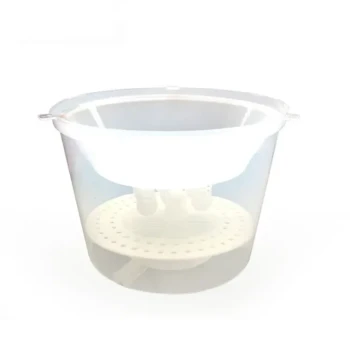
Industrial-grade pollen traps are precision mechanical barriers installed at the entrance of a beehive designed to automate the collection of bee pollen. These devices utilize a grid of precisely calculated apertures that physically strip pollen pellets from the hind legs of returning worker bees as they squeeze through to enter the hive. By capturing these pellets in a collection tray below, the trap secures high-purity raw material for processing while allowing the bees to pass through unharmed.
The primary function of these traps is to serve as the technological bridge between single-product honey operations and a diversified industrial model, enabling the harvest of high-protein pollen without compromising the long-term health of the colony.
The Mechanics of Precision Harvesting
Controlled Physical Interception
The core mechanism of an industrial pollen trap is its aperture grid. This grid is engineered with specific geometric controls to brush against the "pollen baskets" on a bee's legs.
The aperture size is critical; it must be tight enough to dislodge the pollen load but wide enough to prevent physical injury to the insect. This ensures the biological integrity of the bee is maintained during the harvesting process.
Preservation of Raw Material Quality
Industrial-grade traps often incorporate dry collection trays designed to protect the harvest immediately after separation.
By isolating the pollen from the hive environment quickly, these trays reduce exposure to environmental humidity. This is essential for preventing microbial contamination and preserving the biochemical activity of the pollen before it reaches the processing plant.
Strategic Value for Commercial Apiaries
Diversification of Production
The installation of these traps allows an apiary to transition from a monoculture of honey production to a diversified product line.
By efficiently collecting pollen, producers can offer a wider array of bee products, including raw pollen and propolis. This increases the economic resilience and total value potential of the beekeeping operation.
Source-Specific Yield Monitoring
Advanced pollen traps enable beekeepers to quantify yields from specific botanical sources during different blooming periods.
For example, producers can segregate harvests from sesame, maize, or sunflowers. This allows for the creation of specific, high-value pollen products based on floral origin.
Operational Considerations and Trade-offs
Balancing Harvest with Colony Health
A critical function of the trap is to allow for "sufficient retention." It is a common misconception that traps should catch 100% of the pollen.
To maintain a sustainable operation, the trap must allow enough pollen to bypass the grid so the colony retains adequate nutritional supplies for its own brood rearing and growth. Over-harvesting can lead to colony collapse.
Hardware Precision vs. Bee Safety
Lower-quality traps may have inconsistent apertures that can damage the wings or legs of bees.
Industrial-grade equipment prioritizes "non-destructive harvesting." The focus is on ensuring the physical safety of the workforce—the bees—to ensure production remains consistent over time.
Making the Right Choice for Your Goal
When integrating pollen traps into your production line, select equipment based on your specific operational targets:
- If your primary focus is Product Quality: Prioritize traps with dry collection trays to minimize moisture degradation and microbial risks immediately upon harvest.
- If your primary focus is Colony Sustainability: Choose traps with adjustable or specifically calibrated apertures that guarantee a portion of the pollen load bypasses the collector for the hive's consumption.
- If your primary focus is Market Segmentation: Utilize traps to segregate harvests during specific bloom windows to label and sell single-source pollen varieties.
True industrial efficiency is achieved not by maximizing the catch, but by optimizing the balance between yield and colony vitality.
Summary Table:
| Feature | Industrial-Grade Function | Benefit to Production |
|---|---|---|
| Aperture Grid | Precise physical interception of pollen pellets | High-purity harvesting without bee injury |
| Collection Trays | Immediate isolation and moisture protection | Preserves biochemical activity and prevents mold |
| Yield Monitoring | Quantification of floral source intake | Enables high-value single-source product segmentation |
| Harvest Control | Strategic retention for colony nutrition | Ensures long-term sustainability and colony health |
Scale Your Bee Product Portfolio with HONESTBEE
Transitioning from a honey-only operation to a diversified industrial model requires the right hardware precision. HONESTBEE specializes in supporting commercial apiaries and distributors with a comprehensive wholesale offering. From industrial-grade pollen traps and hive-making machinery to advanced honey-filling systems and essential industry consumables, we provide the full spectrum of tools needed to maximize your operational value.
Ready to enhance your yield and protect your colonies? Contact our expert team today to explore how our specialized equipment can optimize your production line.
References
- Agussalim Agussalim, I Gede Suparta Budisatria. VARIATION OF HONEYBEES FORAGES AS SOURCE OF NECTAR AND POLLEN BASED ON ALTITUDE IN YOGYAKARTA. DOI: 10.21059/buletinpeternak.v41i4.13593
This article is also based on technical information from HonestBee Knowledge Base .
Related Products
- Removable Plastic Pollen Trap With Ventilated Tray for Bees Pollen Collector
- 30 cm Plastic Entrance Hole Bee Pollen Trap and Collector
- Plastic Bee Pollen Trap Strips Comb Catcher Collector
- High-Efficiency Diamond Maze Bee Escape for Clearing Supers
- Professional Multi-Component Bucket Wasp Trap
People Also Ask
- What are the design principles and advantages of pollen traps in the collection of bee pollen? Boost Your Apiary Yield
- What is the function of professional pollen traps in evaluating honey plants? Quantifying Pollination and Crop Potential
- What functions do pollen traps serve for bee bread production? Optimize Your Raw Material Collection
- What maintenance and pest prevention measures should be taken for pollen traps? Protect Your Hive and Harvest Quality
- How does the use of pollen traps in honeybee hives enhance crop fertilization? Boost Your Yield Through Induced Activity