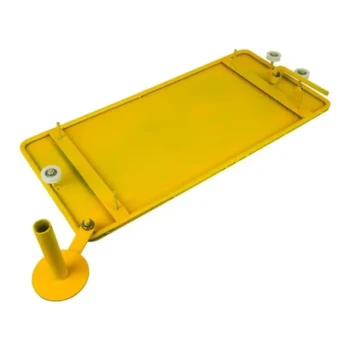
The primary advantage of using a standardized grid frame is the ability to obtain precise, quantitative data on colony strength without disrupting the hive's ecosystem. By overlaying a grid—typically divided into 5x5 cm squares representing approximately 100 cells each—beekeepers and researchers can accurately calculate capped brood areas and food stores while avoiding invasive techniques like shaking or weighing bees.
Core Takeaway: Standardized grid frames bridge the gap between subjective observation and scientific measurement. They transform abstract visual cues into objective numerical data regarding future population growth (capped brood) and current resources, all while maintaining the colony's stability and foraging rhythm.
Non-Destructive Assessment
The most significant benefit of the grid frame method is its ability to measure biological parameters without physically stressing the colony.
Preserving Colony Ecosystems
Unlike invasive methods that require shaking bees off frames to weigh them, a grid frame is simply placed over the honeycomb. This "non-contact" approach ensures the physical structure of the cluster remains intact and prevents the accidental loss of the queen or injury to workers during assessment.
Maintaining Foraging Continuity
Traditional invasive assessments often trigger a defensive response or disrupt the colony's workflow. Because the grid method is passive, it avoids disturbing normal foraging activities, ensuring that data collection does not artificially depress the colony's productivity or food gathering on the day of inspection.
Precision and Objectivity
Standardized grids eliminate the guesswork associated with visual estimations, providing a rigorous standard for defining colony strength.
Eliminating Random Error
Manual estimation based on experience is prone to significant "random error" and subjective bias. A grid frame acts as a standardized measurement instrument, ensuring that "strong" or "weak" definitions are based on fixed geometric units rather than an observer's opinion.
Converting Biology to Data
The grid converts biological surface area into quantifiable numbers. By counting squares, you can generate specific metrics for:
- Capped Brood: Estimating future adult population.
- Food Stores: Quantifying the exact surface area of honey and pollen.
- Population Density: Creating a visual reference for adult bee coverage.
Comparing Colony Vitality
For research and comparative management, standardization is critical. The grid framework allows for the correlation of brood area with other metrics, such as total hive weight or drug treatment efficacy. This makes it possible to statistically analyze how external factors—like pests or supplements—affect population dynamics.
Predictive Capabilities
Beyond measuring the current state, the grid frame serves as a forecasting tool for the colony's future potential.
Forecasting Population Growth
The primary reference notes that a standard 5x5 cm square corresponds to roughly 100 cells. By measuring the area of capped brood, you can mathematically estimate the number of new bees that will emerge in the coming days. This provides a clear window into the colony's replacement capacity and future production potential.
Understanding the Trade-offs
While highly accurate, using a standardized grid frame requires a balanced approach regarding time and equipment.
Operational Speed vs. Accuracy
Using a grid frame is slower than a quick visual inspection ("eyeballing"). It requires opening the hive and physically placing the grid on specific frames. While faster than weighing individual bees, it adds time to the inspection process compared to a simple walk-through.
Hardware Dependency
The accuracy of the data relies on the uniformity of the underlying equipment. As noted in the supplementary references, this method assumes the use of standardized physical environments, such as Langstroth frames. Variations in comb structure or non-standard frame sizes can introduce variables that the grid cannot automatically correct for.
Making the Right Choice for Your Goal
The standardized grid frame is a tool for precision. Here is how to apply it based on your objectives:
- If your primary focus is Research or Breeding: Use the grid to generate hard data points (e.g., "3500 capped brood cells") to statistically compare treatment effects or queen performance.
- If your primary focus is Colony Health Monitoring: Use the grid to track the capped brood-to-adult bee ratio over time, as this is a sensitive indicator of biological stress.
- If your primary focus is Production Management: Use the grid to correlate brood surface area with honey stores to determine if a colony is ready for supers or requires supplemental feeding.
Ultimately, the standardized grid frame creates a shared language of objective metrics, allowing you to manage colonies based on facts rather than intuition.
Summary Table:
| Advantage Category | Key Benefit | Impact on Management |
|---|---|---|
| Non-Destructive | Passive assessment without shaking bees | Minimizes colony stress and preserves foraging rhythm |
| Data Precision | Converts biological area into numerical units | Replaces subjective bias with objective, scientific metrics |
| Predictive Power | 5x5cm grid counts (~100 cells) | Accurately forecasts future worker emergence and productivity |
| Comparative Analysis | Standardized measurement units | Enables statistical tracking of queen performance and health |
Elevate Your Apiary Management with HONESTBEE
Precision in the field requires precision in your tools. At HONESTBEE, we specialize in supporting commercial apiaries and distributors with a comprehensive wholesale portfolio. Whether you are scaling operations with hive-making and honey-filling machines or seeking high-quality beekeeping tools, hardware, and industry consumables, we deliver the reliability your business demands.
From specialized beekeeping equipment to honey-themed cultural merchandise, our solutions are designed to enhance your efficiency and production potential. Partner with HONESTBEE today—Contact us to explore our wholesale offerings!
References
- Б.Д. Гармаев, A A Martemyanova. Hygienic behavior of bees as an element of sterility in the production of environmentally friendly products. DOI: 10.1088/1755-1315/981/3/032078
This article is also based on technical information from HonestBee Knowledge Base .
Related Products
- HONESTBEE Durable Frame Wiring Board with Integrated Tensioner
- Assembled Wooden Bee Frames with Beeswax Foundation Ready to Use by HONESTBEE
- Wooden Bee Hive Frames for Beekeeping and Wholesale
- Assembled Wooden Bee Frames with Plastic Foundation for Durability and Convenience by HONESTBEE
- Precision Stainless Steel Frame Cleaner for Hive Grooves and Corners
People Also Ask
- What tools and materials are required for wiring a beehive frame? Essential Equipment for Stronger Honeycomb
- How to wire a bee frame? A Step-by-Step Guide for Strong, Durable Honeycomb
- What is the final step in wiring a frame? Secure Lasting Tension for a Durable Hive
- What is minimalist bee frame wiring? Learn the Risks and Benefits for Beekeeping
- What factors determine the amount of wiring needed in beehive frames? Tailor Your Strategy for Your Climate