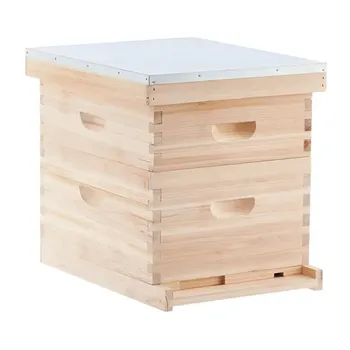
Complete sets of managed commercial beehives provide a mobile, resilient, and standardized infrastructure that optimizes pollination across diverse natural landscapes. These systems allow for the precise deployment of healthy colonies into high-biodiversity regions, ensuring consistent pollination efficiency regardless of altitude or environmental shifts. By utilizing standardized equipment, operators can scale production and secure high-quality monofloral honey yields that meet the rigorous demands of global B2B markets.
Managed beehive systems transform traditional beekeeping into a predictable, industrial-scale operation by providing mobility and environmental control. This infrastructure ensures a stable supply chain of high-value honey and reliable pollination services essential for large-scale agricultural and natural pasture management.
Strategic Mobility and Geographic Reach
Precision Deployment in Natural Pastures
Managed beehives allow for flexible transportation and layout based specifically on plant flowering seasons and varying geographical altitudes. This enables distributors to offer solutions that can be moved to where they are needed most, ensuring "just-in-time" pollination for specific floral blooms.
High-Altitude Operational Stability
Standardized equipment protects colonies from harsh weather conditions, providing a stable operational base in regions ranging from 1000 to 3000 meters. This resilience allows for the utilization of high-altitude biodiversity to produce premium, high-quality monofloral honey.
Cross-Regional Logistics
The design of these complete sets facilitates high-density, cross-regional transportation tailored to specific agricultural needs. This mobility supplements the lack of wild pollinators in remote areas, ensuring the continuity of pollination services across vast territories.
Standardized Quality and Production Efficiency
Uniformity in Honey Production
Modern beehives provide a standardized physical structure that ensures honey quality consistency through systematic production processes. This allows beekeeping operations to transform environmental resources into competitive commercial commodities with predictable specifications.
Advanced Colony Maintenance
Managed systems allow for human intervention, such as supplementary feeding and disease prevention, which sustain stable colony sizes. Unlike feral colonies that are vulnerable to environmental fluctuations, managed hives maintain the "worker force" necessary for efficient nectar collection.
Non-Destructive Harvesting
Professional equipment, including standardized frames and smokers, facilitates non-destructive honey harvesting. This protects the long-term health of the colony while optimizing the internal space for maximum yield per unit.
Commercial Scalability for Distributors
One-Stop Sourcing and Fulfillment
For wholesalers and resellers, complete beehive sets represent a comprehensive full-spectrum product portfolio. Offering a total solution—from the hive structure to protective gear—simplifies the procurement process and enhances order fulfillment efficiency.
Labor Reduction and Professionalism
Standardized hives significantly reduce labor intensity and minimize management losses compared to traditional methods. This efficiency supports the transition from scattered gathering to a scalable, modern farming industry that provides stable economic support for large enterprises.
Rapid Response to Market Demand
Integrated systems allow beekeepers to monitor hive health and yield precisely, enabling a rapid response to shifts in market demand or environmental changes. This professional industry expertise ensures that distributors can maintain a reliable supply of both equipment and honey products.
Understanding the Trade-offs
Operational Complexity and Training
While managed hives increase efficiency, they require a higher level of technical expertise to operate correctly. Users must be trained in disease monitoring and seasonal management to prevent colony collapse, which differs from the "set and forget" nature of wild colonies.
Initial Capital Investment
The transition to complete, standardized sets requires a higher upfront investment compared to traditional log hives. However, this is generally offset by the significantly higher honey yields and the reduction in long-term management labor.
Logistics and Transport Risks
Moving high-density colonies over long distances involves biological risks, such as heat stress or transport-related mortality. Professional-grade transport equipment and rapid delivery protocols are essential to mitigate these risks and ensure colony health upon arrival.
Making the Right Choice for Your Goal
How to Apply This to Your Project
Effective pollination and honey production depend on matching the equipment to the specific environmental and business objectives of the operation.
- If your primary focus is premium product sourcing: Prioritize sets designed for high-altitude resilience to capture the unique value of monofloral honeys from high-biodiversity regions.
- If your primary focus is large-scale pollination services: Invest in standardized, mobile hive systems that allow for rapid deployment and high-density transportation across different climate zones.
- If your primary focus is operational efficiency: Choose full-spectrum managed sets that integrate pest control and non-destructive harvesting tools to reduce labor costs and ensure quality consistency.
By leveraging standardized beehive technology, commercial operations can achieve a level of production stability and quality control that traditional methods simply cannot match.
Summary Table:
| Key Advantage | Feature Detail | Business Impact |
|---|---|---|
| Strategic Mobility | Portable design for high-altitude & remote regions | Enables high-value monofloral honey production |
| Standardization | Uniform physical structure & disease prevention | Ensures consistent honey quality for B2B markets |
| Operational Scale | Non-destructive harvesting & labor reduction | High-volume fulfillment & improved profit margins |
| Resilience | Stable colony sizes via human intervention | Reliable supply chain regardless of wild pollinator shifts |
Partner with HONESTBEE for High-Volume Beekeeping Success
Are you a distributor, wholesaler, or B2B reseller looking to dominate the apiary market? HONESTBEE is your premier one-stop sourcing partner, providing a comprehensive full-spectrum product portfolio tailored for commercial scale.
- Maximize Profit Margins: High-efficiency machinery—from hive-making to honey-filling—designed to reduce your operational overhead.
- Unmatched Supply Reliability: Benefit from our ultra-fast delivery and rapid response times to keep your inventory moving.
- Industry Expertise: We offer professional OEM/ODM support and deep technical knowledge to ensure your equipment meets global certifications.
From specialized hardware to essential industry consumables, we empower your business with premium trading services and exceptional customer support.
Contact HONESTBEE Today for Wholesale Inquiries
References
- Zahra Shakoori, Farid Salmanpour. Nutritional position of managed honey bees during pollination of native plants by the melissopalynology method. DOI: 10.1038/s41598-024-73086-4
This article is also based on technical information from HonestBee Knowledge Base .
Related Products
- Professional Insulated Plastic Bee Hives
- Wholesales Dadant Size Wooden Bee Hives for Beekeeping
- Australian Langstroth Beehive Boxes for Beekeeping Wholesales
- Wooden Bee Hive Frames for Beekeeping and Wholesale
- Long Langstroth Style Horizontal Top Bar Hive for Wholesale
People Also Ask
- What are the advantages of plastic bee hives? Boost Efficiency & Durability for Your Apiary
- Are plastic bee hives any good? Unlock Durability & Efficiency for Your Apiary
- How do plastic bee hives compare to wooden hives in handling? Reduce Strain & Boost Efficiency
- Are plastic bee hives good? Durable, Low-Maintenance Hives for Modern Apiaries
- What are the disadvantages of plastic beehives? Key Operational and Environmental Risks Exposed