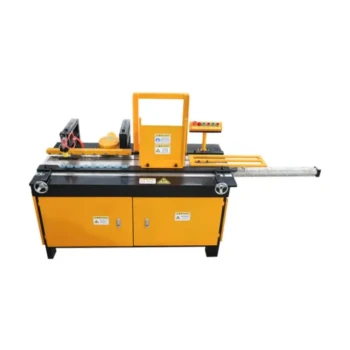
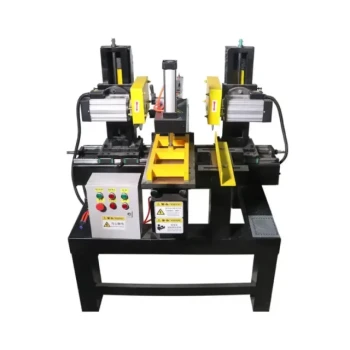
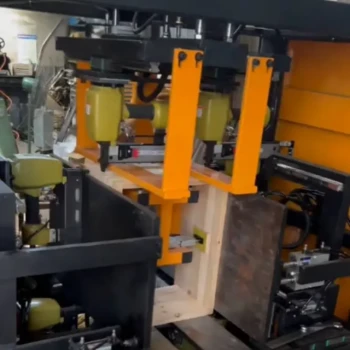
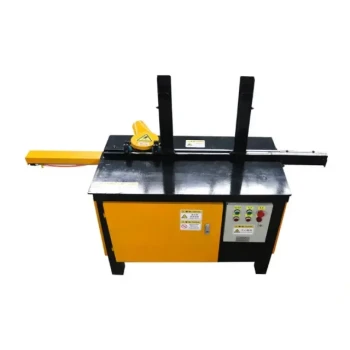
Professional hive-making machines revolutionize commercial apiaries through precision engineering. By utilizing high-precision woodworking technology, these machines mass-produce standardized components that manual construction cannot match in consistency. This uniformity is the critical factor that enables efficient colony management, seamless transportation, and optimized honey production.
The Core Insight Manual construction creates variability that hampers growth; professional machinery creates standardization that unlocks scalability. By ensuring precise dimensions—specifically the "bee space"—these machines simultaneously improve operational efficiency and the biological health of the colony.
The Operational Impact of Standardization
Seamless Interchangeability
In a large-scale apiary, logistics are the primary bottleneck. Machine-produced components ensure that hive bodies, frames, and gates utilize highly uniform dimensions.
This allows for perfect interchangeability of parts across thousands of hives. It significantly reduces the labor costs and logistical complexity associated with equipment maintenance and production turnover.
Enabling Mechanization and Mobility
Commercial beekeeping often requires moving colonies across regions for pollination or foraging. Highly standardized hive parts facilitate these mobile operations by stacking securely and consistently.
Furthermore, uniform equipment is a prerequisite for mechanized management. It reduces the maintenance difficulties caused by inconsistent equipment specifications often found in hand-built hives.
Rapid Infrastructure Scaling
Manual construction is labor-intensive and slow. Mechanized manufacturing significantly increases the production speed of beehives.
This speed is essential for meeting the infrastructure demands of rapidly expanding large-scale apiaries, ensuring that housing is available as soon as the colony count grows.
Optimizing Biological Health and Productivity
Mastering the "Bee Space"
The most critical advantage of machine precision is adherence to the "bee space" principle.
Manual construction often results in slight variances that violate this specific gap. Machine precision ensures internal dimensions are exact, which prevents bees from bridging gaps with excess wax (burr comb) or propolis.
Energy Conservation and Microclimate
When dimensions are precise, bees consume less energy sealing structural gaps or correcting spatial errors.
This energy conservation allows the colony to focus on brood rearing and microclimate regulation. For specific species like the Eastern honeybee, this stress reduction is vital for improving settlement rates and overall colony health.
Supporting Chemical-Free Practices
Precise physical design can reduce reliance on chemical interventions.
In organic production environments, these machines facilitate the processing of chemical-free wood. The tight structural integrity achieved by machines aids in insect prevention, protecting the natural purity of the honeybee growth environment without needing heavy pesticide use.
Preparing for the Digital Future
Integration with IoT Hardware
Modern apiaries increasingly rely on data. Standardized hive structures are fundamental to digital management.
Machine-made hives ensure the seamless installation of Internet of Things (IoT) sensor hardware. Uniform surfaces and tight seals are necessary for sensors to function correctly and report accurate environmental data.
Compatibility with Automated Extraction
The end of the production chain relies on hardware consistency.
Standardized frames and boxes establish a physical foundation for automated honey extraction and filling processes. Deviations in size—common in manual builds—can jam automated lines, causing downtime and equipment damage.
Understanding the Trade-offs
Initial Capital vs. Labor Cost
While machines reduce long-term labor, they represent a significant upfront capital investment. Small-scale operations may find the cost of professional machinery prohibitive compared to the low barrier to entry of manual tools.
Flexibility Limitations
Machine production favors mass standardization. If an apiary requires highly customized or non-standard hive designs for experimental purposes, manual construction offers greater flexibility. Machines are tuned for specific specifications and retooling them for unique shapes can be inefficient.
Making the Right Choice for Your Goal
To determine if transitioning to professional hive-making machinery is the right move for your operation, consider your primary objectives:
- If your primary focus is Scalability: Prioritize machine production to ensure component interchangeability and rapid infrastructure expansion.
- If your primary focus is Organic Certification: Leverage machine precision to utilize chemical-free wood and reduce reliance on pesticides through better physical design.
- If your primary focus is Modernization: Adopt standardized machine-made hives to ensure compatibility with IoT sensors and automated extraction lines.
Precision is not just a manufacturing detail; it is the foundation of a healthy, scalable, and modern commercial apiary.
Summary Table:
| Feature | Professional Hive-Making Machines | Manual Construction |
|---|---|---|
| Precision | High; Ensures exact "bee space" | Variable; Prone to human error |
| Scalability | High-speed production for large apiaries | Slow; Labor-intensive process |
| Interchangeability | Universal parts fit perfectly | Components often require adjustment |
| Biological Impact | Reduces burr comb; optimizes bee health | Can increase stress due to gap errors |
| Automation Ready | Compatible with IoT & automated lines | Difficult to integrate with technology |
| Initial Cost | Higher capital investment | Low entry cost |
Scale Your Apiary with Precision-Engineered Equipment
Transitioning to professional hive-making machinery is the key to unlocking commercial growth and operational efficiency. HONESTBEE supports commercial apiaries and distributors with a comprehensive wholesale offering designed for the modern industry.
We provide the full spectrum of beekeeping tools, specialized hardware, and essential consumables, including:
- Advanced Hive-Making & Woodworking Machinery
- Automated Honey-Filling & Extraction Equipment
- Comprehensive Industry Consumables & Cultural Merchandise
Ready to enhance your production speed and colony health? Contact HONESTBEE today to discover how our wholesale solutions can modernize your infrastructure and maximize your yield.
References
- Subhajit Pal, Swarnali Bhattacharya. APITOURISM IN AGRITOURISM: A FUSION OF GREENERY, APICULTURE & TOURISM IN THE VALLEY OF JAMPUI HILLS OF NORTH EAST INDIA. DOI: 10.51470/plantarchives.2023.v23.no1.008
This article is also based on technical information from HonestBee Knowledge Base .
Related Products
- High-Efficiency Pneumatic Bee Hive Making Machine for Rapid Box Assembly
- Mini Desktop Bee Hive Frame Forming Making Machine
- Beehive Handle and Frame Rest Cutting Machine: Your Specialized Hive Machine
- Beehive Machine Double End Saw for Precision Hive Component Manufacturing
- Automatic High-Speed Bee Hive Box Stapling Machine
People Also Ask
- How does the introduction of professional beehive-making machinery benefit sustainable beekeeping? Scale Your Apiary
- Why is specialized beehive-making machinery critical for low-defense breeding? Enhance Selection with Precision Tools
- How does the introduction of specialized beehive making machinery contribute to increasing the scale of regional beekeeping industries?
- What is the importance of specialized beehive making machinery in a circular bio-economy? Build Local Sustainability
- Why is specialized beehive-making machinery essential? Scale Your Apiary with Precision Industrial Standards