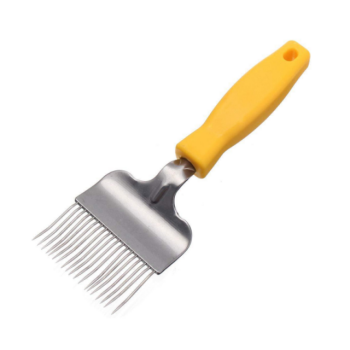
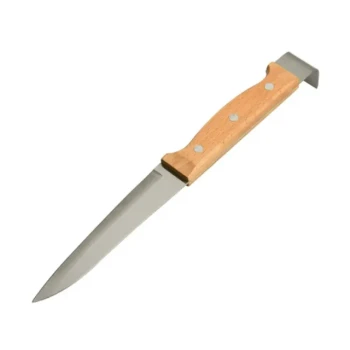
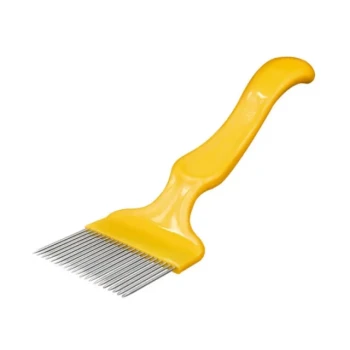
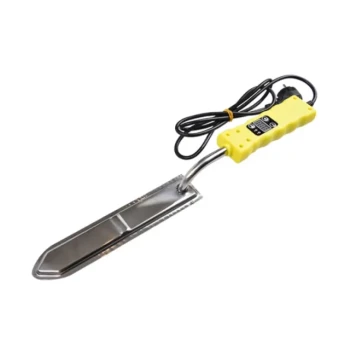
Specialized curved knives provide the essential maneuverability required to harvest honey from the fixed, restrictive interiors of wall hives. Unlike standard straight blades, the unique geometry of a curved knife allows for precise cutting within narrow confines where moveable frames are not an option.
The curved design enables "one-sided cutting," a technique that allows beekeepers to harvest mature honey efficiently while deliberately leaving a portion of the comb intact to ensure the colony's survival through winter.
Navigating the Constraints of Wall Hives
Overcoming Structural Limitations
Wall hives are distinct because they are non-moveable structures. You cannot remove a frame to inspect or harvest it externally as you would with a modern box hive.
The curved knife is specifically designed to work within this fixed architecture. It allows the beekeeper to reach into the hive cavity and sever the comb from the wall without requiring the dismantling of the hive itself.
Precision in Narrow Spaces
The internal space of a wall hive is often tight and irregular. A straight blade can easily become wedged or fail to reach the connection points of the comb.
The flexibility and curve of specialized knives allow for precise navigation around these tight corners. This minimizes damage to the hive walls and ensures a clean cut where the comb attaches to the structure.
Sustainable Harvesting Practices
The Mechanics of "One-Sided Cutting"
The most significant advantage of the curved knife is its ability to facilitate "one-sided cutting."
This technique involves slicing through the comb in a specific way that removes the honey-filled section while leaving the base or a specific side attached. This requires a tool that can manipulate angles inside a small cavity, which is impossible with a rigid, straight tool.
Ensuring Winter Survival
In wall hive beekeeping, total harvest is rarely the goal. The colony requires remaining food stores to survive the winter months.
By using a curved knife to selectively harvest only mature honeycombs, the beekeeper can leave a calculated portion of the comb behind. This ensures the bees have sufficient resources to maintain energy levels and heat during the cold season.
Understanding the Trade-offs
While curved knives are the superior tool for this specific application, they require a high degree of manual dexterity and experience.
Because the cutting happens inside a dark, fixed cavity, the beekeeper relies heavily on tactile feedback through the tool. An inexperienced user risks cutting too deep, potentially injuring the brood or removing too much of the winter store, which would compromise the colony's future viability.
Making the Right Choice for Your Goal
When managing wall hives, the tool you choose dictates the sustainability of your apiary.
- If your primary focus is Colony Health: Use the curved knife to execute "one-sided cutting," prioritizing the retention of sufficient comb for winter survival.
- If your primary focus is Harvest Efficiency: Leverage the tool's flexibility to navigate narrow confines quickly, minimizing the time the hive is open and disturbed.
The curved knife is not just a cutting tool; it is an instrument of balance between harvest yield and colony preservation.
Summary Table:
| Feature | Specialized Curved Knife | Standard Straight Blade |
|---|---|---|
| Maneuverability | High; designed for narrow, fixed cavities | Low; prone to wedging in tight spaces |
| Harvest Method | Supports "one-sided cutting" | Limited to full comb removal |
| Colony Safety | High; preserves winter food stores | Lower; risks over-harvesting |
| Precision | Superior; reaches irregular connection points | Poor; difficult to reach hive corners |
Elevate Your Beekeeping Operations with HONESTBEE
At HONESTBEE, we specialize in empowering commercial apiaries and distributors with high-performance tools designed for every beekeeping challenge. From specialized curved knives for traditional wall hives to advanced honey-filling and hive-making machinery, our comprehensive wholesale portfolio ensures your business has the competitive edge.
Why partner with us?
- Expert Sourcing: Access a full spectrum of industry-leading beekeeping equipment and consumables.
- Scalable Solutions: We cater to large-scale operations and distributors with reliable, high-volume supply.
- Diverse Portfolio: Everything from specialized hardware to honey-themed cultural merchandise.
Ready to enhance your productivity and colony health? Contact our expert team today to explore our wholesale offerings and find the perfect equipment for your needs.
References
- Ramesh Kumar, Raj Kumar Thakur. Indigenous Beekeeping In The Sirmaur District Of Himachal Pradesh, India. DOI: 10.1080/0005772x.2014.11417584
This article is also based on technical information from HonestBee Knowledge Base .
Related Products
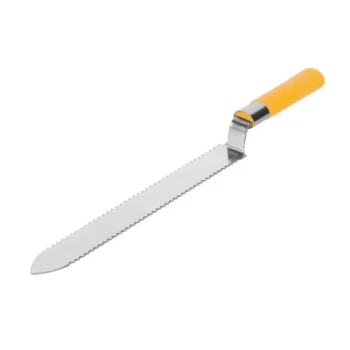
- Serrated Honey Uncapping Knife for Beekeeping and Bee Hive Maintenance
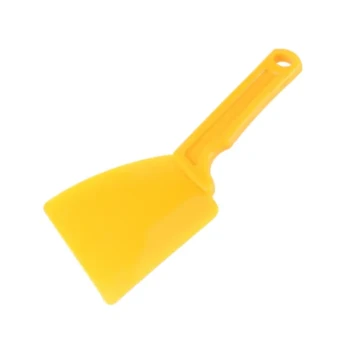
- Professional Honey Scraper for Efficient Apiary Maintenance
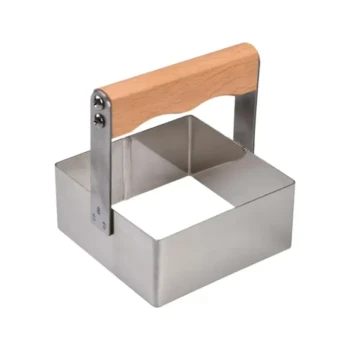
- Heavy Duty Stainless Steel Honeycomb Cutter
- Professional Serrated Double-Sided Uncapping Knife for Beekeeping
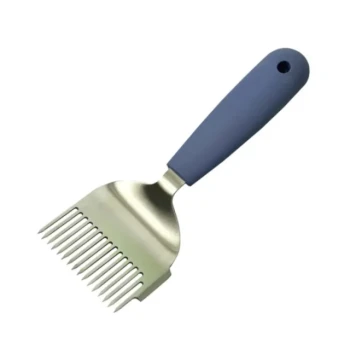
- Professional Multi-Function Uncapping Fork with Ergonomic Rubber Grip
People Also Ask
- What is the benefit of the serrated edge on an uncapping knife? Unlock Faster, Cleaner Honey Extraction
- What specialized tools are used for uncapping and straining honey? Professional Gear for Efficient Harvesting
- What are the technical advantages of using specialized honey uncapping knives? Optimize Purity and Comb Reusability
- What specific structure does a professional honey uncapping knife target? Maximize Your Mature Honey Yield
- How do you cut capping off honey from frames? A Guide to Efficient Uncapping Methods