Running 9 frames in a standard 10-frame honey super is a strategic management technique designed to optimize the physical structure of the honeycomb for easier harvesting. This specific spacing encourages bees to draw out the honeycomb cells further than the wooden frame edges, creating "fatter" combs that are significantly easier to uncap and smoother to process in automated extractors.
Core Takeaway Bees naturally dislike large gaps and will lengthen honeycomb cells to fill the void between wider-spaced frames. This results in comb that protrudes beyond the wood, allowing for a clean, single-pass uncapping process and potentially higher honey yields per box.
Operational Efficiency and Extraction
The Mechanics of "Fat" Comb
When you space frames further apart, bees extend the depth of the cells to maintain the correct "bee space" between comb surfaces. This results in a thicker, bulging comb that extends past the width of the wooden frame bars.
Simplified Uncapping
This is arguably the most practical benefit. Because the wax extends beyond the wood, an uncapping knife can slice off the wax cappings in a single, straight motion. You do not have to dig the knife into the frame or worry about the blade hitting the wooden top and bottom bars.
Automated System Compatibility
If you use mechanical extraction equipment, 9-frame spacing is highly advantageous. The configuration allows automated extracting systems to run much more smoothly compared to the tighter tolerances of a full 10-frame setup.
Honey Quality and Volume
Uniform Consistency
Using 9 frames promotes comb that is evenly drawn from top to bottom. In tighter configurations, comb width can sometimes vary, but the extra space encourages the bees to build a more uniform surface.
Potential for Higher Yields
According to the primary technical data, this configuration can result in a greater honey volume per box. By maximizing the depth of the cells, you optimize the storage capacity of the super relative to the amount of wax used.
Cut Comb Production
For beekeepers producing cut comb honey (honey sold in its natural wax structure), 9-frame spacing is ideal. It is particularly well-suited for foundationless frames, providing the bees the right amount of room to build aesthetic, marketable comb.
Understanding the Trade-offs
The "Drawn Comb" Prerequisite
You must generally introduce this spacing only after the comb is already drawn. If you put 9 frames of undrawn foundation into a box, bees will likely build "cross comb" or "burr comb" in the gaps rather than extending the cells. Start with 10 frames to get the foundation drawn, then space to 9 for refilling.
Strictly for Honey Supers
This technique is exclusively for honey storage. Never reduce frame counts in the brood nest. Altering the spacing in the brood chamber creates operational chaos and disrupts the colony's reproductive organization.
Plastic Frame Limitations
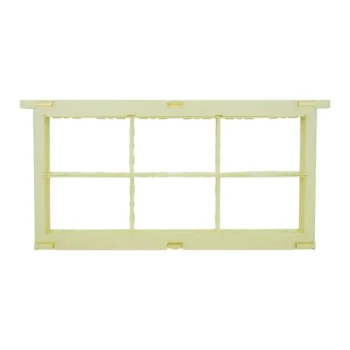
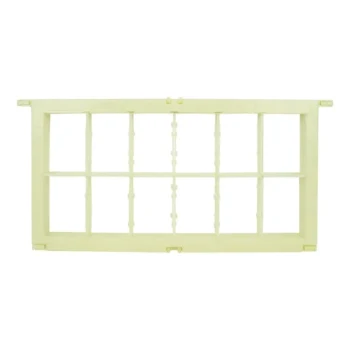
Bees behave differently on plastic frames compared to wax. They are less likely to "draw out" plastic frames to bridge the gap, which can result in messy comb construction if you attempt 9-frame spacing with plastic equipment.
Manual Spacing Requirements
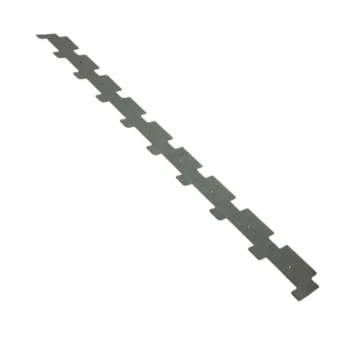
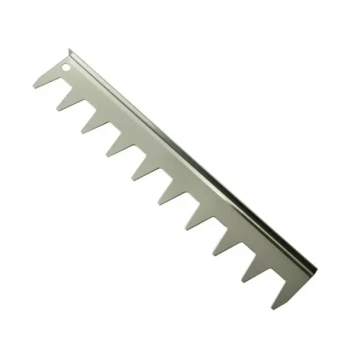
While 10 frames naturally self-space in a standard box, 9 frames require manual adjustment to ensure even gaps. Failure to space them evenly will result in honeycombs of varying widths, negating the benefits of uniformity.
Making the Right Choice for Your Goal
Deciding between 9 and 10 frames depends on the maturity of your equipment and your harvesting method.
- If your primary focus is efficient harvesting: Transition to 9 frames once your comb is drawn to dramatically speed up the uncapping process and reduce handling time.
- If your primary focus is drawing new foundation: Stick to 10 frames to ensure straight combs and prevent the bees from building bridges of wax between frames.
- If your primary focus is cut comb honey: Utilize 9-frame spacing with foundationless frames to encourage thick, uniform squares of honeycomb.
By carefully managing frame spacing, you trade a small amount of manual setup time for a significantly more streamlined extraction process.
Summary Table:
| Feature | 10-Frame Spacing | 9-Frame Spacing |
|---|---|---|
| Comb Depth | Flush with wooden frame | Extends beyond wood ("Fat" comb) |
| Uncapping Effort | High; blade can hit wood | Low; single smooth pass |
| Honey Yield | Standard | Potentially higher per box |
| Ideal Use Case | Drawing new foundation | Honey harvesting & extraction |
| Management | Self-spacing | Requires manual spacing |
| Applicability | Brood nest & supers | Honey supers ONLY |
Streamline Your Apiary Operations with HONESTBEE
At HONESTBEE, we understand that efficiency is the backbone of successful commercial beekeeping. Whether you are scaling up your honey production or supplying local markets, our comprehensive range of beekeeping tools, hive-making machinery, and honey-filling equipment is designed to maximize your output.
We provide commercial apiaries and distributors with high-quality consumables and specialized hardware tailored to professional standards. From foundation-ready frames to automated processing systems, let us help you achieve a more productive harvest.
Ready to elevate your wholesale beekeeping supply?
Contact Us Today to Discuss Your Needs
Related Products
- Heavy Duty Castellated Iron Frame Spacer for Honey Supers
- Rapid Bee Feeder White Plastic 2L Round Top Feeder for 8 or 10-Frame Bee Hives
- Stainless Steel 9 Frame Hive Spacer Durable Precise for Commercial Beekeeping
- Professional 500g Sectional Comb Honey Frame System for Beekeeping
- Professional Sectional Comb Honey Frame with 250g Cassette System for Beekeeping
People Also Ask
- What are honey super frames and what foundation options are available? Choose the Best Support for Your Bees
- What are the reasons and drawbacks of using nine frames in a ten-frame honey super? Boost Extraction Speed Today
- What are honey super frames and how many are needed per box? A Beekeeper's Essential Guide
- What are honey super frames and their foundation options? Choose the Best Support for Your Hive's Honey Production
- Why might a beekeeper use fewer than the standard number of frames in a honey super? Boost Extraction Efficiency