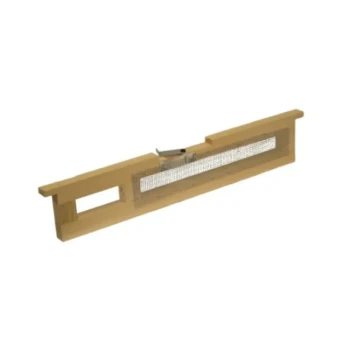
The primary benefit of a wooden measuring frame with a 1-inch square grid is its ability to transform visual inspections into precise, non-destructive scientific data. By overlaying this grid on a comb, you can accurately quantify the specific surface area occupied by critical colony elements—including worker and drone cells, capped brood, honey, pollen, and adult bees—without harming the insects or damaging their infrastructure.
Core Takeaway The 1-inch grid system functions as a standardization tool, converting biological activity into hard metrics. It allows for the calculation of total colony productivity and population density while maintaining the physical integrity of the hive.
Transforming Observation into Quantitative Data
Precise Surface Area Measurement
The fundamental advantage of this tool is standardization. By dividing the irregular surface of a honeycomb into 1-inch square units, you eliminate guesswork and subjective estimation. This allows researchers and apiarists to record exact surface area measurements that are repeatable and comparable over time.
Granular Differentiation of Hive Elements
Unlike simple weight measurements, a grid allows you to distinguish between different types of biomass. You can separately quantify worker cells versus drone cells, as well as distinguish between food stores (honey/pollen) and future population (capped brood). This level of detail is essential for understanding the specific biological composition of the colony.
Calculation of Population and Productivity
The data derived from the grid serves as the foundation for broader calculations. By knowing the exact area covered by bees or brood, you can extrapolate reliable estimates for total adult bee populations and overall colony productivity. This turns a static visual check into a dynamic population model.
Prioritizing Colony Welfare
Non-Destructive Methodology
The most critical operational benefit is that the process is non-destructive. The frame is simply overlaid on the existing comb. There is no need to cut sections of the wax, remove larvae, or sacrifice bees to obtain the data.
Preserving Comb Integrity
Because the measurement is visual and external to the comb structure, the hive's infrastructure remains intact. This ensures that the colony's energy is spent on growth and foraging rather than repairing damage caused by invasive sampling methods.
Understanding the Trade-offs
Manual Effort vs. Automation
While the grid offers high precision for specific biological parameters, it requires manual application to individual frames. This is more labor-intensive than using electronic hanging scales, which provide continuous, non-intrusive data on total hive weight but lack the granularity to distinguish between honey weight and brood weight.
Snapshot Data
The grid provides a highly accurate "snapshot" of the colony at a specific moment. However, unlike automated sensors that track long-term trends in biomass evolution continuously, grid measurements represent distinct points in time that must be manually repeated to track trends.
Making the Right Choice for Your Goal
To determine if a 1-inch wooden measuring frame is the right tool for your specific needs, consider your primary objective:
- If your primary focus is detailed biological research: Use the grid frame to obtain granular data on brood development, egg-laying performance, and specific resource ratios (pollen vs. honey).
- If your primary focus is macro-level monitoring: Consider supplementing the grid with hive scales to track total biomass and honey accumulation without opening the hive as frequently.
By using a standardized grid, you move beyond guessing colony strength to measuring it with scientific rigor.
Summary Table:
| Feature | Benefit | Data Utility |
|---|---|---|
| 1-Inch Square Grid | Standardizes visual observation into hard metrics | Precise surface area calculation |
| Non-Destructive Design | Measures without damaging comb or harming bees | Preserves colony health and energy |
| Granular Differentiation | Separates worker/drone cells and honey/pollen | Detailed biological composition analysis |
| Scientific Rigor | Eliminates subjective estimation | Enables repeatable, comparable data sets |
| Population Modeling | Extrapolates total bee numbers from area | Monitors productivity and growth trends |
Elevate Your Apiary’s Performance with HONESTBEE
Transition from guesswork to precision with professional-grade beekeeping tools. At HONESTBEE, we specialize in supporting commercial apiaries and distributors by providing a comprehensive wholesale range of equipment—from specialized hardware like hive-making and honey-filling machines to essential industry consumables and honey-themed merchandise.
Whether you are scaling your production or refining your research methodology, our portfolio is designed to enhance your efficiency and scientific rigor. Contact us today to explore our full equipment catalog and wholesale solutions and see how we can help your business thrive.
References
- Alexandria N. Payne, Juliana Rangel. The effect of queen insemination volume on the growth of newly established honey bee (Apis mellifera) colonies. DOI: 10.1007/s13592-018-0587-x
This article is also based on technical information from HonestBee Knowledge Base .
Related Products
- Professional Wooden Requeening Frame for Beekeeping
- Assembled Wooden Bee Frames with Beeswax Foundation Ready to Use by HONESTBEE
- Wooden Bee Hive Frames for Beekeeping and Wholesale
- Assembled Wooden Bee Frames with Plastic Foundation for Durability and Convenience by HONESTBEE
- HONESTBEE Wired and Assembled Wooden Bee Frames Foundation for a Thriving Hive
People Also Ask
- What are the primary functions of beekeeping frames? Boost Efficiency with Professional Hive Management
- What are the best practices for assembling beekeeping frames? Pro Tips for Maximum Durability & Efficiency
- How are deep, medium, and shallow frames typically used in beekeeping? Optimize Your Hive Setup
- What are the characteristics of wooden frames in beekeeping? Unlock Natural Flexibility & Cost-Effectiveness
- What are the common specifications for wooden beekeeping frames used in colony expansion? Your Complete Guide