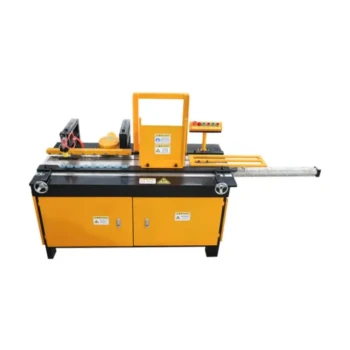
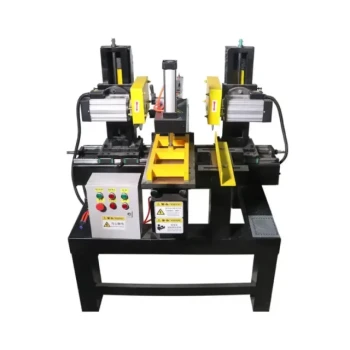
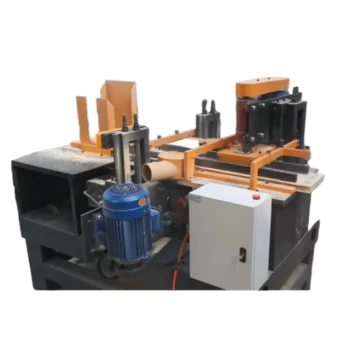
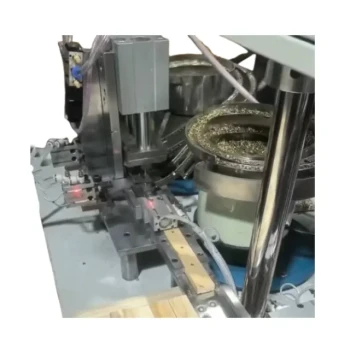
Automated manufacturing machinery revolutionizes large-scale beekeeping by replacing manual, variable production with precise, industrial-grade consistency. Specifically, these systems significantly reduce the production cost per unit and ensure the complete interchangeability of hive components, allowing operations to scale seamlessly from small apiaries to commercial farms managing thousands of hives.
The core value of automated hive manufacturing is not just speed; it is the establishment of a standardized infrastructure. By guaranteeing that every frame and box is physically identical, you eliminate hardware incompatibility, streamline downstream processing, and create a stable foundation for massive commercial expansion.
The Strategic Value of Standardization
Ensuring Component Interchangeability
For large operations, the ability to swap parts between hives without friction is critical. Automated CNC and assembly processes produce components with strict dimensional tolerances. This ensures that a frame from Apiary A fits perfectly into a box in Apiary B, eliminating the operational bottlenecks caused by mismatched equipment.
Facilitating Efficient Management
Standardization transforms hive management from a craft into a streamlined process. Uniform equipment facilitates faster colony inspections and easier migration of hives between locations. When every box is identical, logistics become predictable, reducing the complexity of managing vast numbers of colonies.
Enhancing Biosecurity
A standardized physical environment is fundamental for maintaining colony health. Precision manufacturing minimizes structural gaps and irregularities that can harbor pests or disease. Consistent equipment supports better disease transmission control and ensures a stable breeding environment for the bees.
Economic and Logistical Advantages
Reducing Unit Costs
Transitioning from artisanal construction to industrial-grade manufacturing significantly lowers the cost of production per unit. By utilizing specialized woodworking equipment, operators can produce large volumes of hardware at a fraction of the cost of manual labor.
Optimizing Logistics and Procurement
Owning hive-making machinery allows operations to manufacture hives according to local specifications in-house. This capability drastically reduces external procurement and logistics costs. You are no longer dependent on the shipping schedules or pricing volatility of external equipment suppliers.
Increasing Asset Resilience
Beekeeping faces sudden risks, such as environmental collapses or pest outbreaks. In-house manufacturing capacity ensures rapid asset recovery. If a significant number of colonies are lost, the operation can quickly produce new hives to replace them, ensuring self-sufficiency and business continuity.
Integration with Industrial Workflows
Enabling Downstream Automation
Modern commercial beekeeping relies on automated honey extraction lines and industrial transport platforms. These machines require high-precision inputs to function correctly. Automated frame manufacturing ensures that every removable frame fits the exact specifications required by extraction robots, preventing jams and equipment damage.
Improving Supply Chain Productivity
Precision machinery serves as the foundational infrastructure for the entire industrial cycle, from equipment supply to product recovery. By aligning hive construction with international standards (such as Langstroth dimensions), operations ensure their hardware is universally compatible, increasing overall supply chain productivity.
Understanding the Trade-offs
The Shift from Artisanal to Industrial
Adopting automated machinery marks a distinct transition from artisanal hive construction to standardized mass production. While this ensures structural integrity and lower costs, it requires a commitment to rigid specifications. You lose the ability to make ad-hoc, "on-the-fly" adjustments to individual hives, as the efficiency of the system relies entirely on total uniformity.
The Requirement for Precision
The benefits of downstream automation (like extraction lines) are entirely dependent on the precision of your upstream manufacturing. If the manufacturing machinery is not calibrated to high tolerances, the resulting "standardized" equipment will fail to integrate with automated extraction systems, negating the efficiency gains.
Making the Right Choice for Your Goal
To determine how to best integrate this technology into your operation, consider your primary objective:
- If your primary focus is Rapid Scaling: Prioritize machinery that delivers the lowest cost per unit to maximize your budget for colony expansion.
- If your primary focus is Operational Efficiency: Focus on equipment that guarantees high-precision tolerances to ensure seamless integration with automated honey extraction lines.
- If your primary focus is Risk Management: Invest in in-house manufacturing capabilities to ensure you can rapidly replace hardware losses without relying on external supply chains.
Automated manufacturing is the bridge that allows beekeeping to evolve from a labor-intensive practice into a scalable, industrial operation.
Summary Table:
| Key Benefit | Impact on Operation | Strategic Advantage |
|---|---|---|
| Component Interchangeability | Eliminates hardware friction | Seamless hive migration and logistics |
| Cost Reduction | Lowers production cost per unit | Higher profit margins and rapid scaling |
| Dimensional Precision | Ensures compatibility with robots | Prevents jams in automated extraction lines |
| In-house Production | Reduces procurement lead times | Rapid asset recovery and self-sufficiency |
| Standardization | Uniform hive environment | Enhanced biosecurity and easier inspections |
Scale Your Beekeeping Business with Industrial Precision
Transitioning from artisanal methods to industrial-grade automation is the key to managing thousands of hives efficiently. HONESTBEE specializes in empowering commercial apiaries and distributors with the high-precision tools necessary for global competitiveness.
Our comprehensive wholesale portfolio includes:
- Hive-Making & Honey-Filling Machinery: Reliable, high-tolerance equipment for standardized production.
- Specialized Beekeeping Tools: A full spectrum of hardware and machinery designed for large-scale durability.
- Industrial Consumables & Merchandise: Everything you need to maintain and brand your operation.
Whether you are looking to lower your cost per unit or integrate seamless downstream automation, we provide the infrastructure to support your growth.
Contact HONESTBEE Today to Discuss Your Wholesale Needs
References
- Dinkar Morvadia. Entrepreneurial Constraints Faced by Beekeeper Entrepreneurs in Junagadh Districts of Gujarat. DOI: 10.56360/dijcm/3.ii.2023.2302
This article is also based on technical information from HonestBee Knowledge Base .
Related Products
- Beehive Handle and Frame Rest Cutting Machine: Your Specialized Hive Machine
- Mini Desktop Bee Hive Frame Forming Making Machine
- Beehive Machine Double End Saw for Precision Hive Component Manufacturing
- Automatic High-Speed Bee Hive Box Stapling Machine
- HONESTBEE Top Bar & Bottom Bar Forming Machine | Bee Frame Machine
People Also Ask
- What is the importance of specialized beehive-making machinery? Ensure Precision for Sensor-Based Hive Monitoring
- How do bee hive handles facilitate the evaluation of food stores? Use the Lift Test for Winter Survival
- How do specialized beehive handling machines contribute to efficiency? Streamline Your Mobile Beekeeping Logistics
- How do professional beehive and frame manufacturing machines contribute to commercial apiary management? Boost Efficiency
- What are the standard dimensions for frame rests in a beehive? Essential Guide for Perfect Bee Space