Local honey is distinct. Honey produced by backyard beekeepers in the United States is primarily defined by being raw and unfiltered. Unlike mass-produced varieties that may undergo heavy processing, this honey is handled at low temperatures to ensure it remains as close as possible to the natural state in which the bees produced it.
Core Takeaway: Local US honey is characterized by high quality and minimal processing, retaining its natural profile. However, due to the uncontrollable foraging patterns of bees, it is rarely certified as "organic," regardless of its purity.
The Standard of Processing
The most defining characteristic of honey from local or backyard beekeepers is the method of extraction and bottling.
Minimal Heat Exposure
Backyard beekeepers typically utilize low-temperature processing.
High heat can degrade the fundamental properties of the product. By avoiding this, beekeepers maintain the honey's inherent quality and natural characteristics.
Raw and Unfiltered
Because of this gentle handling, the final product is almost always raw.
It is also typically unfiltered. This means the honey retains the texture and composition found within the hive, rather than being stripped down to a clear, uniform syrup.
The Reality of Organic Labeling
While consumers often equate "local" with "organic," this is rarely the case in the United States honey market.
The Foraging Challenge
Bees roam freely over vast distances to gather nectar.
Because a beekeeper cannot control where their bees forage, they cannot guarantee the bees visit only pesticide-free plants. This uncontrollable nature makes achieving organic status exceptionally difficult for local producers.
Regulatory Barriers
The regulatory requirements for organic certification are strict.
Due to the combination of these strict rules and the roaming nature of bees, very few backyard beekeepers in the US can legally label their product as organic.
Understanding the Trade-offs
When choosing local honey, it is important to understand what you are gaining and what you are sacrificing regarding labels.
Quality vs. Certification
The primary trade-off is between actual product quality and official certification.
You are likely buying a superior, high-quality product that preserves natural characteristics. However, you sacrifice the reassurance of an "organic" government label.
The Limits of "Natural"
While the honey is close to its natural state, "natural" does not automatically mean free from environmental contaminants.
Since the bees' flight path is ungovernable, the honey reflects the environment the bees live in, not necessarily a controlled organic zone.
Making the Right Choice for Your Goal
When evaluating honey from US backyard beekeepers, align your expectations with the realities of production.
- If your primary focus is natural quality: Prioritize local honey labeled as "raw and unfiltered," as this indicates low-temperature processing that preserves the honey's character.
- If your primary focus is strict organic certification: Be aware that local US honey rarely meets this standard due to the impossibility of controlling bee foraging areas.
Focus on the processing method—raw and unfiltered—as the true indicator of quality for local honey.
Summary Table:
| Feature | Local/Backyard Honey Characteristics | Consumer Impact |
|---|---|---|
| Processing | Raw and Unfiltered | Retains natural enzymes and pollen |
| Temperature | Low-heat / Minimal heating | Preserves flavor and nutritional profile |
| Certification | Rarely "Organic" | Foraging areas cannot be strictly controlled |
| Consistency | Natural texture and variation | Reflects local floral source and environment |
| Purity | High-quality, minimal additives | Superior taste compared to mass-produced syrup |
Scale Your Beekeeping Success with HONESTBEE
At HONESTBEE, we empower commercial apiaries and distributors with the professional-grade tools needed to harvest premium local honey. Whether you are seeking high-efficiency honey-filling machines, specialized hive-making hardware, or a full range of wholesale beekeeping consumables, we provide the industrial-strength solutions your business demands.
From specialized machinery to honey-themed cultural merchandise, our comprehensive portfolio is designed to enhance your production quality and market reach. Contact us today to discuss your wholesale needs and see how our expertise can streamline your operation!
Related Products
- High Quality Honey Dehumidifier Dryer Thickening Machine for Beekeeping
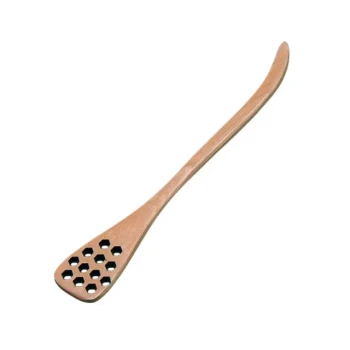
- Modern Honeycomb Pattern Wooden Honey Dipper for Stirring and Drizzling
- Economy Small Scale Honey Dryer Dehumidifier Thickening Machine
- Classic Honey Bear Jars with Flip Top Dispensing Cap for Liquid Sweeteners
- Inverted Squeezable Honey Jar with No Drip Flip Top Cap for Easy Pouring
People Also Ask
- Can you dehumidify honey? A Beekeeper's Guide to Preventing Fermentation
- How to dry up honey? The Safe Guide to Stabilizing Honey and Preventing Fermentation
- How can the moisture content of honey be reduced? A Guide to Safe, Effective Drying Methods
- How to remove humidity from honey? Protect Your Harvest from Fermentation
- What is the process for using a dehumidifier to lower honey's moisture content? Expert Drying Techniques