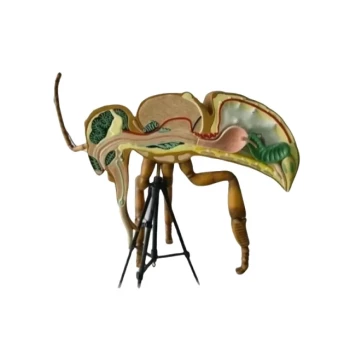
Honeybee artificial insemination (AI) instruments are precision biological tools designed to manually inject selected drone semen into a queen bee, achieving fully controlled mating through microsystem operations. These instruments serve as the technological foundation for bypassing the genetic randomness of natural mating, allowing breeders to stabilize specific traits—such as high productivity or disease resistance—and develop specialized honeybee populations.
The Core Shift: Natural honeybee mating (polyandry) in open environments makes controlling paternal inheritance nearly impossible. Artificial insemination instruments solve this by enabling absolute manual control over the genetic composition of offspring, shifting breeding from a game of chance to a precise science.
Achieving Absolute Genetic Control
Eliminating Genetic Randomness
In nature, a queen mates with multiple drones from unknown lineages. Artificial insemination instruments eliminate this uncertainty by allowing the breeder to select specific drones for mating. This ensures that the paternal genetics are known and verified, rather than random.
Stabilizing Desirable Traits
By controlling both parents, breeders can "lock in" specific characteristics. The primary reference highlights that these instruments are essential for developing populations with high productivity, disease resistance, and cold tolerance. This precision allows for the creation of high-performance breeder colonies that consistently pass on these traits.
Enabling Pedigree Control
For complex hybridization experiments or line breeding, knowing the exact lineage is non-negotiable. AI equipment provides the 100% mating control necessary to maintain strict pedigree records, which is impossible with open-air mating.
Protecting Germplasm Resources
Preventing Hybrid Contamination
In open environments, genetic lines are easily contaminated by foreign drones. AI instruments are the core hardware for closed population management. They prevent the infiltration of unwanted genetics—such as Africanized genes—ensuring the purity of specific strains like European honey bee germplasm.
Restoring Endangered Species
For endangered native species, such as the Dark Bee (Apis mellifera mellifera), maintaining genetic integrity is critical. These tools allow conservationists to restore native populations by precisely crossing specific superior maternal lines with pure paternal lines, effectively reversing genetic dilution.
Enhancing Research and Efficiency
Standardizing Experimental Variables
Scientific research requires consistency. AI instruments allow researchers to control the source and injection volume of drone semen precisely. This ensures that all experimental queen bees share a consistent genetic background, eliminating genetic variability as a confounding factor when studying mechanisms like egg-laying capacity.
Overcoming Environmental Constraints
Natural mating relies heavily on good weather. AI equipment decouples breeding from the environment. Breeders can obtain high-quality fertilized queens even during unfavorable conditions, such as early spring or periods of poor weather, significantly increasing overall breeding efficiency.
Understanding the Trade-offs
High Technical Skill Required
These are microsystem operations, not simple mechanical tasks. The "precision" and "manual intervention" described in the references imply that successful use requires specialized training and steady hands. It is a laboratory-grade procedure, not a field shortcut.
Resource Intensity
Unlike natural mating, which is "free" in terms of labor, AI requires specific equipment (microscopes, insemination devices) and a controlled laboratory setting. It transforms breeding into a high-sensitivity technical process, requiring more time and resources per queen than natural methods.
Making the Right Choice for Your Goal
- If your primary focus is Commercial Production: Use these instruments to stabilize high-value traits like honey productivity and disease resistance to maximize colony performance.
- If your primary focus is Conservation: Rely on AI to maintain strict genetic isolation, preventing the infiltration of foreign genes and preserving rare local germplasm.
- If your primary focus is Scientific Research: Utilize the precise control over semen volume and source to ensure the repeatability and reliability of your genetic evaluations.
By moving from random mating to precise microsystem operations, you gain the ability to engineer the genetic future of your apiary.
Summary Table:
| Core Function | Key Benefit | Impact on Breeding |
|---|---|---|
| Genetic Control | Eliminates randomness of natural mating | Ensures 100% known pedigree and lineage |
| Trait Stabilization | Locks in productivity & disease resistance | Develops high-performance breeder colonies |
| Germplasm Protection | Prevents genetic contamination/hybridization | Preserves purity of native and endangered species |
| Research Precision | Standardizes semen source and volume | Ensures consistency and repeatability in studies |
| Climate Independence | Overcomes environmental mating constraints | Allows year-round queen production regardless of weather |
Elevate Your Breeding Precision with HONESTBEE
As a dedicated partner to commercial apiaries and global distributors, HONESTBEE understands that the future of beekeeping lies in genetic excellence. Our professional-grade honeybee artificial insemination instruments and laboratory-grade beekeeping tools are designed to transform your breeding program from a game of chance into a precise science.
From advanced honey-filling machines to specialized hive-making equipment and essential industry consumables, we provide a comprehensive wholesale offering to scale your operations. Whether you are preserving rare germplasm or maximizing honey productivity, our expert team is here to supply the technology you need to succeed.
Ready to engineer the genetic future of your apiary?
Contact Us Today for Wholesale Solutions
References
- L.A. Burmistrova, L.V. Prokofieva. Problems of beekeeping in the Russian Federation. DOI: 10.30917/att-vk-1814-9588-2018-2-5
This article is also based on technical information from HonestBee Knowledge Base .
Related Products
- Queen Bee Artificial Insemination Instrument Equipment for Instrumental Insemination
- Stainless Steel Beekeeping Queen Grafting Tool for Honey Bee Rearing
- Plastic Beekeeping Honey Bee Larvae Grafting Tools for Queen Rearing and Chinese Grafting
- Plastic Handle Single Row Artificial Fiber Bee Brush
- Retractable Chinese Queen Rearing Grafting Tools Equipment
People Also Ask
- Why is maintaining sanitary conditions important during artificial insemination? Protect Your Queen from Fatal Infections
- Why are artificial insemination instruments critical in bee hybridization? Master Genetic Control & Pure Breeding
- What is the core value of bee artificial insemination instruments in breed improvement? Achieve Precise Genetic Control
- Why is professional bee artificial insemination equipment considered a core tool for genetic control in honeybee breeding? Ensure 100% Purity
- Why is high-purity CO2 used for queen bee artificial insemination? Unlock Precision Breeding & Faster Egg-Laying