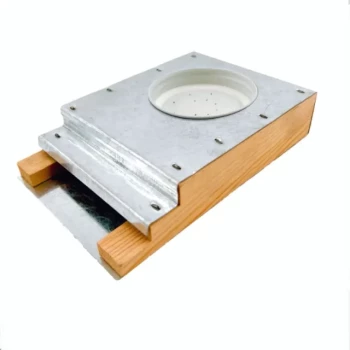
Entrance feeders present three critical disadvantages that can compromise colony health and stability. The most significant drawbacks are their limited capacity, their tendency to malfunction in cold weather due to freezing or inaccessibility, and their high potential for inciting robbing behavior by placing food at the hive's most vulnerable point.
While entrance feeders offer high visibility and ease of use for the beekeeper, they often compromise hive security by signaling food availability to predators and competitors right at the front door.
The Security Risk: Induced Robbing
The most dangerous disadvantage of an entrance feeder is its impact on the colony's ability to defend itself.
Compromising the Defensive Line
By design, these feeders place a syrup source directly at the hive entrance. This location is the colony's primary defensive perimeter.
Attracting External Threats
The scent of the syrup at the entrance can attract scout bees from other colonies, wasps, and other pests. Because the food source is not contained deep within the hive, it acts as a beacon for "robbing," where stronger colonies attack to steal resources.
Difficulty for Guard Bees
Defending an entrance feeder forces guard bees to fight off intruders while simultaneously managing traffic. This is particularly dangerous for weaker colonies that may not have the population numbers to secure the entrance against a concentrated robbing attempt.
Environmental and Operational Limitations
Beyond security, entrance feeders suffer from functional issues related to weather conditions and volume.
Failure in Cold Climates
Entrance feeders perform poorly in low temperatures because the syrup container rests outside the hive body. Without the warmth of the colony, the liquid can easily freeze, rendering it useless.
Inaccessibility to the Cluster
Even if the liquid does not freeze, bees cluster together to stay warm in cold weather and typically move upward into the hive boxes. Because the feeder is at the bottom entrance, the cluster may be physically unable to break formation to travel down and access the feed.
Insufficient Capacity
These feeders generally have a very small capacity compared to top feeders or frame feeders. This holding limit requires the beekeeper to refill the jar frequently, making them inefficient for hives requiring significant food stores for winter or rapid buildup.
Understanding the Trade-offs
While the disadvantages are significant, it is important to understand why these feeders remain in use to make an informed decision.
The Appeal of Visibility
The primary utility of an entrance feeder is the ability to monitor syrup levels without opening the hive. Beekeepers can see exactly how much feed remains at a glance.
Ease of Refilling
Refilling does not disturb the colony, as the inverted jar is accessible from the outside. However, this convenience must be weighed heavily against the risk of dripping syrup, which exacerbates the robbing risks mentioned above.
Making the Right Choice for Your Goal
- If your primary focus is winter feeding: Avoid entrance feeders entirely, as the syrup will likely freeze or become inaccessible to the clustering bees.
- If your primary focus is supporting a weak colony: Choose an internal feeder to prevent attracting robbers that could overwhelm the small population.
- If your primary focus is monitoring consumption rates: An entrance feeder may be used cautiously during warm weather, provided you ensure the unit has a solid bottom to catch drips and prevent robbing.
Select your equipment based on the safety of the colony, not just the convenience of the keeper.
Summary Table:
| Disadvantage | Impact on Colony | Why It Happens |
|---|---|---|
| Robbing Behavior | High Risk of Attack | Syrup scent at the entrance attracts predators and scout bees. |
| Weather Sensitivity | Feed Becomes Inaccessible | External placement leads to freezing or disconnect from the winter cluster. |
| Limited Capacity | High Labor Intensity | Small volumes require frequent refills, making them inefficient for large stores. |
| Security Weakness | Compromised Defense | Forces guard bees to defend the primary perimeter against concentrated threats. |
Secure Your Apiary with Professional Grade Feeding Solutions
At HONESTBEE, we understand that the right equipment is the difference between a thriving colony and a lost season. While entrance feeders offer convenience, commercial success requires robust, high-capacity solutions that protect your bees from robbing and environmental stress.
As a premier partner for commercial apiaries and distributors, we provide a comprehensive wholesale range of:
- Advanced Feeding Systems: Frame feeders and top feeders designed for maximum security.
- Beekeeping Machinery: Hive-making and honey-filling machines to scale your operations.
- Full Equipment Spectrum: From specialized hardware to essential industry consumables.
Don't let inefficient feeding gear hold back your production. Contact HONESTBEE today to access wholesale pricing on professional-grade beekeeping tools and machinery tailored to your commercial needs.
Related Products
- HONESTBEE Entrance Bee Feeder Professional Hive Nutrition Solution for Beekeeping
- HONESTBEE Entrance Bee Feeder Efficient Hive Front Liquid Feeding Solution for Beekeeping
- HONESTBEE Professional Entrance Bee Feeder Hive Nutrition Solution
- White Plastic 0.5L Beekeeping Entrance Feeder for Bees
- Professional Hive Front Entrance Bee Feeder
People Also Ask
- What types of bee feeders are available for beginners? Start with the Simple Entrance Feeder
- What are the advantages and disadvantages of using an entrance feeder for bees? Balance Convenience and Hive Security.
- What is a bee entrance feeder and what are its drawbacks? Essential Guide to Hive Security and Feeding Efficiency
- How does a bee entrance feeder work? A Simple Guide to Convenient Hive Feeding
- How to make an entrance feeder for bees? A DIY Guide for Safe & Effective Feeding