Rendering beeswax safely requires four controlled stages: drain, wash, melt, and filter. Use equipment that provides indirect heating—such as a double boiler, water-jacketed melter, or double-jacketed boiler—because beeswax must never be heated directly over an open flame. Keep the molten wax attended throughout, then filter it into clean molds and allow it to cool and solidify.
Core takeaway: Clean beeswax comes from controlling both contamination and heat. Efficient equipment improves throughput, but safe indirect heating, continuous supervision, fire preparedness, and proper filtration are non-negotiable.
Prepare the Wax and Work Area
Collect Suitable Raw Wax
Collect cappings, crushed comb, and other recoverable beeswax separately from heavily contaminated materials. Removing large debris before melting reduces strain on filters and improves final wax quality.
Set Up Dedicated Processing Equipment
A practical setup may include:
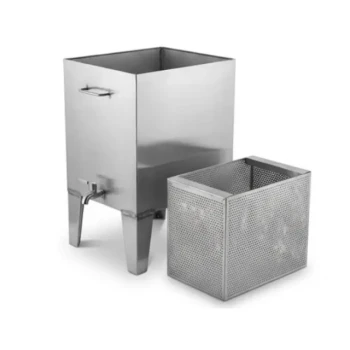
- Double uncapping tank for draining residual honey
- Honey strainer for washing and draining wax
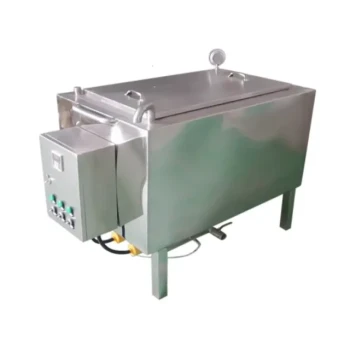
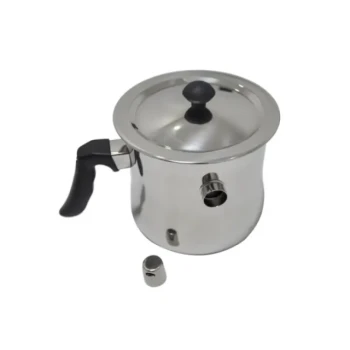
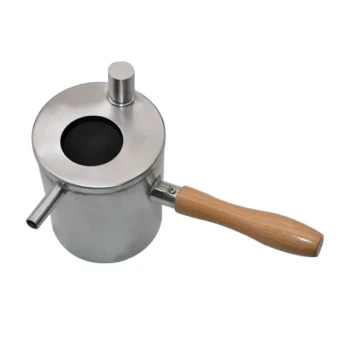
- Double boiler or water-jacketed melter for indirect heating
- Skimmer or spoon for removing larger debris
- Cheesecloth, nylon filter bag, or fine mesh for final filtration
- Heat-resistant molds or flexible containers for forming wax blocks
Use dedicated pots and containers for wax processing rather than equipment intended for food preparation.
Protect the Work Area
Work on a stable, heat-resistant surface with good ventilation and enough space to handle hot containers safely. Keep combustible materials away from the heating equipment, and ensure that suitable fire-extinguishing equipment is immediately accessible.
Heat-resistant gloves and eye protection are appropriate when handling hot water, molten wax, filters, and molds.
Drain and Wash the Wax
Drain Residual Honey First
Place the wax cappings in a double uncapping tank and allow the remaining honey to drain before washing. This reduces stickiness, limits contamination, and improves the efficiency of the later melting stage.
Wash with Warm Water
Rinse the drained wax in warm water to remove remaining honey residues. Pass the wash water and wax through a honey strainer, repeating the process until the water runs clear.
Do not pour wax-containing water into a household sink, where it can cool and create blockages. Collect wastewater for appropriate disposal or recovery.
Remove Large Debris
Before or during melting, remove visible pieces of wood, bee parts, comb fragments, and other large contaminants with a skimmer. This reduces the load on the fine filter and helps prevent clogging.
Melt the Beeswax Safely
Use Indirect Heating Only
Melt beeswax in a double boiler, water-jacketed melter, or double-jacketed boiler. The water or other indirect heating medium separates the wax from the heat source and provides more controlled heating.
Never place beeswax directly over an open flame. Beeswax is highly flammable, and direct heating can create localized hot spots that may ignite the wax.
Control the Temperature
Beeswax melts at approximately 61–65°C (143–148°F). Use a thermometer and follow the operating limits specified by the equipment manufacturer.
Avoid unnecessary overheating. Excessive heat can cause smoking, acrid odors, vapor formation, and increased fire risk.
Monitor the Melting Process
Stir carefully as needed to prevent sticking and encourage the separation of debris. Larger impurities can be removed from the surface with a skimmer.
Never leave melting wax unattended. Assign a trained operator to monitor the equipment, temperature, power supply, and surrounding work area throughout the process.
Filter and Form the Clean Wax
Strain the Molten Wax
Once the wax is fully liquid, carefully pour it through cheesecloth, a nylon filter bag, or another suitable fine filter medium. Filtering removes fine debris that washing and skimming cannot eliminate.
Use a stable receiving container large enough to prevent overflow, and handle the filter and molten wax with appropriate heat protection.
Allow Separation During Cooling
For an initial cleaning stage, a hot wax-and-water mixture can be strained into a suitable container and allowed to cool slowly. The clean wax will harden and float above the water, while denser impurities settle below.
Once the wax disc has fully hardened, remove it and scrape away the dirty layer on its underside.
Repeat Filtration When Necessary
Repeat melting and filtering when the intended application requires higher purity or when visible debris remains. Multiple passes are often more effective than attempting to force heavily contaminated wax through a single fine filter.
Pour into Molds
Pour the filtered liquid wax into clean, heat-resistant molds and allow it to cool and solidify undisturbed. Flexible containers can make it easier to remove finished wax blocks without damaging them.
Understanding the Trade-offs
Finer Filtration Improves Purity but Reduces Flow
Fine filter media remove smaller particles, but they also clog more quickly and slow production. A staged approach—coarse debris removal followed by fine filtration—usually provides a better balance between purity and throughput.
Water-Assisted Cleaning Adds Handling Requirements
Using warm water helps separate honey and impurities, but it creates wastewater and requires careful cooling and separation. Commercial operations should plan for collection, cleanup, and disposal rather than sending wax residue into drains.
Higher Purity May Require Additional Processing
A single wash and filtration cycle may be sufficient for some applications, while cosmetic, manufacturing, or other quality-sensitive uses may require repeated filtration. Each additional cycle adds labor, energy use, handling time, and exposure to hot material.
Equipment Capacity Affects Safety and Order Fulfillment
Oversized batches can increase heating time, lifting risk, and the consequences of a spill. Select equipment capacity based on actual batch volume, staffing, filtration rate, and cooling space—not only on maximum theoretical output.
Common Safety Errors to Avoid
Do Not Use Direct Heat
Direct flames, exposed heating elements, and uncontrolled hot surfaces can ignite wax. Indirect heating is the fundamental safety requirement for beeswax processing.
Do Not Add Water to a Wax Fire
Water can spread burning liquid wax and intensify the hazard. If a fire occurs, shut off the power source only if it is safe to do so, evacuate as necessary, and use appropriate fire-control equipment such as a dry chemical powder extinguisher, approved foam or fog system, or fire blanket according to site procedures.
Do Not Overfill Equipment
Leave sufficient headspace in boilers, strainers, and receiving containers. Overfilling increases the likelihood of splashes, overflow, and contact with hot wax or water.
Do Not Treat Filtration as a Substitute for Cleaning
Filters cannot reliably compensate for excessive honey, water, or large debris. Drain and wash the wax first, then use staged filtration to achieve consistent results.
How to Apply This to Your Operation
Choose the process and equipment according to your batch size, purity requirement, operator skill, and delivery commitments.
- If your primary focus is safe small-batch processing: Use a dedicated double boiler, thermometer, coarse strainer, fine filter, heat-resistant molds, and continuous operator supervision.
- If your primary focus is higher wax purity: Drain and wash thoroughly, remove large debris, then repeat fine filtration until the finished wax meets your quality standard.
- If your primary focus is commercial throughput: Consider water-jacketed or double-jacketed melting equipment with compatible filtration capacity, clear operating procedures, and planned wastewater handling.
- If your primary focus is reliable B2B supply: Standardize batch sizes, filtration stages, cooling times, inspection criteria, and packaging so orders can be fulfilled consistently and quickly.
A disciplined process paired with properly specified indirect-heating equipment turns raw wax into a safer, cleaner, and more dependable commercial product.
Summary Table:
| Step | Key Actions | Safety Protocols |
|---|---|---|
| 1. Prepare | Collect raw wax, set up dedicated equipment, protect work area | Stable heat-resistant surface, ventilation, fire extinguisher, PPE |
| 2. Drain & Wash | Drain honey, wash with warm water, remove large debris | Don't pour wax water down sinks, proper disposal |
| 3. Melt | Use indirect heating (double boiler/water-jacketed), control temperature | Never direct heat, monitor continuously, don't leave unattended |
| 4. Filter & Form | Strain through filters, allow separation, repeat if needed, pour into molds | Use heat protection, stable containers, avoid overflow |
Ready to upgrade your beeswax processing? HONESTBEE offers a full range of commercial beekeeping equipment, including double uncapping tanks, water-jacketed melters, and filtration systems, designed for safety and efficiency. As a one-stop sourcing partner for distributors and apiaries, we provide ultra-fast delivery, dedicated support, and OEM/ODM services to help you meet demand. Contact us today to get started!
Related Products
- Manual Beeswax Flat Sheet Machine for Beeswax Processing
- Electric Beeswax Flat Sheet Machine with Operating Tray for Wax Processing
- Beeswax Machine Press Embosser Wax Foundation Mold Printer Bee Hive Equipment Making Sheet
- Electric Commercial Beeswax Melter for Factory Use
- Electric Flatting and Embossing Machine with Tray for Beekeeping
People Also Ask
- What is the primary function of the double-roller extrusion system? Master Precision Beeswax Foundation Production
- How do cultural merchandise processing machines contribute to the economic value chain? Boosting Apiary Profitability
- What are some practical tips for managing equipment and workspace when processing beeswax? Essential Studio Setup Tips
- How do specialized beeswax processing machines maximize the value of beekeeping by-products? Boost Your Apiary's ROI
- What role does beeswax processing equipment play in development of by-products? Turn Apiary Waste into High-Value Profit