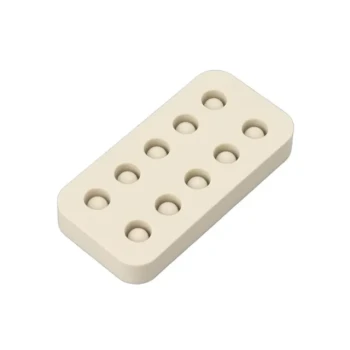
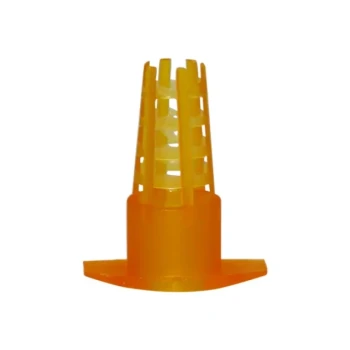
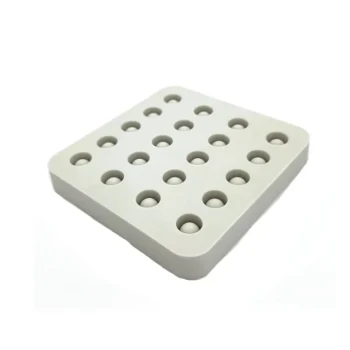
Plastic cell cups and cell bar frames function as an integrated modular system designed to industrialize the harvesting of royal jelly. The cups act as standardized, artificial vessels that mimic natural queen cells to trigger biological secretion from nurse bees, while the frames serve as the structural chassis that holds these cups in place for efficient batch processing and extraction.
Core Takeaway This hardware combination transforms royal jelly collection from a sporadic natural event into a scalable, controlled process. By standardizing the developmental environment, beekeepers can induce a queenless colony to mass-produce royal jelly and harvest it with high precision and minimal waste.
The Role of Plastic Cell Cups
Biological Induction
The primary function of the plastic cup is to simulate the natural environment of a queen bee cell. When a worker bee larva (typically 1–2 days old) is grafted into this cup, nurse bees perceive it as a developing queen. This triggers a biological response, compelling the bees to secrete and deposit copious amounts of royal jelly into the cup to feed the larvae.
Standardization for Scalability
Unlike natural wax cells, which vary in shape and size, plastic cups provide a uniform geometry. This standardization is critical for commercial production, as it allows for consistent grafting techniques and reliable yield expectations. It also facilitates the use of semi-mechanical tools for harvesting, ensuring the process is repeatable across thousands of colonies.
Hygiene and Purity Preservation
Using food-grade plastic creates a non-reactive barrier between the hive environment and the product. This ensures the royal jelly remains free from contaminants that might seep into porous wax. Furthermore, the smooth surface of the plastic allows for the lossless extraction of the jelly and easier cleaning of the larvae after harvesting.
The Role of Cell Bar Frames
High-Density Batch Processing
The cell bar frame acts as a modular holding fixture, allowing dozens of plastic cups to be arranged in a single hive simultaneously. This density is essential for maximizing the biological output per colony. It converts a standard hive frame slot into a high-volume production line.
Rapid Workflow Integration
The frame design enables the rapid removal and insertion of cup batches without dismantling the entire hive. Because the cups are fixed to removable bars within the frame, technicians can extract samples at precise time intervals (often 48 to 72 hours) to ensure peak freshness and potency.
Understanding the Trade-offs
The Requirement of Precision
While this hardware standardizes the vessel, it does not automate the biological requirements. Success relies heavily on the precise grafting of larvae at the correct age. If the larvae are too old or damaged during transfer to the plastic cup, the nurse bees will reject the artificial cell regardless of the hardware used.
Colony Stress Factors
To function effectively, these frames must usually be placed in a queenless colony (or a colony manipulated to feel queenless). This state induces the desperation needed for mass royal jelly secretion. However, maintaining a colony in this state requires careful management to prevent colony collapse or aggressive behavior.
Making the Right Choice for Your Goal
To maximize the effectiveness of this equipment, align your usage with your specific production targets:
- If your primary focus is maximum yield: Ensure your cell bar frames are fully populated and that the colony is in a strictly managed queenless state to trigger the highest possible secretion rates.
- If your primary focus is product purity: Prioritize high-quality food-grade plastic cups and strictly adhere to a 48-72 hour harvest window to prevent larval waste accumulation.
Ultimately, the synergy between the plastic cup and the bar frame allows apiarists to harness natural bee biology within a strictly controlled, hygienic manufacturing framework.
Summary Table:
| Component | Primary Function | Key Benefit |
|---|---|---|
| Plastic Cell Cups | Simulates queen bee cells | Triggers mass royal jelly secretion & ensures hygiene |
| Cell Bar Frames | Modular holding fixture | Enables batch processing and rapid hive integration |
| Integrated System | Industrialized workflow | Scalable, repeatable, and high-precision harvesting |
Maximize Your Royal Jelly Production with HONESTBEE
As a dedicated partner to commercial apiaries and global distributors, HONESTBEE understands that precision hardware is the foundation of a profitable honey-based business. We provide a comprehensive wholesale range of food-grade beekeeping tools, from high-density cell bar frames to specialized honey-filling machinery and hive-making equipment.
Whether you are scaling up your royal jelly output or sourcing premium industry consumables, our expertise ensures your operation achieves peak efficiency and product purity. Empower your apiary with professional-grade solutions—contact us today to discuss our wholesale offerings.
References
- Franziska Böhme, Klaus Wallner. From field to food—will pesticide-contaminated pollen diet lead to a contamination of royal jelly?. DOI: 10.1007/s13592-017-0533-3
This article is also based on technical information from HonestBee Knowledge Base .
Related Products
- JZBZ Type Wide Base Plastic Queen Cell Cups for Base Mounting and Queen Rearing
- Premium Nicot Style Cell Bar Holder and Queen Cell Cup Holder System
- Clear Black Plain Polystyrene Queen Bee Grafting Cell Cups No Lug for Bee Queen Cup
- JZBZ Langstroth Queen Rearing Frame for Beekeeping
- Brown Nicot Queen Cell Cups for Breeding Queen Bees Beekeeping
People Also Ask
- What is the primary function of commercial plastic queen cell cups? Driving Efficiency in Mass Queen Rearing
- What are the primary advantages of using plastic queen cell cups? The Industrial Choice for High-Efficiency Apiaries
- What technical advantages do commercial plastic queen cell cups offer? Scale Your Queen Rearing for Maximum Efficiency
- What is the function of standardized plastic Queen Cell Cups? Boost Efficiency in Commercial Larval Grafting
- Why are standardized plastic queen cell cups preferred? Boost Commercial Queen Rearing Efficiency