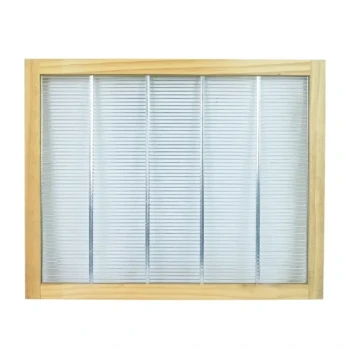
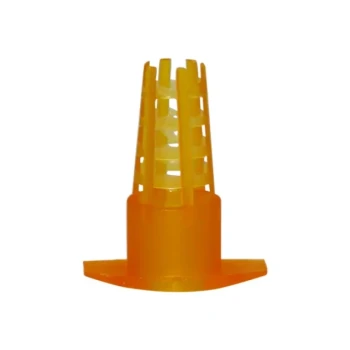
Wire mesh covers serve a dual biological and mechanical function: they act as a protective shield against aggression while simultaneously serving as a vital conduit for sustenance and chemical communication. Specifically, these covers prevent colony workers from physically attacking the banked queen while allowing the essential contact required for feeding and reproductive maturation.
The wire mesh is not merely a containment device; it is a selective interface. It effectively filters out hostile physical behavior while permitting the social interaction and chemical exchange necessary to trigger a virgin queen’s ovarian development.
The Mechanics of Protection and Sustenance
Preventing Colony Aggression
When a queen is banked (stored) in a hive, she risks being viewed as an intruder. The primary function of the wire mesh is to create an impenetrable physical barrier. This prevents the colony’s worker bees from "balling" or attacking the queen, ensuring her immediate physical survival.
Enabling Trophallaxis
Despite the need for separation, the queen cannot survive in total isolation. The mesh gauge is specifically designed to allow worker bees to feed the caged queen. This process, known as trophallaxis, involves the direct transfer of food through the wire grid, keeping the queen nourished without releasing her.
Facilitating Biological Maturation
Chemical Pheromone Exchange
Beyond simple nutrition, the mesh allows for the free flow of air and contact. This enables the workers to perceive the "queen substance" (pheromones) emitted by the banked queen. This chemical signaling is crucial for maintaining social order and preventing the workers from rejecting the queen.
Promoting Reproductive Development
For virgin honeybee queens, the mesh plays a critical role in physiology. The primary reference indicates that social interaction through the mesh is a core requirement for biological maturity. This contact initiates the differentiation of ovarioles and promotes the further development of the queen's ovaries.
Understanding the Design Trade-offs
The Balance Between Safety and Stagnation
A solid barrier would offer maximum protection but would result in the queen's starvation and social isolation. Conversely, no barrier leads to immediate rejection and death. The wire mesh represents the necessary compromise: it sacrifices total isolation to allow for the social interaction that drives the queen's biological clock.
The Necessity of Contact
It is a common pitfall to view banking boxes solely as storage units. If the mesh prevents too much contact (e.g., if the gauge is too fine), the queen may survive physically but fail to mature reproductively. The "trade-off" is that the queen must be exposed to the colony to develop, even if that exposure carries a managed level of stress or risk.
Making the Right Choice for Your Goal
When selecting or inspecting banking equipment, consider how the mesh design impacts your specific objectives:
- If your primary focus is Queen Survival: Ensure the mesh is secure enough to prevent any physical entry by workers, as this is the only line of defense against lethal aggression.
- If your primary focus is Queen Quality: Recognize that the mesh must allow sufficient contact for pheromone exchange, as this interaction is required to develop the ovaries of virgin queens.
The wire mesh cover is the essential hardware that transforms a holding box into a biologically active environment, balancing physical security with physiological necessity.
Summary Table:
| Function | Description | Impact on Queen Health |
|---|---|---|
| Physical Protection | Acts as a barrier against worker bee aggression and "balling." | Ensures immediate survival. |
| Trophallaxis Support | Allows worker bees to feed the queen through the mesh grid. | Maintains nourishment and hydration. |
| Pheromone Exchange | Facilitates the flow of "queen substance" to the colony workers. | Prevents rejection and maintains social order. |
| Biological Development | Permits social contact required for ovarian maturation in virgin queens. | Promotes reproductive readiness. |
Maximize Your Queen Quality with HONESTBEE
At HONESTBEE, we understand that every detail of your beekeeping hardware—down to the wire mesh gauge—impacts the health and productivity of your colony. As a dedicated partner to commercial apiaries and distributors, we provide a comprehensive wholesale range of professional-grade beekeeping tools, specialized machinery, and essential consumables.
From advanced queen banking systems to high-efficiency honey-filling machines and hive-making equipment, our portfolio is designed to scale your operations and enhance biological success. Let our expertise in beekeeping hardware support your business growth.
Connect with the HONESTBEE experts today to request a quote or custom solution!
References
- Bruno Berger, Carminda da Cruz‐Landim. Beekeeping practice: effects of Apis mellifera virgin queen management on ovary development. DOI: 10.1007/s13592-015-0404-8
This article is also based on technical information from HonestBee Knowledge Base .
Related Products
- Wood and Mesh Push-In Queen Cage
- Twin Queen Styrofoam Honey Bee Nucs Mating and Breeding Box
- Classic Wooden and Mesh California Queen Cage
- Premium Wood Framed Metal Wire Queen Bee Excluder
- Automatic Heat Preservation 6 Frame Pro Nuc Box for Honey Bee Queen Mating
People Also Ask
- When is a queen introduced with a push-in cage ready for full release? Key Signs for Maximum Colony Acceptance
- How are queen cages used to protect newly hatched queens? Secure Your Virgin Queens During Development
- Why are queen cages or grid cages used in bee studies? Achieve Precise Biological Data for Research
- What advantages do push-in queen cages offer? Boost Acceptance Rates for Artificially Inseminated Queens
- What is a push-in queen cage and how does it differ from a standard queen cage? Boosting Your Queen Acceptance Rates