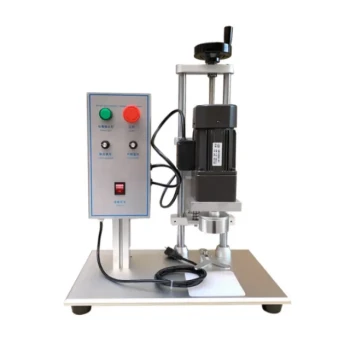
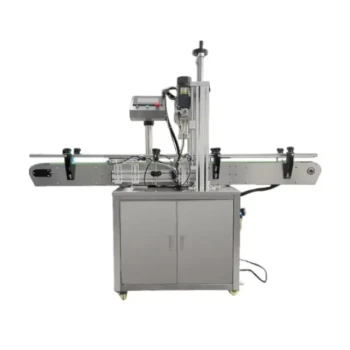
At its fundamental level, a filling machine operates through a synchronized cycle of product feeding, precise dispensing, and final sealing. The process begins with a feeding system that moves the liquid—often using pumps or gravity—from a bulk hopper to the filling station. A specialized mechanism then measures and dispenses a specific volume into a container, followed immediately by a capping or sealing station to secure the product.
The mechanical reliability of a filling machine relies not just on moving liquid, but on matching the dispensing principle—whether piston, pump, or gravity—to the specific viscosity of the product and the required production speed.
The Product Feeding System
The first stage of operation is the Feeding Phase. Before any filling can occur, the machine must transport the product from a bulk source into the main system.
Intake Mechanisms
The machine typically draws the product from a hopper or a large tank.
Depending on the machine's design, this transfer is achieved either through gravity, which allows the liquid to flow naturally downward, or through a pump system, which actively forces the liquid into the filling lines.
The Core Filling Mechanisms
The "heart" of the machine is the filling mechanism itself. This component determines how the liquid is measured and dispensed into the container. There are three primary principles used, often selected based on the liquid's thickness (viscosity).
Piston Filling
This mechanism operates like a syringe. It draws a precise volume of product into a cylinder and then forces it out into the container.
Piston fillers are highly effective for thick, viscous liquids (such as honey). They offer exceptional precision in measurement, though they may operate slower than continuous pumping systems.
Gravity Filling
This is the simplest and most cost-effective method. It relies on the natural force of gravity to fill the container to a specific level or time.
While ideal for low-viscosity (thin) liquids, this method can be adapted for thicker products, though it may lack the speed and force required for extremely dense fluids.
Pump-Based Systems
Commonly found in fully automated, high-speed lines, these systems use a mechanical pump to regulate the flow of liquid into the jar.
Pump systems are designed for consistency and speed, making them suitable for high-volume operations. However, they typically carry a higher initial investment cost than gravity or piston options.
Thermal Conditioning (Optional)
For particularly thick products, some machines incorporate a heating mechanism.
By gently warming the product, the machine reduces the liquid's viscosity. This ensures a smoother flow, improves accuracy, and helps prevent the formation of air bubbles during the dispense cycle.
Post-Filling and Control
Once the product is in the container, the machine performs final operations to ensure the product is market-ready and the system remains accurate.
Capping and Sealing
Immediately after filling, the container moves to a capping station.
Here, the machine applies and secures the lid or seal. This step is critical for preventing contamination and leakage, preparing the unit for labeling and packaging.
Calibration and Adjustment
A filling machine is not a "set and forget" tool; it requires calibration.
Operators must adjust the machine to account for different container sizes and liquid viscosities. However, once calibrated for a specific product, the machine generally does not require readjustment during the run, provided the liquid's temperature and homogeneity remain constant.
Understanding the Trade-offs
When selecting or operating a filling mechanism, you must weigh specific operational trade-offs.
Speed vs. Precision
Pump-based systems generally offer the highest speeds for mass production but can be complex to clean and maintain. Conversely, piston systems offer superior precision for expensive or thick products but may become a bottleneck in ultra-high-speed environments.
Viscosity Limitations
Gravity fillers are economical but can struggle with consistent flow rates if the product is too thick. If your product viscosity varies with temperature (like honey or oil), a machine without a heating mechanism or positive displacement (piston) may deliver inconsistent fill volumes.
Making the Right Choice for Your Goal
To ensure your filling machine operates effectively, align the mechanism with your specific production requirements.
- If your primary focus is high precision with thick liquids: Prioritize a Piston Filling mechanism to ensure exact dosages without waste.
- If your primary focus is high-speed volume: Opt for a Pump-Based System, which can handle rapid, continuous dispensing better than piston cycles.
- If your primary focus is budget and simplicity: Choose a Gravity Filling system, particularly if your liquid has a low to medium viscosity.
- If your primary focus is consistency: Ensure your machine includes calibration controls and potentially a heating element to stabilize the product's flow characteristics.
Success in automated filling comes from ensuring the machine's mechanical principle works in harmony with the physical properties of your liquid.
Summary Table:
| Mechanism Type | Ideal Viscosity | Key Advantage | Best Use Case |
|---|---|---|---|
| Piston Filling | High (Thick) | Exceptional Precision | Honey, Creams, Pastes |
| Gravity Filling | Low (Thin) | Cost-Effective & Simple | Water, Oils, Thin Syrups |
| Pump Systems | Variable | High-Speed Consistency | High-Volume Automation |
| Thermal Conditioning | Very High | Reduces Viscosity | Cold-sensitive thick liquids |
Elevate Your Honey Production with HONESTBEE
Are you a commercial apiary or a distributor looking to scale your operations? HONESTBEE provides the industry-leading tools you need to transition from manual labor to high-precision automation.
We specialize in high-performance honey-filling machines, hive-making hardware, and a comprehensive range of beekeeping equipment designed for durability and accuracy. From specialized machinery to essential consumables and honey-themed merchandise, we offer a complete wholesale portfolio tailored to your growth.
Ready to optimize your filling precision and output? Contact HONESTBEE today for a professional consultation and wholesale pricing.
Related Products
- Precision Durable Efficient HONESTBEE Rotary Honey Filling Machine
- Pneumatic Paste Filling Machine Bottling Packaging Machine Single Nozzle
- Pneumatic Double Nozzle Honey Filling Bottling Packaging Machine
- Economy Small Honey Filling Machine Honey Bottle Filler Packaging Machine
- Precision Automated Packaging Turntable Honey Spoon Filling Sealing Packing Machine
People Also Ask
- What are the common types of bottling machines used for honey? Choosing the Right Solution for Your Apiary
- How do honey filling machines work? Achieve Precision & Speed for Your Apiary
- How do high-precision honey filling machines ensure quality? Optimize Your Commercial Production with HONESTBEE
- What quality control role does professional honey filling equipment perform? Ensure Consistency and Product Stability
- What is a key feature of the new generation of the honey filling machine? The Advanced Electronic Control Unit