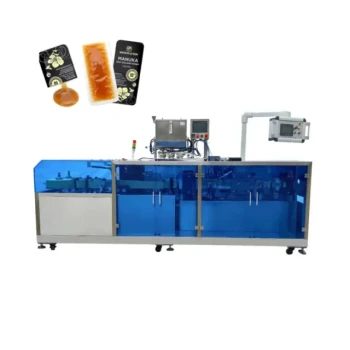
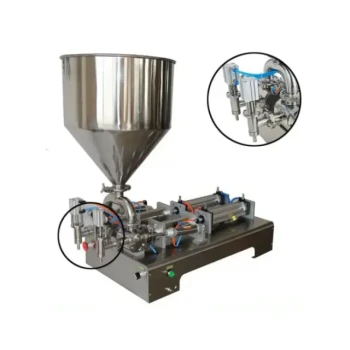
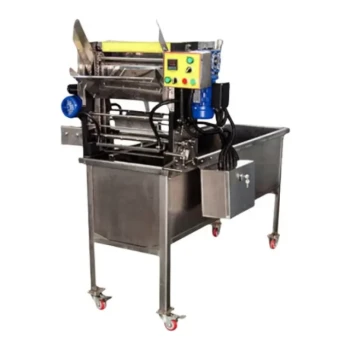
Automated honey filling equipment serves as the technological bridge between raw apiary harvest and market-ready commodities. Its specific contributions center on enabling high-efficiency continuous operation, ensuring precise quantitative dosing to minimize raw material loss, and establishing a rigorous hygienic barrier against secondary contamination.
Core Takeaway Automated filling is not merely about speed; it is the critical technical component that transforms raw honey into high-value commercial goods. By replacing manual handling with precision engineering, these systems guarantee the standardization, hygiene, and volume accuracy required to enter formal retail channels.
Elevating Processing Yield and Efficiency
The transition to automation directly impacts the "yield" of the final product by minimizing waste and maximizing throughput.
Precision Dosing and Reduced Waste
Manual filling often leads to overfilling or spillage, which represents a direct loss of revenue. Automated machines utilize high-precision piston-style or weighing-based filling systems.
These mechanisms ensure the net content of every jar strictly complies with label specifications. By achieving exact metering, producers significantly reduce raw material loss, effectively increasing the volume of saleable product derived from a single batch.
Continuous High-Frequency Operation
Unlike manual labor, which is subject to fatigue and variation, automated equipment allows for continuous, high-efficiency operation.
This capability increases overall production output, enabling producers to scale operations to meet industrial demands without a proportional increase in labor costs.
Professional Sealing and Appearance
Yield is also about the number of sellable units. Machines equipped with no-drip filling nozzles and automatic capping functions ensure clean, airtight seals.
This eliminates the risk of contamination at the bottle neck, ensuring that every filled unit meets the aesthetic and physical standards required for retail display.
Guaranteeing Hygiene and Product Purity
Beyond volume, automated equipment is essential for maintaining the biological integrity of the honey.
Minimizing Secondary Contamination
The primary reference highlights that automation minimizes the risk of secondary contamination. This is achieved by removing manual handling from the post-processing stage.
A closed-loop system ensures the honey remains additive-free. It maintains high purity throughout the packaging process, adhering to strict organic production policies.
Preserving Traceability and Authenticity
Advanced filling systems protect the unique characteristics of the honey, such as its specific pollen fingerprint. By preventing external pollen contamination or the unauthorized introduction of adulterants like syrup, the equipment safeguards the product's identity.
This hardware foundation is necessary for reliable traceability systems. It ensures the physicochemical indicators of the bottled product remain consistent with the original samples taken from the apiary.
Unlocking Commercial Market Access
Automation is the prerequisite for moving from bulk wholesale to high-value retail.
Standardization for Retail Channels
To enter formal retail channels like supermarkets, products must meet rigorous consistency standards. Automated equipment provides the control necessary to ensure physicochemical consistency across different batches.
Meeting Certification Requirements
The precision and hygiene controls offered by automation allow enterprises to meet complex certification requirements, such as organic standards. This capability is essential for differentiating brands and capturing higher-value consumer markets.
Understanding the Operational Trade-offs
While the benefits are significant, adopting automated filling technology requires a shift in operational focus.
The Necessity of Rigorous Maintenance
To maintain the "high-precision" cited in the references, equipment requires strict cleaning and calibration protocols. Neglecting maintenance can lead to dosage inaccuracies or cross-contamination, negating the system's primary advantages.
Standardization vs. Flexibility
Automation thrives on consistency. Irregular bottle shapes or honey with vastly different viscosities may require machine adjustments or specific hardware modules (like different piston types). Producers must align their packaging choices with their machine's capabilities to maintain efficiency.
Making the Right Choice for Your Goal
When integrating automated filling equipment, align your technical choice with your primary business objective.
- If your primary focus is Profit Margins: Prioritize machines with high-precision weighing or piston systems to eliminate overfilling and reduce raw material loss.
- If your primary focus is Brand Authority: Select equipment that emphasizes closed-loop hygiene and no-drip sealing to guarantee traceability and a pristine "pollen fingerprint."
- If your primary focus is Market Expansion: Ensure your equipment supports labeling and standardized capping to meet the strict entry requirements of supermarkets and organic certifiers.
Automation transforms honey processing from a manual craft into a scalable, verifiable industrial science.
Summary Table:
| Key Contribution | Technical Benefit | Impact on Honey Processing |
|---|---|---|
| Precision Dosing | High-precision piston or weighing systems | Minimizes overfilling and raw material waste |
| Efficiency | Continuous high-frequency operation | Scales production output while lowering labor costs |
| Hygiene Control | Closed-loop systems and no-drip nozzles | Prevents secondary contamination and preserves purity |
| Standardization | Consistent sealing and net volume | Ensures compliance for retail channels and supermarkets |
| Traceability | Protected biological integrity | Safeguards the pollen fingerprint and organic status |
Scale Your Honey Production with HONESTBEE Precision
Transitioning from manual labor to industrial-grade automation is the key to unlocking higher profit margins and retail market access. At HONESTBEE, we specialize in empowering commercial apiaries and distributors with the tools needed for global competitiveness.
How we add value to your business:
- Advanced Machinery: From high-precision honey-filling machines to automated hive-making equipment.
- Complete Solutions: A full spectrum of beekeeping tools, specialized hardware, and essential industry consumables.
- Brand Growth: Enhance your product's appeal with our honey-themed cultural merchandise and professional packaging standards.
Ready to eliminate waste and maximize your yield? Contact HONESTBEE today to discover how our wholesale equipment solutions can transform your honey processing operation.
References
- AL- Kafage AL – Bedrey. EXTENSION AGRICULTURAL INNOVATION FOR BEE KEEPERS TO DEVELOP AND INCREASE PRODUCTIVITY IN THE CENTRAL REGION OF IRAQ. DOI: 10.36103/ijas.v47i5.497
This article is also based on technical information from HonestBee Knowledge Base .
Related Products
- Fully Automatic Honey Filling Packaging Machine for Processing Line
- Automatic Honey Filling and Filtering Machine for Beekeeping Bottle Filling
- Precision Durable Efficient HONESTBEE Rotary Honey Filling Machine
- Precision Automated Packaging Turntable Honey Spoon Filling Sealing Packing Machine
- Semi Automatic Small Honey Bottle Filling Machine Honey Filler
People Also Ask
- Why are fully automatic honey filling and packaging lines essential? Boost Your Honey's Market Value and Quality
- What is a fully-automatic honey filler? Streamline Your Production with High-Precision Automation
- How do automated honey filling and packaging machines affect profitability? Boost Margins with HONESTBEE Technology
- How do automated honey filling and packaging machines contribute to the market value of honey products? Maximize Your ROI
- How do industrial-grade automated honey filling and packaging machines mitigate the risk of physical contamination?