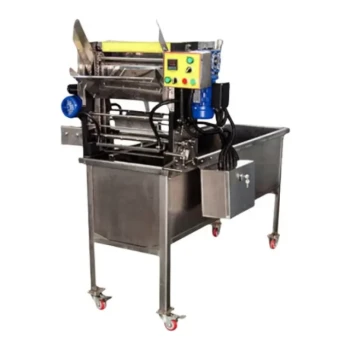
Automatic honey-filling machines are the definitive solution for modernizing commercial honey processing, primarily offering precise volumetric control and efficient, standardized sealing. By automating the filling stage, producers can significantly reduce labor costs while simultaneously increasing packaging throughput. Most importantly, these machines operate as a closed system, minimizing contact between the honey and the external environment to ensure consistent product quality and brand reliability.
By transitioning from manual to automated filling, producers secure the biological integrity of the honey against oxidation and contamination while achieving the rigorous standardization required for large-scale retail distribution.
Preserving Product Integrity and Safety
Eliminating Secondary Contamination
The primary risk in honey packaging is secondary contamination caused by human contact or environmental exposure. Manual processes inherently leave the product vulnerable to airborne particles and biological contaminants.
Automatic filling machines mitigate this by utilizing enclosed operating environments. This isolation effectively separates the honey from the external atmosphere, ensuring the product remains sterile from the tank to the bottle.
Stabilizing Chemical Properties
Honey is hygroscopic, meaning it naturally absorbs moisture from the air, which can lead to fermentation or spoilage. Automated systems pair filling with immediate, reliable sealing technology.
This creates an airtight environment that significantly slows down oxidation and moisture absorption. Consequently, critical biochemical indicators, such as Hydroxymethylfurfural (HMF) levels, remain stable, meeting the quality demands of high-end markets.
Operational Efficiency and Cost Control
Reducing Raw Material Waste
Handling viscous fluids like honey often leads to drips, spills, and overfilling when done manually. Automated machines employ precision flow control and anti-drip mechanisms.
These technologies ensure that every drop is dispensed accurately into the container. This reduction in raw material loss directly improves the profit margin on every batch produced.
Optimizing Labor Allocation
Manual packaging is often the bottleneck in production lines. Automating this task allows for a significant reduction in labor costs.
By removing the need for manual scooping or pouring, producers can reallocate their workforce to higher-value tasks. This shift increases overall efficiency and allows for scalable production without a linear increase in staffing.
Standardization for Commercial Scaling
Achieving Volumetric Precision
Retail distribution requires strict adherence to net weight standards. Automatic machines utilize high-precision piston or weight-based metering systems.
This ensures that every container receives an identical volume of honey, regardless of viscosity changes. Such consistency is critical for meeting legal measurement standards and consumer expectations.
Enhancing Brand Consistency
To compete in the retail market, a product must look professional and uniform. Automated lines ensure consistent fill levels and aesthetic packaging.
This uniformity supports the transition from selling bulk raw materials to offering high-value branded products. It provides the traceability and standardization that large-scale distributors and supermarkets mandate.
Understanding the Trade-offs
While the benefits of automation are substantial, it is important to recognize the operational shift required. Implementing these machines requires an upfront capital investment and a commitment to regular maintenance.
To maintain the high precision described above, the equipment requires periodic calibration. Furthermore, staff must be retrained to operate and monitor the hardware, shifting the skill requirement from manual labor to technical oversight.
Making the Strategic Shift to Automation
To maximize the return on your investment, align your equipment choice with your specific production goals:
- If your primary focus is High-Volume Retail: Prioritize machines with high-speed piston systems to guarantee net weight compliance and shelf uniformity.
- If your primary focus is Premium Quality Assurance: Select fully enclosed, sterile filling systems to protect HMF levels and prevent moisture absorption.
Ultimately, automation is not merely about increasing speed; it is the essential hardware required to guarantee a safe, standardized product that can compete in a regulated global marketplace.
Summary Table:
| Key Benefit | Description | Impact on Commercial Success |
|---|---|---|
| Product Integrity | Closed system prevents secondary contamination and oxidation. | Ensures safety and extends product shelf-life. |
| Volumetric Precision | High-precision piston or weight-based metering systems. | Guarantees net weight compliance and brand trust. |
| Waste Reduction | Anti-drip mechanisms and precise flow control. | Maximizes profit margins by saving raw material. |
| Operational Scaling | High-speed automated throughput replaces manual bottlenecks. | Lowers labor costs and enables large-scale distribution. |
Scale Your Honey Production with HONESTBEE
At HONESTBEE, we specialize in empowering commercial apiaries and distributors with the tools needed to dominate the global marketplace. From high-precision honey-filling machines and hive-making hardware to a comprehensive range of beekeeping tools and essential consumables, our portfolio is designed to enhance your operational efficiency and brand reliability.
Whether you are looking to modernize your processing line or source premium beekeeping machinery at wholesale, our team is ready to provide the expertise and hardware you need. Contact us today to explore our full spectrum of honey processing solutions!
References
- Dimelu Mabel Ukamaka, Nwuba Loveth Eberechukwu. Indigenous climate change adaptation strategies used by Honey Producers in rural communities of Enugu State, Nigeria. DOI: 10.4314/jae.v22i2.16
This article is also based on technical information from HonestBee Knowledge Base .
Related Products
- Fully Automatic Honey Filling Packaging Machine for Processing Line
- Automatic Honey Filling and Filtering Machine for Beekeeping Bottle Filling
- Precision Durable Efficient HONESTBEE Rotary Honey Filling Machine
- Automatic Single-Dose Snap & Squeeze Honey Sachets Packing Machine
- Semi Automatic Small Honey Bottle Filling Machine Honey Filler
People Also Ask
- Why are fully automatic honey filling and packaging lines essential? Boost Your Honey's Market Value and Quality
- What is a fully-automatic honey filler? Streamline Your Production with High-Precision Automation
- How do automated honey filling and packaging machines affect profitability? Boost Margins with HONESTBEE Technology
- How do automated honey filling and packaging machines contribute to the market value of honey products? Maximize Your ROI
- How do industrial-grade automated honey filling and packaging machines mitigate the risk of physical contamination?