Introducing larval frames is the biological catalyst for professional royal jelly production.
In an in vitro royal jelly production platform, larval frames serve as the essential biological "switch" that triggers worker bees to transition from basic maintenance to an active nursing state. By releasing critical chemical signals like brood pheromones and beta-ocimene, these frames ensure worker bees accept artificial queen cells and initiate the physiological secretion of royal jelly.
Core Takeaway: Larval frames act as both a physical substrate and a chemical signaling center, leveraging natural honey bee instincts to maximize the acceptance of queen cells and the volume of royal jelly secreted. For distributors, these are the high-value consumables that underpin the entire efficiency of a commercial harvesting operation.
Triggering Physiological Secretion via Chemical Signaling
The Role of Brood Pheromones
Worker bees do not produce royal jelly in a vacuum; they require specific biological cues to activate their hypopharyngeal glands. Larval frames release brood pheromones that signal the presence of hungry larvae, fundamentally altering the colony's behavior toward intensive nutrient production.
Beta-Ocimene as a Behavioral Modulator
Beta-ocimene is a volatile pheromone found in larval frames that acts as a primary attractant for nurse bees. This chemical signal ensures that worker bees remain focused on the production area, maintaining the high-intensity nursing activity required for commercial-grade royal jelly yields.
Optimizing Production Efficiency and Standardization
Maximizing Artificial Queen Cell Acceptance
Without the biological context provided by larval frames, worker bees are likely to reject artificial queen cells. The presence of these frames creates a familiar environment that dramatically increases acceptance rates, ensuring that high-density grafting frames are fully utilized by the colony.
Thermal and Structural Uniformity
Professional larval frames are designed to maintain uniform temperature and humidity across hundreds of individual cell cups. This physical consistency is vital for large-scale operations, ensuring that the royal jelly collected is of a uniform quality and volume across every batch.
Essential Hardware for High-Output Platforms
Precision Grafting Integration
The larval frame serves as the central carrier for precision-grafted larvae, which are the biological engines of the production process. High-quality frames allow for the exact placement of larvae at the optimal age, which is the critical "golden window" for maximizing jelly accumulation.
Streamlining the Harvesting Workflow
Standardized frames transform a complex biological process into a repeatable industrial workflow. By using high-density frames, beekeepers can collect and weigh jelly more efficiently, allowing for the quantitative evaluation of colony performance and diet impact.
Understanding the Trade-offs and Operational Risks
Biological Activity vs. Over-manipulation
While larval frames are essential, frequent handling or poor grafting techniques can lead to larval mortality. If the larvae die, the pheromone signal vanishes, causing worker bees to immediately cease secretion and resulting in a total loss of production for that cycle.
Sanitation and Hardware Maintenance
Because these frames are core consumables in a high-moisture environment, they are susceptible to contamination. Distributors must emphasize the need for meticulous cleaning protocols, as pathogen buildup on frames can lead to colony decline and reduced royal jelly purity.
Selecting the Right Inventory for Your Market
When sourcing components for an in vitro royal jelly platform, your selection should align with the technical sophistication and scale of your target clientele.
- If your primary focus is high-yield commercial production: Prioritize high-density, standardized grafting frames and automated collection kits that maximize output per colony with minimal labor.
- If your primary focus is research and precision breeding: Source frames that emphasize environmental stability and high-precision grafting needles to ensure the highest possible larval survival rates and data accuracy.
By providing the specialized hardware that masters these biological signals, you position your business as a deep industry expert capable of supporting the world's most efficient royal jelly producers.
Summary Table:
| Key Function | Biological/Physical Mechanism | Operational Benefit for Producers |
|---|---|---|
| Biological Trigger | Releases brood pheromones & beta-ocimene | Activates worker bee hypopharyngeal glands for secretion |
| Cell Acceptance | Creates a familiar larval environment | Minimizes rejection rates of artificial queen cell cups |
| Yield Optimization | Precision grafting integration | Maximizes jelly accumulation during the 'golden window' |
| Climate Control | Thermal and structural uniformity | Ensures consistent jelly quality across high-density frames |
| Workflow Efficiency | Standardized industrial design | Streamlines harvesting, weighing, and colony evaluation |
Scale Your B2B Success with HONESTBEE’s Professional Beekeeping Solutions
As a leading one-stop sourcing partner, HONESTBEE empowers distributors and commercial apiaries with the high-performance hardware needed for intensive royal jelly production. We offer a comprehensive wholesale portfolio—from specialized larval frames and hive-making machinery to advanced honey-filling systems and essential consumables.
Why partner with HONESTBEE?
- Deep Industry Expertise: Specialized equipment designed for maximum biological efficiency and output.
- Rapid Fulfillment: Ultra-fast delivery and efficient order processing to keep your inventory stocked.
- Premium Service: Dedicated support and rapid response times for B2B resellers and wholesalers.
- Full-Spectrum Portfolio: Everything from technical machinery to honey-themed cultural merchandise.
Ready to enhance your profit margins with reliable, professional-grade equipment? Contact us today to explore our wholesale offerings!
References
- Zhiwei Peng, Ming‐Cheng Wu. Mechanistic exploration of royal jelly production in caged honey bees (Apis mellifera). DOI: 10.1038/s41598-024-82094-3
This article is also based on technical information from HonestBee Knowledge Base .
Related Products
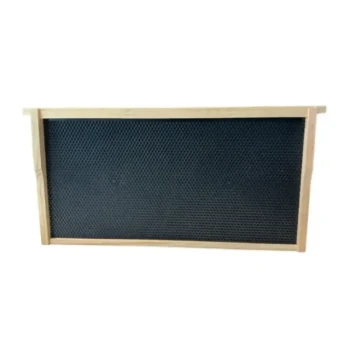
- Wooden Bee Hive Frames for Beekeeping and Wholesale
- Plastic Bee Frame Beekeeping Hive Frames for Wholesale
- Assembled Wooden Bee Frames with Plastic Foundation for Durability and Convenience by HONESTBEE
- JZBZ Langstroth Queen Rearing Frame for Beekeeping
- Professional Galvanized Steel Frame Rest for Beehives
People Also Ask
- How does balancing the number of frames impact hive productivity? Optimize Your Apiary's Biological Output
- How do wooden and plastic hive frames compare in terms of durability? Wood vs. Plastic Longevity & Repairability
- What are the main considerations when choosing between wooden and plastic bee hive frames? Optimize Your Apiary's Efficiency
- How should beehive frames be maintained to prolong their lifespan? 5 Pro Tips for Durable Beekeeping Equipment
- What are frames and combs used for in beekeeping? The Foundation of Modern Hive Management