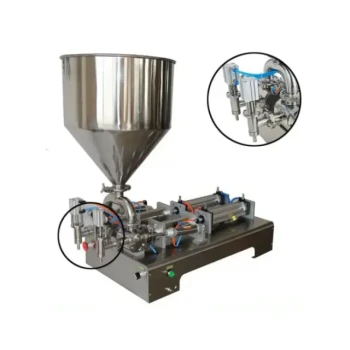
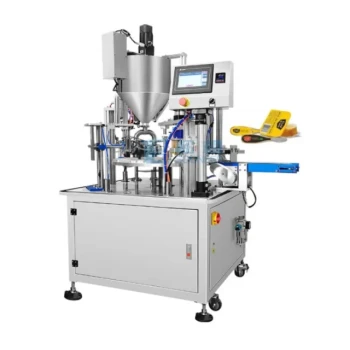
Volumetric filling systems provide a decisive advantage in production environments by prioritizing versatility and volume consistency over visual fill levels or weight. These systems are engineered to handle a broad spectrum of container types and complex designs, ensuring high throughput while maintaining strict quality control regarding the actual amount of product dispensed.
Volumetric fillers are defined by their operational flexibility. They allow manufacturers to automate diverse product lines with a single, user-friendly interface that reduces labor costs while protecting the integrity of the product through precise volume management.
Operational Flexibility and Design
Handling Diverse Container Types
One of the strongest arguments for adopting a volumetric system is its adaptability. These machines can accommodate a wide array of packaging materials, including aluminum cans, glass jars, rigid bottles, and flexible tubes.
Accommodating Complex Shapes
This flexibility extends beyond materials to physical design. Volumetric fillers are capable of effectively processing containers with complex or irregular shapes without sacrificing speed.
Efficiency and Workflow Optimization
Enhancing Productivity
Implementing volumetric filling directly impacts the bottom line by increasing overall productivity. By automating the measurement and dispensing process, these systems significantly reduce the manual labor required on the line.
Streamlining Operations
Beyond filling, some models integrate additional features to further condense the workflow. For example, certain systems can handle automatic labeling, consolidating multiple production steps into one efficient station.
Ease of Setup
Despite their advanced capabilities, these systems are designed for usability. They are typically intuitive to set up and easy to operate, minimizing the training time required for line operators.
Quality Control and Consistency
Precision in Product Dispensing
The core function of these systems is to maintain rigorous consistency in the volume of product dispensed. The machine continuously monitors the output to ensuring that every unit contains exactly the specified amount of product.
Air Management and Preservation
Volumetric fillers play a critical role in preserving product quality by preventing air from entering the final package. This feature is vital for shelf stability and can potentially eliminate the need for auxiliary equipment, such as vacuum sealers.
Understanding the Trade-offs
The Focus on Volume vs. Visual Fill
While volumetric systems excel at dispensing a precise amount of liquid, they do not fill to a specific visual level. If your containers have slight irregularities in their internal volume (a common issue with glass), the liquid level may appear uneven across bottles on the shelf, even though the net content is accurate.
Equipment Dependency
Because these systems can replace other machinery (like vacuum sealers) and integrate labeling, your production line becomes highly dependent on a single complex asset. While this streamlines the footprint, it requires a commitment to maintaining that specific unit to avoid bottlenecks.
Making the Right Choice for Your Goal
To determine if a volumetric filling system aligns with your production needs, evaluate your specific priorities:
- If your primary focus is Production Versatility: Choose this system to run multiple container types (jars, cans, tubes) on a single line without complex changeovers.
- If your primary focus is Cost Reduction: Leverage the high-speed automation and integrated features (like labeling) to lower your labor costs per unit.
- If your primary focus is Product Integrity: Rely on this technology to prevent air entrapment and ensure precise dosage consistency, potentially removing the need for vacuum sealing.
Volumetric filling offers a robust solution for manufacturers seeking to balance high-speed efficiency with the flexibility to adapt to changing packaging demands.
Summary Table:
| Key Advantage | Feature Detail | Benefit to Manufacturer |
|---|---|---|
| Versatility | Handles glass, aluminum, and flexible tubes | Run diverse product lines on one machine |
| Consistency | Strict volume-based dispensing | Guaranteed product dosage regardless of container shape |
| Efficiency | High-speed automation & integrated labeling | Reduced labor costs and faster time-to-market |
| Product Quality | Prevents air entrapment during filling | Enhanced shelf stability and reduced equipment needs |
| Ease of Use | Intuitive setup and user-friendly interface | Minimal operator training and rapid changeovers |
Maximize Your Output with HONESTBEE Beekeeping Solutions
At HONESTBEE, we understand the specialized needs of commercial apiaries and distributors. Whether you are looking for high-precision honey-filling machines, specialized hive-making hardware, or a complete range of beekeeping tools and consumables, we provide the industrial-grade equipment you need to scale your operations.
Our portfolio is designed to help you maintain product integrity while slashing labor costs through advanced automation. Ready to upgrade your honey processing line?
Contact HONESTBEE Today to Discuss Your Wholesale Equipment Needs
Related Products
- Pneumatic Paste Filling Machine Bottling Packaging Machine Single Nozzle
- Pneumatic Double Nozzle Honey Filling Bottling Packaging Machine
- Precision Durable Efficient HONESTBEE Rotary Honey Filling Machine
- Commercial Rotary Honey Filling Machine for Production
- Precision Automated Packaging Turntable Honey Spoon Filling Sealing Packing Machine
People Also Ask
- Why is the motor an important factor when selecting a filling machine? Boost Efficiency and Simplify Production
- What are the calibration requirements for the filling machine? Expert Tips for Liquid Consistency
- How are filling machines calibrated to ensure accurate filling? Optimize Your Production Line for Maximum Profitability
- How does scalability differ between automatic and manual filling machines? Scale Your Production Efficiently
- What is the main goal of the filling machine process? Ensure Precision & Integrity for Your Products