A manual honey presser utilizes mechanical leverage to fundamentally upgrade the extraction process from hand-squeezing. By applying consistent, uniform pressure, this equipment significantly increases honey recovery rates, minimizes physical labor, and ensures a cleaner separation of honey from the wax, effectively reducing waste and contamination.
Core Takeaway Traditional hand-squeezing leaves a significant amount of product trapped in the wax, often achieving only ~75% efficiency. A manual presser solves this by using mechanical advantage to push extraction efficiency up to approximately 92%, while simultaneously filtering out impurities that degrade the quality of your harvest.
The Mechanics of Yield Optimization
Maximizing Extraction Efficiency
The primary deficit of hand-squeezing is the inability to apply enough force to fully drain the honeycomb. Data indicates that manual squeezing typically yields only about 75% of the available honey.
The Power of the Screw Mechanism
A manual presser, often utilizing a screw mechanism, creates high mechanical pressure that hands cannot replicate. This allows the device to reach an extraction efficiency of approximately 92%, recovering a substantial amount of honey that would otherwise be discarded with the wax.
Uniform Pressure Application
Human hands apply pressure unevenly, leaving pockets of honey untouched. A presser applies force uniformly across the entire batch of honeycomb. This consistency ensures that every ounce of material is processed equally, eliminating the variability inherent in manual labor.
Elevating Product Purity
Reducing Environmental Contamination
Hand-squeezing requires prolonged, direct contact with the honeycomb, often in open environments. A manual presser contains the material and minimizes the time the honey is exposed to air. This reduces the risk of oxidation and environmental contamination, such as dust or debris settling into the product.
Improving Clarification
Squeezing often forces impurities—such as larval debris or propolis—into the honey flow. The mechanism of a presser helps compress the wax into a "cake" while allowing the liquid honey to flow out. This results in a cleaner raw product with significantly less residue, reducing the filtration work required later.
Operational Consistency and Labor
Reducing Physical Strain
Processing large volumes of honeycomb by hand is physically exhausting and risks repetitive strain injuries. The mechanical leverage of a presser allows the operator to generate immense force with minimal physical exertion, making the process sustainable for larger harvests.
Speed and Throughput
While a single squeeze might be fast, processing a full harvest by hand is slow due to fatigue and inefficiency. A screw honey press processes more material in less time, streamlining the workflow and significantly reducing the total labor hours required for production.
Understanding the Trade-offs
Comb Destruction
It is critical to note that, like hand-squeezing, a manual presser is a destructive extraction method. It crushes the comb to release the honey, meaning the bees must rebuild the wax foundation from scratch. If your goal is to reuse combs to save bee energy (a benefit of centrifugal extractors), a presser is not the correct tool.
Filtration Requirements
While a presser yields cleaner honey than squeezing, it still introduces small wax particles into the honey. You will likely still need a secondary settling or straining process to achieve retail-grade clarity, though the load on your filters will be lighter than with hand-squeezing.
Making the Right Choice for Your Goal
To determine if a manual presser is the right upgrade for your operation, consider your specific objectives:
- If your primary focus is Maximum Yield: The presser is the superior choice, increasing your harvest by roughly 17% compared to hand-squeezing.
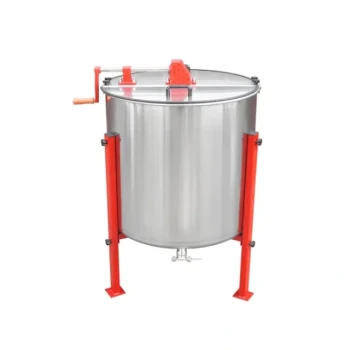
- If your primary focus is Comb Preservation: You should look into centrifugal extractors, as both pressers and hand-squeezing destroy the honeycomb structure.
- If your primary focus is Hygiene: The presser is recommended because it minimizes human contact and reduces the inclusion of non-honey impurities.
By moving from manual squeezing to a mechanical press, you are effectively trading a small investment in equipment for a permanent increase in product volume and quality.
Summary Table:
| Feature | Hand-Squeezing | Manual Honey Presser |
|---|---|---|
| Extraction Efficiency | ~75% (High Waste) | ~92% (Maximum Yield) |
| Labor Intensity | High (Physically Exhausting) | Low (Mechanical Leverage) |
| Product Purity | Higher Contamination Risk | Cleaner Separation/Less Oxidation |
| Pressure Type | Uneven/Variable | Uniform/Consistent |
| Throughput Speed | Slow (Manual Fatigue) | Fast (Streamlined Workflow) |
Scale Your Apiary Efficiency with HONESTBEE
Transitioning from manual labor to professional-grade equipment is the key to maximizing your harvest and profitability. HONESTBEE specializes in supporting commercial apiaries and distributors with a comprehensive range of beekeeping machinery and tools.
From high-efficiency honey pressers and honey-filling machines to specialized hardware and essential industry consumables, we provide the end-to-end solutions your business needs to grow.
Ready to optimize your production and reduce waste? Contact HONESTBEE today to discuss our wholesale offerings and discover how our equipment can transform your honey production.
References
- Asmiro Abeje, Lijalem Abebaw. Adoption and intensity of modern bee hive in Wag Himra and North Wollo zones, Amhara region, Ethiopia. DOI: 10.51599/are.2017.03.01.01
This article is also based on technical information from HonestBee Knowledge Base .
Related Products
- Stainless Steel Manual Honey Press with Guard for Pressing Honey and Wax
- Easy Use Manual Stainless Steel Honey Press for Honey Comb
- Manual Honey Filling Machine Bottling Machine for Honey
- Stainless Steel 3 Frame Manual Honey Extractor Spinner for Bee Honey Extraction
- HONESTBEE 3-Frame Manual Acrylic Honey Extractor
People Also Ask
- What other functions can a honey press serve besides honey extraction? Discover Versatile Multi-Purpose Uses
- How does the honey press preserve the quality of honey during extraction? Maintain Pure Enzymes and Flavor
- What materials are used to construct the honey press? Choose Durable, Food-Grade Solutions for Your Apiary
- What are the fundamental differences between manual honey presses and centrifugal honey extractors? A Guide for Pros
- What are some general features of a honey press? Maximize Your Yield with Durable Extraction Tools