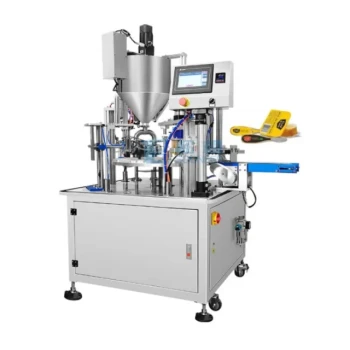
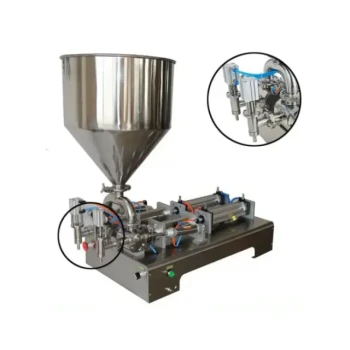
Industrial-grade honey-filling machines significantly boost market competitiveness by ensuring standardized product quality, minimizing raw material waste, and enabling rapid production scaling. These machines provide the high-precision measurement and sterile processing environments necessary to meet the rigorous demands of global retail channels and international food safety certifications.
To compete in modern trade, honey producers must move beyond manual processes to automated systems that guarantee volume consistency and product stability. These machines transform raw honey into a standardized, high-value commodity that is ready for global distribution.
Driving Operational Efficiency and Scalability
Transitioning from Manual to Automated High-Volume Output
Automated filling eliminates the weight deviations and inconsistencies common in manual operations. This precision ensures that every unit meets labeled specifications, which is a fundamental requirement for large-scale distribution contracts.
Reducing Labor Costs and Raw Material Loss
High-precision quantitative filling minimizes raw material waste, directly improving a producer’s bottom line. By automating the transfer from bulk storage to retail containers, producers significantly reduce labor overhead while increasing total throughput.
Rapid Response to Market Fluctuations
Mechanized systems allow producers to rapidly scale production to meet sudden spikes in demand. For distributors, this translates to a more reliable supply chain and the ability to fulfill large-scale orders with ultra-fast delivery times.
Safeguarding Product Quality and Brand Integrity
Eliminating Contamination Risks
Industrial-grade machines operate in closed environments that minimize exposure to the atmosphere and microbes. This strict hygiene control prevents the introduction of moisture, which is the primary cause of honey fermentation and spoilage.
Extending Shelf Life and Physical Stability
Integrated filtration and moisture control mechanisms ensure that the honey maintains its physical integrity over time. By preventing fermentation, these machines allow products to remain shelf-stable for longer periods, which is critical for long-distance shipping and international trade.
Supporting Organic and Premium Standards
For producers targeting the premium sector, these machines provide the sterile operations required for organic certification. This technical capability serves as a tangible representation of a manufacturer’s commitment to high quality and rigorous standards.
Achieving Global Market Readiness
Meeting International Food Safety Certifications
Consistent, standardized processing is the hardware foundation for achieving global quality certifications. Without the precision of industrial filling, entering high-barrier markets like the EU or North America is virtually impossible for local producers.
Integration with Intelligent Labeling
Modern filling lines often integrate with intelligent labeling systems to ensure accurate transmission of product data. This transparency builds trust with wholesalers and distributors who require full traceability across the supply chain.
Enhancing Competitive Positioning Against Imports
By adopting industrial automation, local producers can match the standardized supply of established international brands. This allows them to compete effectively on both price and quality, offering a professional product that meets retail management requirements.
Understanding the Trade-offs and Pitfalls
Initial Capital Expenditure and Complexity
The primary barrier to entry is the high initial investment required for industrial-grade machinery. Additionally, these systems require specialized technical knowledge for maintenance and calibration to prevent downtime.
Flexibility vs. Specialization
While these machines excel at high-volume standardization, they may offer less flexibility for small-batch, artisanal runs with diverse bottle shapes. Producers must balance the need for specialized speed with the market's demand for variety.
Making the Right Choice for Your Goal
How to Apply This to Your Project
Selecting the right honey-filling solution depends on your specific business objectives and the markets you intend to serve.
- If your primary focus is global export and premium retail: Invest in machines that feature closed-environment filling and integrated moisture control to meet international food safety standards.
- If your primary focus is supply chain reliability and volume: Prioritize high-speed automated systems with integrated labeling to ensure rapid fulfillment and consistent inventory for your distributors.
- If your primary focus is cost-efficiency and waste reduction: Focus on high-precision quantitative dosing systems that minimize raw material loss and reduce manual labor requirements.
The adoption of industrial-grade filling technology is the single most important step a honey producer can take to transition from a local supplier to a competitive global player.
Summary Table:
| Competitive Driver | Key Benefit | Impact on Market Readiness |
|---|---|---|
| Precision Filling | Minimizes raw material waste & ensures weight accuracy | Essential for large-scale retail & distribution contracts |
| Hygiene Control | Closed environment prevents fermentation & spoilage | Meets rigorous international food safety standards (EU/US) |
| Automation | Replaces manual labor with high-volume throughput | Enables rapid scaling to meet sudden market demand spikes |
| Data Integration | Supports intelligent labeling & batch traceability | Builds brand trust with wholesalers & global distributors |
Elevate Your Honey Production with HONESTBEE Solutions
Are you ready to scale your operations and secure a competitive edge in the global market? HONESTBEE provides a comprehensive, one-stop sourcing experience for commercial apiaries, wholesalers, and B2B resellers.
From high-precision honey-filling machines and hive-making hardware to essential industry consumables and cultural merchandise, our full-spectrum portfolio is designed to maximize your profit margins. We offer:
- Deep Industry Expertise: Professional guidance to help you meet global certification standards.
- OEM/ODM Support: Tailored machinery and tools to fit your specific brand requirements.
- Rapid Fulfillment: Ultra-fast delivery and exceptional customer service to keep your supply chain moving.
Streamline your production and achieve superior product stability today. Contact our experts for a wholesale quote!
References
- Quality management of honey in the BANI world: consumer perceptions and market responses. DOI: 10.29119/1641-3466.2025.239.2
This article is also based on technical information from HonestBee Knowledge Base .
Related Products
- Precision Durable Efficient HONESTBEE Rotary Honey Filling Machine
- Commercial Rotary Honey Filling Machine for Production
- Fully Automatic Honey Filling Packaging Machine for Processing Line
- Precision Automated Packaging Turntable Honey Spoon Filling Sealing Packing Machine
- Automatic Honey Filling and Filtering Machine for Beekeeping Bottle Filling
People Also Ask
- How do high-precision honey filling machines ensure quality? Optimize Your Commercial Production with HONESTBEE
- What are the common types of bottling machines used for honey? Choosing the Right Solution for Your Apiary
- What is a key feature of the new generation of the honey filling machine? The Advanced Electronic Control Unit
- How do honey filling machines work? Achieve Precision & Speed for Your Apiary
- What quality control role does professional honey filling equipment perform? Ensure Consistency and Product Stability