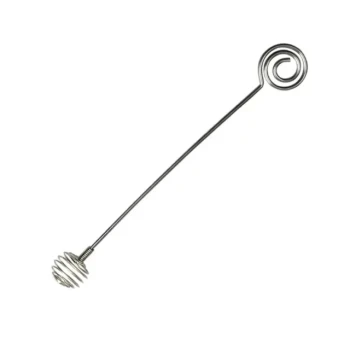
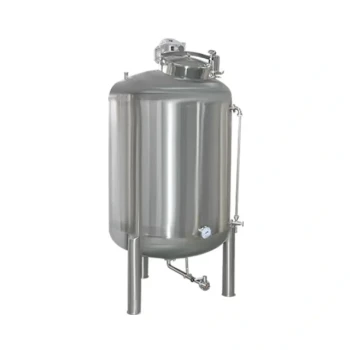
Industrial-grade mixing and temperature control equipment serve a specific, critical role in creamed honey production: they engineer the physical structure of the honey to ensure a smooth texture. The primary function of this machinery is to precisely regulate crystallization temperatures and agitation frequencies to force the development of microscopic crystals while preventing the growth of large, gritty ones.
Core Takeaway The difference between gritty, crystallized honey and smooth, creamed honey is entirely dependent on controlled nucleation. Industrial equipment automates this process, maintaining a strict environment that forces honey to solidify into a stable, silk-like spread rather than a coarse solid.
Engineering the Perfect Crystal Structure
To produce spreadable honey, you must control nature's tendency to form irregular crystals. Industrial equipment achieves this through two synchronized mechanisms.
Precise Temperature Management
Honey crystallizes most rapidly and uniformly at specific temperatures. Industrial systems precisely manage the thermal environment throughout the processing cycle.
By maintaining the optimal temperature range, the equipment encourages the honey to crystallize quickly. This speed is vital because rapid crystallization generally leads to smaller crystal sizes, whereas slow cooling allows large, jagged crystals to form.
Controlled Agitation Frequency
Simply cooling the honey is not enough; it must be moved. Industrial mixers utilize specific agitation frequencies to mechanically disrupt crystal growth.
This constant, calculated movement prevents individual sugar crystals from bonding into large structures. It physically breaks apart forming clusters, ensuring that the solid components of the honey remain microscopic.
Achieving the 'Creamed' Characteristic
The ultimate goal of this machinery is to alter the mouthfeel and stability of the final product without changing its chemical composition.
Promoting Fine Nucleation
The combined effect of cooling and mixing promotes the formation of extremely fine crystal nuclei. These act as "seeds" for the crystallization process.
When millions of microscopic nuclei form simultaneously, the honey sets into a dense, creamy matrix. The equipment ensures these nuclei are distributed evenly throughout the batch for a consistent texture.
Preventing Coarse Texture
Without this intervention, honey naturally develops coarse crystals over time, resulting in a sugary, gritty texture that is often considered a defect in table honey.
Industrial processing eliminates this randomness. By preventing coarse development, the machinery produces honey with a smooth, silk-like texture, distinguishing it from standard liquid or raw crystallized honey.
Understanding the Trade-offs
While industrial processing creates a superior texture, it requires a delicate balance between mechanical intervention and product integrity.
The Risk of Over-Processing
If the agitation frequency is too aggressive or the temperature fluctuates, the honey can lose its desired viscosity or fail to set properly. Inconsistent processing can lead to phase separation, where a layer of liquid honey forms on top of the crystallized mass.
Thermal Sensitivity
Supplementary data indicates that heat treatment is often used to dissolve existing crystals or reduce yeast activity before creaming. However, excessive heat can destroy heat-sensitive nutrients, such as enzymes. The equipment must balance the need for flow and filtration with the preservation of the honey's nutritional profile.
Making the Right Choice for Your Goal
When evaluating equipment for creamed honey production, your selection depends on which aspect of the final product matters most to your market position.
- If your primary focus is Sensory Quality: Prioritize equipment with variable agitation speeds to fine-tune the "silk-like" texture and mouthfeel.
- If your primary focus is Shelf Stability: Focus on systems with high-precision temperature control to ensure the "physical form" remains stable during storage and shipping.
Ultimately, the value of this equipment lies in its ability to transform a variable raw material into a standardized, high-value product with a predictable, premium texture.
Summary Table:
| Feature | Primary Function | Impact on Honey Quality |
|---|---|---|
| Temp Management | Regulates crystallization speed | Ensures small, uniform crystal size |
| Agitation Frequency | Disrupts crystal bonding | Prevents gritty, coarse textures |
| Controlled Nucleation | Distributes "seed" crystals | Creates a stable, stable, silk-like spread |
Optimize Your Creamed Honey Production with HONESTBEE
HONESTBEE caters to commercial apiaries and distributors with a comprehensive wholesale offering designed to scale your operations. We supply the full spectrum of beekeeping tools and machinery, including:
- Specialized Hardware: High-precision honey-filling and hive-making machines.
- Processing Equipment: Advanced industrial mixers and temperature control systems for perfect crystallization.
- Industry Consumables: A wide array of essential supplies and honey-themed cultural merchandise.
Partner with HONESTBEE to transform your raw honey into a high-value, standardized product with a predictable, premium texture. Contact us today to explore our wholesale solutions and elevate your business efficiency.
References
- Imants Justs, Andris Skromulis. CHARACTERISTICS OF THE BEEKEEPING INDUSTRY IN THE LATVIA. DOI: 10.17770/etr2024vol1.7990
This article is also based on technical information from HonestBee Knowledge Base .
Related Products
- Double Wall Honey Heating Stirring Homogenizer Mixing Machine with Various Capacity
- Economy Honey Homogenizer Mixer and Melting Machine for Beekeeping
- Professional Thermostatic Conical Honey Melter
- Professional Electric Honey Uncapping Knife with Heated Digital Temperature Control for Beekeeping
- HONESTBEE Commercial Upright Honey Melter
People Also Ask
- What impact do homogenizers or oscillating equipment have on honey microbial detection? Ensure Testing Accuracy
- Why is thorough mechanical stirring and homogenization emphasized in honey processing? Ensure Sample Accuracy
- How do heating equipment and homogenizers liquefy crystallized honey? Expert Guide to Professional Honey Processing
- How does the honey mixer handle different types of honey? Master Viscosity for Perfect Blends
- What are the main components of the honey mixer? Engineered for Gentle, Efficient Honey Processing