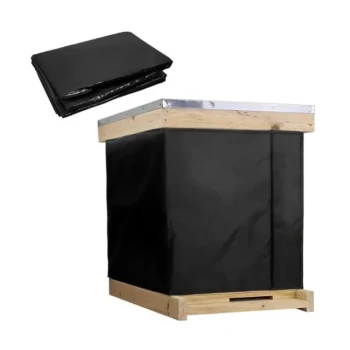
Insulating a beehive during winter serves to stabilize the colony's internal environment, reducing the physical stress on the bees. It functions as a thermal barrier that helps the colony regulate temperature, conserve limited energy reserves, and manage internal moisture levels.
Core Insight: The goal of insulation is not to heat the hive like a house, but to reduce the rate of heat loss. This allows bees to maintain their cluster temperature with less effort, preventing the fatal combination of starvation and wetness.
Regulating Thermal Stability
Maintaining the Brood Nest
The primary biological imperative for the colony is keeping the brood nest at a stable 90-95°F (32-35°C). Insulation shields the hive from extreme external cold and abrupt temperature swings. This stability is critical for the survival of any developing bees during the winter months.
Conserving Vital Energy
Bees generate heat by vibrating their wing muscles, a process that burns calories. By reducing heat loss, insulation minimizes the work required to maintain warmth. Consequently, the colony consumes less stored honey, significantly reducing the risk of starvation before spring arrives.
Increasing Yield and Growth
Reduced energy expenditure allows the colony to reallocate resources. Studies suggest that hives with foam insulation—which has low thermal conductivity—often show increased capped brood areas and higher honey yields compared to uninsulated hives.
Managing Moisture and Condensation
Preventing the "Cold Rain"
Moisture is a leading cause of winter colony loss. Warm air from the cluster holds moisture (from respiration and honey metabolism), which condenses into water droplets when it hits cold surfaces. If these droplets drip back onto the bees, the resulting chill can be fatal.
Reducing Surface Condensation
Insulation keeps the interior walls and inner cover of the hive warmer. Because condensation forms when warm air contacts a cold surface, warmer walls significantly reduce the amount of liquid water forming inside the hive. This keeps the colony dry and healthy.
Promoting Spring Resilience
Encouraging Early Brood Rearing
A well-insulated hive is less susceptible to late-season cold snaps. This thermal buffer encourages the queen to begin laying eggs earlier in the spring. As a result, the colony can build up its population faster once the weather warms.
Protection from Wind Chill
Insulation, particularly when combined with hive wraps, acts as a windbreak. Reducing wind exposure prevents cold air from stripping heat away from the hive, further aiding in thermoregulation.
Understanding the Trade-offs
The Danger of Over-Sealing
While heat retention is the goal, you must never completely seal the hive. Trapping warm, moist air without an escape route leads to dampness, mildew, and disease. Wet bees are dead bees.
The Necessity of Ventilation
Insulation must work in tandem with ventilation. You must leave small openings (typically at the top and bottom) to allow excess moisture to escape. The objective is a balance: retain enough heat to keep walls warm, but allow enough airflow to vent humidity.
Making the Right Choice for Your Goal
When deciding on your insulation strategy, consider the specific outcomes you wish to prioritize for your apiary.
- If your primary focus is Colony Survival: Prioritize moderate insulation combined with top ventilation to prevent condensation, as moisture is a greater threat than cold.
- If your primary focus is Spring Production: Use higher R-value materials like foam to maximize heat retention, allowing the bees to start brood rearing earlier in the season.
- If your primary focus is Resource Efficiency: Wrap hives to reduce wind chill, ensuring the bees burn fewer calories and preserve their honey stores for erratic spring weather.
Effective wintering is about balance; keep the bees dry first, warm second, and always ensure they have fresh air.
Summary Table:
| Benefit | Primary Function | Impact on Colony |
|---|---|---|
| Thermal Stability | Reduces heat loss rate | Maintains brood nest at 90-95°F with less effort |
| Energy Conservation | Minimizes wing vibration needs | Reduces honey consumption; prevents starvation |
| Moisture Control | Keeps interior walls warm | Prevents "cold rain" condensation from killing bees |
| Spring Development | Buffers against cold snaps | Encourages earlier brood rearing and faster buildup |
| Wind Protection | Acts as a thermal barrier | Prevents wind chill from stripping internal warmth |
Maximize Your Apiary’s Winter Survival with HONESTBEE
Transitioning through winter requires the right balance of insulation and ventilation. At HONESTBEE, we empower commercial apiaries and distributors with high-performance beekeeping tools and machinery designed for resilience. From specialized hive-making equipment to essential wintering consumables, our comprehensive wholesale offerings ensure your colonies thrive year-round.
Partner with HONESTBEE to scale your operations and secure your honey yields.
Related Products
- Professional Insulated Plastic Bee Hives
- Professional Insulated Winter Hive Wrap for Beekeeping
- Inner Beehive Cover for Beekeeping Bee Hive Inner Cover
- Stainless Steel Round Beehive Air Vents for Ventilation
- Metal Hive Feet Bee Hive Stand for Ant Protection
People Also Ask
- What are the advantages of plastic bee hives? Boost Efficiency & Durability for Your Apiary
- Are plastic bee hives any good? Unlock Durability & Efficiency for Your Apiary
- How do plastic bee hives compare to wooden hives in handling? Reduce Strain & Boost Efficiency
- Are plastic bee hives good? Durable, Low-Maintenance Hives for Modern Apiaries
- What are the disadvantages of plastic beehives? Key Operational and Environmental Risks Exposed