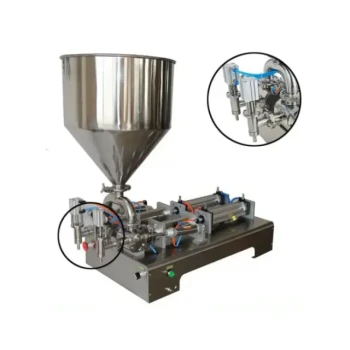
Industrial-grade honey filling machines utilize precision flow control systems to strictly manage the unique rheological properties of honey, specifically its high viscosity and tendency to string. Unlike traditional manual methods, these systems deliver fast, quantitative filling while utilizing a closed processing path to eliminate environmental contamination and minimize raw material waste.
The core advantage lies in the integration of precision metering with a closed-loop environment. This technology transforms honey production from a variable, labor-intensive process into a consistent, hygienic operation capable of meeting strict international weight and safety standards.
Overcoming Physical Processing Challenges
Mastering High Viscosity and Stringing
Honey presents significant physical resistance due to its thickness. Industrial machines employ precision flow control systems designed specifically to handle this high viscosity without slowing down production.
Eliminating Product Stringing
A common issue in manual filling is the "string" of honey left between the source and the container. Advanced machines utilize temperature-regulated anti-drip designs and precision cut-off mechanisms. This prevents the stringing effect, ensuring clean bottle necks and preventing product loss on the conveyor line.
Managing Wall-Clinging and Overflow
High-viscosity fluids tend to cling to container walls or overflow if poured too quickly. Precision metering systems manage the flow rate dynamically to mitigate wall-clinging issues, ensuring the honey settles correctly without spillage.
Ensuring Regulatory and Commercial Compliance
Achieving Exact Weight Consistency
Manual filling often results in volume variations between bottles. Industrial equipment provides precise metering control, ensuring the volume of every unit is highly consistent with the labeled weight.
Meeting International Standards
This level of consistency is not just about quality control; it is a compliance necessity. Accurate quantitative filling allows producers to meet strict international trade standards, a requirement for entering global supply chains and high-value retail markets.
Elevating Hygiene and Product Safety
The Closed-Loop Advantage
Traditional methods often expose honey to the open air. Industrial machines operate using a closed processing path. This isolation significantly reduces the risk of secondary contamination from dust or biological particulates in the facility.
Protecting the Final Product
By automating the environment, producers minimize human contact with the product. This ensures the hygienic quality of the final honey product meets the rigorous safety standards required for distribution channels and brand reputation.
Maximizing Production Efficiency
Reducing Material Waste
Spills, overfilling, and drips represent direct financial loss. By stabilizing the filling process, industrial machines minimize material loss and raw material waste.
Accelerating the Bulk-to-Retail Transition
These systems act as a critical tool for scaling operations. They significantly reduce the time required to transfer honey from large storage tanks to retail packaging, facilitating a smooth transition from bulk sales to high-value-added fractional packaging.
Understanding the Operational Considerations
The Shift from Flexibility to Standardization
Implementing industrial filling represents a shift away from the flexibility of manual labor to a rigid, high-speed workflow. While this boosts volume, it requires a commitment to standardized container sizes and consistent maintenance of the flow control systems to retain accuracy.
Capitalizing on Scalability
This technology is specifically positioned for apiaries and producers transitioning to commercial production. It is less about maintaining artisanal irregularity and more about establishing a professional product image capable of competing on retail shelves.
Making the Right Choice for Your Goal
To determine if this technology aligns with your current production stage, consider your primary objectives:
- If your primary focus is Market Expansion: Industrial filling is essential for meeting the strict weight and hygiene standards required by international trade and large-scale retail distributors.
- If your primary focus is Cost Reduction: The technology justifies the investment by minimizing raw material waste and lowering the labor costs associated with manual transfer and cleaning.
Summary: Industrial-grade filling machines are not merely faster; they are the technical bridge that allows honey producers to transition from bulk processing to precise, safe, and commercially viable retail manufacturing.
Summary Table:
| Feature | Industrial Filling Machines | Traditional Manual Methods |
|---|---|---|
| Drip Control | Precision anti-drip mechanisms | Frequent stringing & waste |
| Accuracy | Precise quantitative metering | Variable weight consistency |
| Hygiene | Closed-loop processing path | Open-air exposure risk |
| Speed | High-speed bulk-to-retail | Labor-intensive & slow |
| Compliance | Meets international trade standards | Difficult to standardize |
Scale Your Honey Production with HONESTBEE
Transitioning from bulk honey to high-value retail packaging requires precision and reliability. HONESTBEE specializes in supporting commercial apiaries and distributors with our comprehensive wholesale range of professional beekeeping machinery, including high-precision honey-filling and hive-making machines.
Our equipment is designed to minimize waste, ensure strict hygiene compliance, and maximize your operational efficiency. Whether you are expanding your retail presence or streamlining a global distribution chain, we provide the tools and consumables you need to succeed.
Contact HONESTBEE today to optimize your production line!
References
- Deborah Stevenson. The Hive Detectives: Chronicle of a Honey Bee Catastrophe , and: The Buzz on Bees: Why Are They Disappearing? (review). DOI: 10.1353/bcc.0.1752
This article is also based on technical information from HonestBee Knowledge Base .
Related Products
- Commercial Rotary Honey Filling Machine for Production
- Precision Durable Efficient HONESTBEE Rotary Honey Filling Machine
- Fully Automatic Honey Filling Packaging Machine for Processing Line
- Economy Small Honey Filling Machine Honey Bottle Filler Packaging Machine
- Precision Automated Packaging Turntable Honey Spoon Filling Sealing Packing Machine
People Also Ask
- What role do commercial honey filling machines play in honey distribution? Scaling Efficiency and Quality Control
- What technical support do commercial-grade filling machines provide? Convert Honey NTFPs into Marketable Commodities
- What is the significance of specialized honey filling equipment? Scaling from Beekeeping to Commercial Success
- Why is professional honey filling machinery critical for honey production? Scale Your Apiary's Profit & Efficiency
- Why is high-capacity honey filling machinery necessary for Giant Honey Bees? Solve the Apis dorsata Volume Crisis