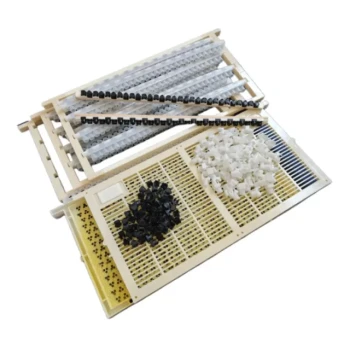
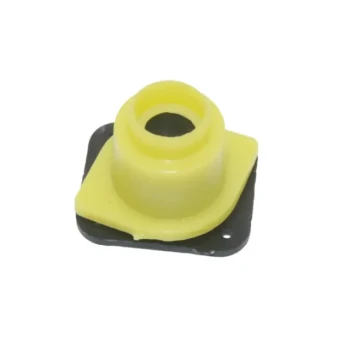
Professional queen rearing equipment fundamentally transforms bee breeding from a random biological process into a precise, scalable science. By utilizing specialized tools like grafting needles and artificial cell cups alongside temperature-controlled incubators, breeders create an ideal physiological environment that strictly mimics natural hive conditions. This technical precision allows for the mass propagation of superior bee strains, ensuring genetic stability and significantly enhancing the overall vitality of the colony's offspring.
The primary technical advantage is the ability to standardize environmental variables and intervene manually, allowing breeders to scale the production of superior genetics while maintaining high survival rates and trait consistency.
Optimizing the Physiological Environment
Mimicking Nature with Precision
The core advantage of using incubators is the regulation of temperature and humidity.
These devices maintain an environment that exactly replicates the conditions within a healthy colony.
This consistency ensures that queen larvae develop without the stress of environmental fluctuations, leading to higher viability.
Reducing Physical Trauma
Professional grafting needles and artificial cell cups are designed to facilitate the delicate transfer of larvae.
Manual intervention, when done with these specialized tools, minimizes physical damage to the larvae during transfer.
This precision is critical for maintaining high acceptance rates and ensuring the resulting queens are physically robust.
Achieving Genetic Stability at Scale
Mass Propagation of Superior Strains
High-precision equipment allows experts to disconnect the quantity of queens produced from the natural limitations of a single hive.
Breeders can perform large-scale propagation from a single, high-performing mother queen.
This capability is essential for commercial operations looking to standardize quality across an entire apiary.
Enhancing Colony Traits
By using professional tools to control the rearing process, breeders can focus on specific genetic markers.
This leads to the stabilization of desirable traits, such as disease resistance and increased honey production potential.
Systematic breeding replaces random natural selection with targeted genetic improvement.
Managing Mating and Pedigree Accuracy
Reducing Drifting and Loss
Specialized hardware, such as Four-way Nucleus Hives, addresses the risks associated with mating flights.
By orienting entrances in four different directions, these hives prevent queens from "drifting" (entering the wrong hive) upon return.
This simple geometric solution significantly protects the breeder's investment in the queen.
Absolute Genetic Control
While rearing equipment controls the maternal line, artificial insemination equipment controls the paternal line.
This technology overcomes the biological limitation of random aerial mating.
It allows for the precise estimation of genetic parameters, ensuring that the pedigree is known and pure.
Understanding the Trade-offs
High Technical Skill Requirement
Possessing the equipment does not guarantee success; the manual intervention required (such as grafting) demands high dexterity.
Improper use of grafting needles or artificial insemination tools can damage larvae or queens, negating the benefits of the hardware.
Resource and Maintenance Overhead
Incubators and precision tools require calibration, sterilization, and a reliable power source.
While mini nucleus hives lower feeding costs, the overall infrastructure for a professional breeding program represents a significant upfront investment compared to natural splitting methods.
Making the Right Choice for Your Breeding Goals
To leverage these technical advantages effectively, align your equipment choice with your specific breeding objectives:
- If your primary focus is large-scale production: Prioritize high-capacity incubators and grafting kits to maximize the volume of viable queen cells.
- If your primary focus is genetic purity: Invest in artificial insemination equipment or establish isolated mating stations to control paternal lineage.
- If your primary focus is cost efficiency: Utilize mini nucleus hives to minimize resource consumption during the mating and initial egg-laying stages.
By standardizing the rearing environment, professional equipment bridges the gap between natural variability and the consistent excellence required for modern apiary success.
Summary Table:
| Feature | Technical Advantage | Impact on Breeding |
|---|---|---|
| Incubators | Precise Temp & Humidity Control | Replicates hive conditions for maximum larval viability |
| Grafting Tools | Ergonomic & Delicate Design | Minimizes physical trauma during larval transfer |
| Artificial Cell Cups | Standardized Dimensions | Enhances acceptance rates and ensures robust queen growth |
| 4-Way Nucleus Hives | Multi-directional Entrances | Prevents queen drifting and loss during mating flights |
| Insemination Gear | Paternal Line Control | Achieves 100% pedigree accuracy and genetic stability |
Elevate Your Apiary's Genetic Excellence with HONESTBEE
Maximize your colony's potential by transforming natural variability into predictable, high-quality results. HONESTBEE specializes in supporting commercial apiaries and distributors with a comprehensive wholesale range of professional beekeeping tools and machinery.
From precision queen rearing kits and high-capacity incubators to advanced honey-filling machines and specialized hardware, we provide the full spectrum of equipment needed to scale your operations. Partner with us to access essential industry consumables and honey-themed cultural merchandise designed for growth.
Ready to scale your production? Contact us today to discuss your wholesale needs!
References
- A.M. Ovdiienko, N.M. Korbych. Beekeeping of Ukraine: production and export. DOI: 10.32851/2226-0099.2020.116.2.18
This article is also based on technical information from HonestBee Knowledge Base .
Related Products
- Professional Multi-Functional Queen Bee Cage
- No Grafting Queen Rearing Kit: System for Royal Jelly Production and Queen Rearing
- Portable Queen Bee Incubator with 12V Car Adapter for Safe Transport
- Retractable Chinese Queen Rearing Grafting Tools Equipment
- JZBZ Style Push-In Cell Protector for Professional Queen Rearing Kits
People Also Ask
- Why are specialized queen bee cages used for the banking of mated queen bees? Maximize Commercial Apiary Storage Efficiency
- What is the mechanism of action for using temporary queen bee cages? Master Successful Queen Introduction
- What technical precaution must be taken regarding the mesh or grill side of a queen bee cage? Ensure Queen Survival
- What is the step-by-step process for installing a queen bee's cage onto a frame? Ensure Hive Acceptance Safely
- How is a queen bee released from a queen cage? Ensure Safe Colony Integration & Hive Success