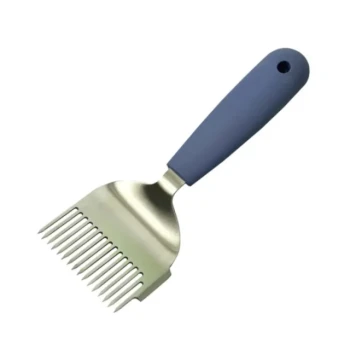
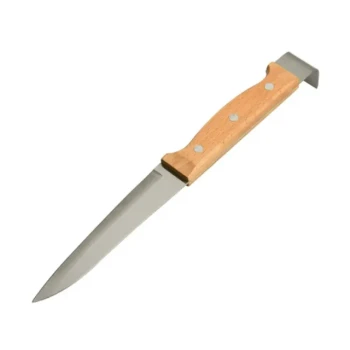
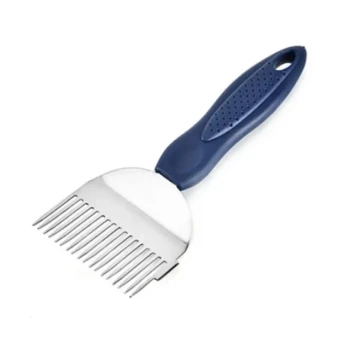
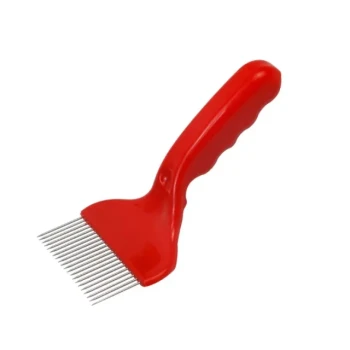
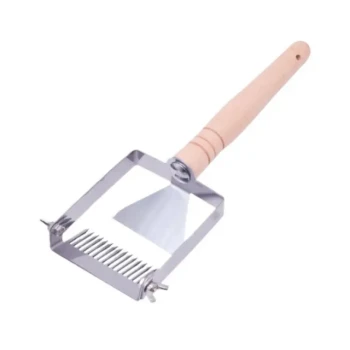
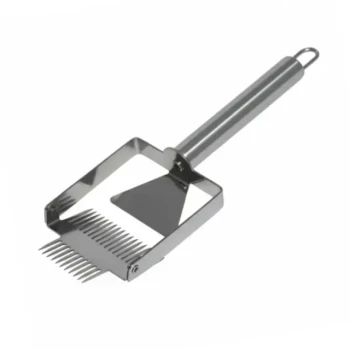
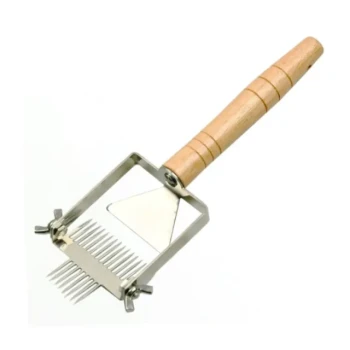
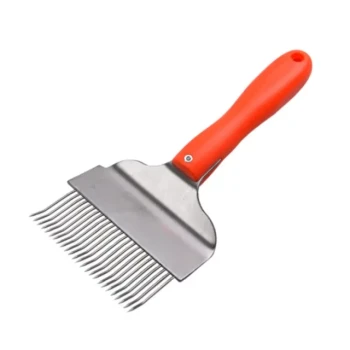
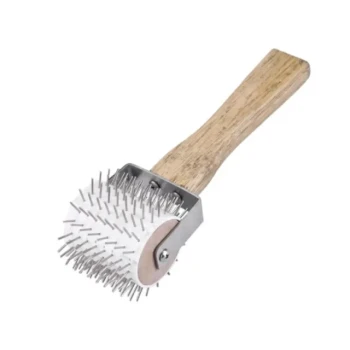
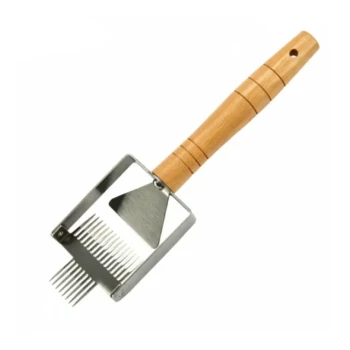
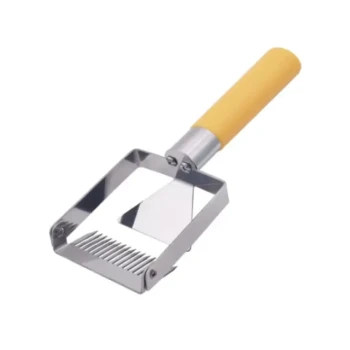
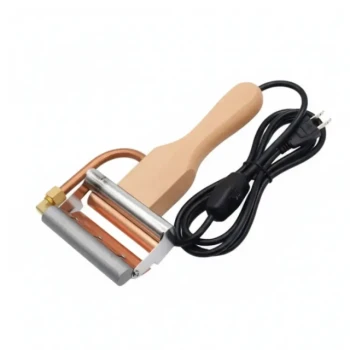
To technically qualify for professional Varroa inspection, an uncapping tool must offer surgical precision. Its primary function is to remove the wax capping from a hive cell without causing any physical trauma to the larva underneath. This non-destructive capability is the absolute prerequisite for subsequent extraction and accurate data collection regarding parasite infestation.
To ensure data integrity during Varroa mite inspections, the uncapping tool must facilitate the exposure of the cell while leaving the larva completely intact. Damage to the host renders accurate mite counting and developmental study impossible.
The Mechanics of Non-Destructive Uncapping
Precision at the Wax Interface
The tool must be designed to slice or lift the wax capping with exact control.
It must sever the wax seal without penetrating the cell depth where the larva resides.
Enabling Secondary Extraction
The uncapping process is only the first step; it prepares the cell for the insertion of tweezers.
A professional tool creates a clean opening that allows researchers to grasp and remove the larva without obstruction or injury.
The Critical Link Between Tooling and Data Accuracy
Facilitating Accurate Mite Counts
The primary goal of this inspection is to quantify Varroa mites hidden within the capped cells.
If the uncapping tool damages the larva, bodily fluids can obscure the visual field, making it difficult to spot or count the minute parasites.
Preserving Developmental Context
Researchers must often study how parasites impact specific honey bee developmental stages.
A tool that mangles the specimen prevents the researcher from accurately determining the larva's age or developmental health at the time of inspection.
Understanding the Trade-offs
The Cost of Precision vs. Speed
Tools designed for this level of high-fidelity uncapping are inherently slower than bulk uncapping methods used for honey harvesting.
The Consequence of Improper Tooling
Using standard or blunt tools increases the risk of larval mortality during the inspection process.
A damaged larva compromises the biological integrity of the sample, potentially invalidating the specific data point regarding that cell's infestation level.
Making the Right Choice for Your Goal
To select the appropriate equipment for your inspection protocols, consider your primary objective:
- If your primary focus is accurate parasite quantification: Prioritize tools with fine, sharp leading edges that can lift wax caps without downward pressure.
- If your primary focus is developmental research: Ensure the tool creates a wide enough aperture to allow tweezers to extract the larva without it touching the jagged edges of the cell wall.
Precision in your tools leads directly to precision in your data.
Summary Table:
| Technical Requirement | Critical Function | Impact on Research |
|---|---|---|
| Surgical Precision | Removes wax capping without touching the larva | Prevents host trauma and fluid interference |
| Non-Destructive Design | Severs the wax seal without cell penetration | Maintains biological integrity for developmental study |
| Aperture Expansion | Creates a clean, wide opening for tweezers | Facilitates easy extraction for accurate mite counts |
| High-Fidelity Edge | Fine, sharp leading edge for lifting caps | Minimizes downward pressure to avoid crushing specimens |
| Data Integrity Support | Preserves host and parasite visibility | Ensures reliable quantification of infestation levels |
Elevate Your Beekeeping Standards with HONESTBEE
For commercial apiaries and distributors, the difference between an average season and a thriving one lies in the precision of your equipment. HONESTBEE is your strategic partner in professional beekeeping, offering a comprehensive wholesale range of high-fidelity tools, specialized hive-making machinery, and honey-filling systems designed for industrial performance.
Whether you are conducting rigorous Varroa research or scaling up honey production, our specialized hardware ensures you never compromise on data accuracy or hive health. We cater specifically to the needs of distributors and large-scale operations with premium industry consumables and honey-themed merchandise.
Ready to upgrade your inventory with world-class beekeeping technology?
Contact HONESTBEE Today to discuss our wholesale offerings and how we can support your business growth.
References
- Desalegn Begna, Amssalu Bezabeh. Identifying The Species, Effects And Seasonal Dynamics Of Honeybee Varroa Mites: A Newly Emerging Parasite To Ethiopian Honeybee. DOI: 10.15226/2572-3162/2/1/00102
This article is also based on technical information from HonestBee Knowledge Base .
Related Products
- Professional Multi-Function Uncapping Fork with Ergonomic Rubber Grip
- Professional Compact Multi-Function Uncapping Knife for Beekeeping
- Professional Multi-Function Uncapping Fork with Integrated Blade for Beekeeping
- Professional Wide Head Honey Uncapping Fork for Beekeeping
- Adjustable Stainless Steel Honey Uncapping Fork with Scraper for Beekeeping
People Also Ask
- What is the primary use of an uncapping fork in beekeeping? A Guide to Precision Honey Harvesting
- What is the use of an uncapping fork? A Precision Tool for Hive Management and Honey Harvesting
- What is the original purpose of an uncapping fork? Mastering Precision Honey Extraction and Comb Preservation
- How is an uncapping fork used to uncap honey frames? Precision Techniques for Perfect Honey Extraction
- What is an uncapping fork? A Precision Tool for Efficient Honey Harvesting