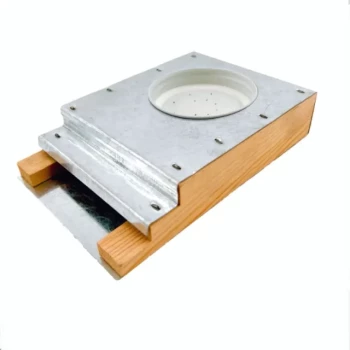
The three basic types of bee feeders are contact feeders, tray feeders, and frame feeders. These distinct categories encompass various designs used to supplement a hive's nutrition, differing primarily in how the bees access the food and where the equipment is situated within the apiary.
While specific designs like entrance or bucket feeders are common, they generally fall into three fundamental mechanical categories: contact, tray, and frame. Choosing the right one balances the colony's need for security with the beekeeper's need for convenience.
Examining the Three Basic Feeder Types
Beekeepers utilize these three main categories to deliver solid or liquid feed depending on the season and colony strength.
Contact Feeders
This category relies on gravity and direct interaction to deliver food.
Commonly recognized as bucket, can, or jar feeders, these function by inverting a container filled with syrup.
Small holes in the lid allow bees to access the liquid from underneath through surface tension and vacuum pressure.
Because the feed is often placed directly over the cluster or at the entrance, bees can access it easily without traveling far.
Tray Feeders
Tray feeders are generally designed as reservoirs that hold a larger volume of feed.
These are frequently identified as top feeders, which are placed under the main lid and sitting on top of the inner cover.
This design allows the colony to come up and feed from a "tray" of syrup, often capable of holding significantly more food than a standard jar.
Some entrance feeders also utilize a tray-like slide-in mechanism, though top-mounted variations are widely favored for their capacity.
Frame Feeders
Also known as internal or division board feeders, these are designed to fit inside the hive body itself.
A frame feeder physically replaces one or two standard frames within the brood box.
This places the food source directly inside the hive, keeping the syrup at the same temperature as the colony.
It allows bees to access food without leaving the warmth and safety of the hive body.
Understanding the Trade-offs
Every feeder type presents a specific set of merits and drawbacks that must be weighed against your management style.
Ease of Monitoring vs. Disturbance
Contact feeders (specifically inverted jars at the entrance or on top) allow you to check food levels at a glance without opening the hive.
Conversely, checking a frame feeder requires opening the hive and removing the inner cover, which disrupts the colony's internal climate and activity.
Temperature and Accessibility
Frame feeders offer a distinct advantage in cooler weather because the food is kept warm by the cluster.
External or top-mounted feeders can sometimes become too cold in lower temperatures, making the syrup difficult for bees to metabolize.
Capacity vs. Convenience
Tray (top) feeders often hold the most feed, reducing the frequency of refill trips for the beekeeper.
However, contact feeders are generally easier to swap out quickly for cleaning or refilling without exposing the bees to the open air.
Making the Right Choice for Your Goal
The "best" feeder is subjective and varies from one colony to the next based on weather, hive strength, and your schedule.
- If your primary focus is minimal disturbance: Choose a contact or entrance feeder (like an inverted jar) to monitor and refill syrup without opening the hive.
- If your primary focus is cold-weather feeding: Opt for a frame feeder to keep the food source internal and warm alongside the cluster.
- If your primary focus is high volume: Utilize a tray (top) feeder to provide a large supply of food at once, minimizing the number of visits required.
Select the feeder that aligns best with the current season and your capacity to manage the hive.
Summary Table:
| Feeder Type | Design Style | Placement | Key Advantage | Best For |
|---|---|---|---|---|
| Contact | Inverted Bucket/Jar | Top or Entrance | Easy monitoring & fast swaps | Minimal hive disturbance |
| Tray | Top Reservoir | Under the Lid | High volume capacity | Reducing refill frequency |
| Frame | Division Board | Inside Hive Body | Maintains feed temperature | Cold weather & weak colonies |
Maximize Your Colony Health with HONESTBEE
Are you looking to scale your commercial apiary or expand your distribution catalog? HONESTBEE specializes in providing high-quality, professional-grade beekeeping solutions tailored for the global industry. From precision frame feeders and high-capacity top feeders to advanced honey-filling machines and specialized hive-making equipment, we supply everything your business needs to thrive.
Our Value to You:
- Comprehensive Wholesale Catalog: One-stop shop for all tools, machinery, and consumables.
- Industrial-Grade Durability: Equipment designed to withstand the rigors of commercial use.
- Global Distribution Support: Reliable supply chains for distributors and large-scale operations.
Take your beekeeping business to the next level today. Contact us now for a wholesale quote and see how our expertise can drive your success!
Related Products
- Rapid Bee Feeder White Plastic 2L Round Top Feeder for 8 or 10-Frame Bee Hives
- White Plastic 0.5L Beekeeping Entrance Feeder for Bees
- HONESTBEE Entrance Bee Feeder Professional Hive Nutrition Solution for Beekeeping
- HONESTBEE Professional Entrance Bee Feeder Hive Nutrition Solution
- Boardman Entrance Bee Feeder Durable Galvanized Steel and Wood Construction for Beekeeping
People Also Ask
- What should be done with feeders and equipment after feeding bees? Essential Steps for Apiary Health
- What should be done if feed in a feeder is not consumed by the bees? Prevent Hive Mold with Prompt Feed Management
- What is the necessity of specialized internal or entrance feeders? Secure Your Hive with Professional Feeding Tools
- How do bee feeders work to preserve colony health during nectar shortages? Essential Guide for Beekeepers
- How quickly does a medium to strong colony usually empty a feeder? A Beekeeper's Guide to Hive Health