For commercial apiaries in hot climates, choose a flat telescopic lid with a durable tin or zinc outer cover, reliable weather sealing, and a white exterior finish. The lid should fit securely over standardized hive bodies, resist rain and wind, and support stacking during transport. For extreme heat, integrated insulation, adequate ventilation, and shaded placement are also important for protecting brood and reducing colony stress.
The best commercial hive lid balances weather resistance, thermal control, transport efficiency, and maintainability. A light-colored metal-covered telescopic lid is a strong baseline, but its performance depends on sound construction, regular inspection, and appropriate apiary placement.
Choose a Lid That Protects the Colony and the Equipment
Use a flat telescopic design
A flat telescopic lid overlaps the hive body and fits snugly around the upper box. This helps reduce rain entry and improves resistance to strong winds.
Its flat profile also allows hives to be stacked efficiently during transport, an important advantage for commercial operators, distributors, and large-scale apiaries.
Specify a tin or zinc outer cover
A tin or zinc outer cover provides the primary barrier against rain and moisture. By keeping water away from the wooden components, it helps reduce wood deterioration and extends the service life of the hive.
The metal should be securely fitted and adequately protected against corrosion. Poorly finished edges, exposed fasteners, or damaged coatings can become entry points for moisture.
Consider the base hive standard
The lid must match the dimensions of the hive system being used. Commercial operations generally benefit from standardized movable-frame systems, such as 8-frame or 10-frame Langstroth equipment, because compatible boxes, supers, handling equipment, and extraction machinery are easier to source and interchange.
For resellers and wholesalers, offering lids matched to common standardized systems simplifies inventory planning and improves customer compatibility.
Design for Hot-Climate Thermoregulation
Select a white exterior finish
In hot regions, white-painted lids are essential for reducing heat absorption. Dark or unpainted covers can become extremely hot under direct sunlight, increasing the thermal load inside the hive.
When colonies overheat, worker bees may spend more time collecting water and cooling the hive instead of foraging for nectar. Excessive heat can also threaten brood health.
Add thermal insulation where conditions require it
A lid with double-layer insulation can help buffer the colony against severe temperature fluctuations. Insulation is particularly valuable where apiaries experience intense summer heat as well as significant seasonal variation.
The objective is not simply to make the lid thicker. The construction should help maintain a more stable internal microclimate while remaining practical to manufacture, transport, and inspect.
Support ventilation without compromising weather protection
Thermal control requires a balance between insulation and airflow. The lid should protect against rain while working with the hive’s overall ventilation design to prevent excessive heat and moisture buildup.
A well-designed cover should not rely on gaps or loose joints for ventilation, because uncontrolled openings can admit rain, pests, or wind-driven moisture.
Use shade as part of the design strategy
Even a white lid performs better when the hive is protected from intense summer sun. Where possible, place hives in partial shade, while maintaining clear flight paths and sufficient working access.
The lid, hive construction, and site should be treated as one thermal-management system rather than evaluated separately.
Prioritize Durability and Commercial Handling
Match the material to the maintenance strategy
Wooden covers with a heavy-duty galvanized steel tray can provide a durable, traditional solution when the timber is properly protected. Rot-resistant woods such as cypress or cedar are suited to applications where wooden construction and thermal performance are priorities.
Plastic outer covers provide a rot-proof alternative and can reduce concerns about timber deterioration. They may be attractive for commercial fleets where low maintenance and consistent weatherproofing are more important than traditional materials.
Design for repeated transport
Commercial lids should tolerate frequent handling, stacking, and movement between apiary sites or processing locations. A flat, robust profile is valuable because it reduces wasted space and helps keep stacked hives stable.
The lid should also be manageable for operators. Excessive weight can slow inspections, increase handling strain, and reduce efficiency across a large number of colonies.
Ensure compatibility with apiary equipment
Lids should fit consistently with the hive bodies, supers, stands, and transport systems used by the operation. Dimensional consistency is especially important for wholesalers and distributors supplying multiple customers.
A full commercial product range should ideally include compatible covers for the relevant hive sizes, replacement metal components, insulated options, and alternative materials.
Establish a Practical Maintenance Program
Inspect the lid before and after harsh weather
Check the cover for dents, lifted edges, loose fittings, damaged seams, and corrosion. High winds can shift or deform poorly secured lids, while heavy rain can reveal weak points in the weather seal.
Inspections should be more deliberate after periods of extreme heat, storms, or repeated transport.
Maintain the protective finish
The white exterior finish should remain intact and clean enough to reflect sunlight effectively. Recoat or repair areas where paint has deteriorated, exposed the substrate, or lost its protective function.
For metal lids, address corrosion promptly rather than allowing it to spread beneath the coating. For wooden covers, maintain the exterior protection and replace sections that show persistent moisture damage or rot.
Keep water away from vulnerable surfaces
Do not allow water to collect on the lid or remain trapped where the metal cover meets the wood. The cover should be positioned correctly so rain drains away from joints and hive walls.
During inspections, confirm that the lid still seats evenly and that transported or stacked equipment has not distorted its fit.
Replace damaged covers promptly
A lid that no longer seals against rain or wind should not remain in service simply because the damage appears cosmetic. Moisture intrusion can deteriorate the hive body and create a more expensive equipment failure.
For commercial operations, keeping replacement lids available reduces downtime and avoids exposing colonies to preventable weather stress.
Keep the maintenance process scalable
Commercial apiaries need maintenance procedures that can be applied consistently across many hives. Standardized lid dimensions, replaceable components, and clear inspection criteria make it easier for staff to identify problems and manage inventory.
For distributors and resellers, supplying durable products with readily available replacements strengthens long-term customer support and reduces fulfillment delays.
Consider the Apiary Location as Part of Lid Performance
Provide shade and wind shelter
Place hives where they receive protection from intense summer sun and strong winds, without blocking the bees’ flight paths. A lid designed for hot climates still benefits substantially from a suitable site.
Wind shelter also reduces the likelihood of lids shifting or being damaged during severe weather.
Maintain clear flight paths
The hive entrance and surrounding area should allow unobstructed movement for foraging bees. Equipment should be positioned so that shade, covers, and protective structures do not interfere with normal colony activity.
Adapt to rooftop and urban conditions
Rooftop and dense urban apiaries require equipment that is durable, space-efficient, and easy to transport. Standardized wooden or modular hive systems can simplify movement through buildings and installation in elevated locations.
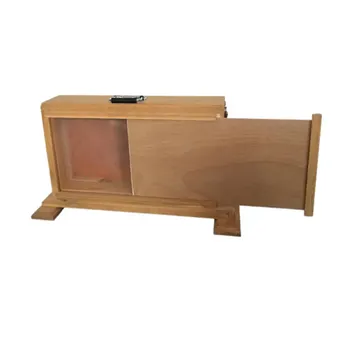
Where disturbance must be minimized, shuttered observation windows can allow visual checks without opening the hive. This helps reduce unnecessary heat loss and colony disturbance during cold, wet, or windy conditions.
Understanding the Trade-offs
Metal versus plastic covers
Metal-covered wooden lids offer a familiar commercial format with strong weather resistance and the potential for good thermal performance. However, metal surfaces and wooden substrates require attention to paint condition, corrosion, and moisture protection.
Plastic covers are rot-proof and generally attractive for low-maintenance operations. Their suitability still depends on correct fit, climate performance, transport requirements, and compatibility with the selected hive system.
Insulation versus simplicity
Insulated lids can provide better thermal buffering in regions with extreme temperatures. They may also add material, cost, or weight, so the benefit should be evaluated against handling requirements and the climate where the equipment will operate.
For mild conditions, a well-sealed, white, metal-covered lid may be sufficient. For severe heat or broad seasonal variation, integrated insulation deserves stronger consideration.
Weather sealing versus ventilation
A lid must prevent rain infiltration without creating an uncontrolled or poorly ventilated enclosure. Overemphasizing either sealing or airflow can reduce performance.
The correct solution is a coordinated hive design in which the lid, walls, entrance, and any ventilation features work together.
White paint is not a substitute for site management
Painting the lid white is an important hot-climate measure, but it cannot compensate for full-day exposure to intense sun, inadequate wind protection, or damaged insulation. Product selection and placement must be managed together.
How to Apply This to Your Project
Select the lid specification according to the operating environment, handling system, and maintenance capacity of the apiary.
- If your primary focus is hot-climate colony protection: Choose a white-painted, metal-covered telescopic lid with suitable insulation and place the hive in partial shade with wind protection.
- If your primary focus is commercial transport and scaling: Use standardized flat lids matched to common movable-frame hive dimensions so boxes can be stacked, exchanged, and processed efficiently.
- If your primary focus is low maintenance: Consider rot-proof plastic covers or metal-covered lids with durable finishes, while maintaining a routine for checking fit, corrosion, and weather damage.
- If your primary focus is distributor or reseller value: Build a compatible product portfolio that includes standard lid sizes, insulated options, replacement covers, and responsive fulfillment support.
The right hive lid is a climate-control, weatherproofing, and logistics component—not merely a cover.
Summary Table:
| Feature | Recommendation |
|---|---|
| Design | Flat telescopic design for weather resistance and stackability |
| Material | Tin or zinc outer cover for moisture protection |
| Finish | White exterior to reflect heat |
| Insulation | Double-layer for temperature buffering |
| Ventilation | Integrated without compromising sealing |
| Maintenance | Inspect after harsh weather, maintain finish, replace damaged covers |
Ensure your commercial apiary thrives with HONESTBEE's premium hive lids and complete beekeeping supplies. Our insulated, white metal covers are designed for hot climates, offering durability and thermal efficiency. Ideal for distributors and beekeepers, we provide one-stop sourcing with rapid delivery and dedicated support. Contact us today to optimize your hive equipment and boost your operations – Get in touch with our team and discover why we're the trusted partner for apiaries and resellers.
Related Products
- Telescopic Beehive Outer Cover Lid Roof with Galvanised Sheeting for Langstroth Hive and Beehive Outer Cover
- Acrylic Lid Beekeeping Honey Extractor for Beekeepers
- Inner Beehive Cover for Beekeeping Bee Hive Inner Cover
- Wooden Bee Hive Frames for Beekeeping and Wholesale
- Metal Bee Hive Stand Bee Box Stand for Beekeeping
People Also Ask
- What is a telescoping outer cover and what are its advantages? Maximize Hive Protection in Harsh Climates
- What is the function of an outer telescoping cover on a beehive? Ultimate Weather Protection for Your Colony
- What is the purpose of the outer telescoping cover in a beehive? The Key to Weatherproofing Your Hive
- What are the benefits of the telescoping outer cover? Essential Protection for Hive Health & Longevity
- How should a telescoping outer cover be removed? Expert Techniques for Smooth Beekeeping Operations